-
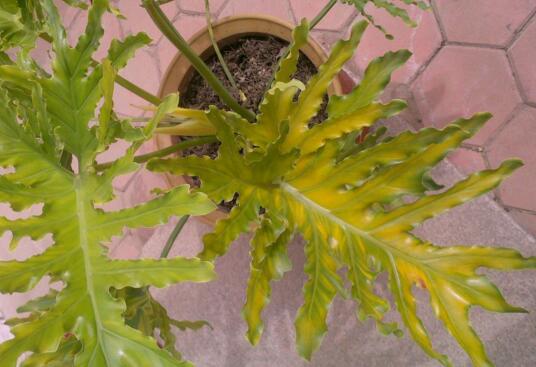
What to Do When Philodendron Leaves Turn Yellow? Identify the Cause of Temperature, Fertilizer, and Watering Problems and Treat Accordingly
Native to South America, Philodendron bipinnatifidum is loved for its huge, heart-shaped leaves, but some flower growers may encounter yellowing leaves, which is deeply distressing. So what should you do if the leaves of your Philodendron turn yellow? Besides mastering the correct cultivation methods and precautions for Philodendron
-
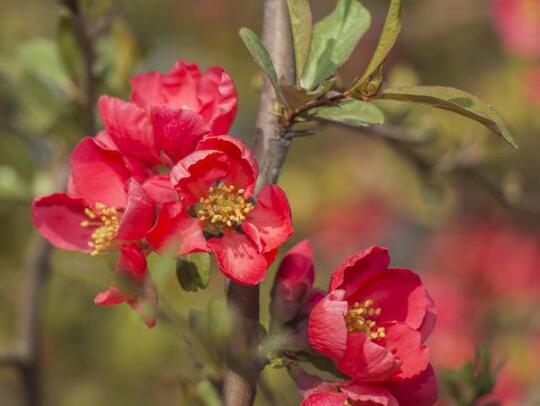
What to do when the leaves of the Japanese rose turn yellow? Identify the cause and control the amount of watering
The Japanese rose is a highly ornamental plant and is grown in many regions of our country. But even the most beautiful flower will lose its appeal if its leaves turn yellow. What should you do when the leaves of the Japanese rose turn yellow, and what are the causes? Let's take a look below.
-

How to Identify the Quality of Fish Fry? An Introduction to Practical Methods
Fish farmers have accumulated a wealth of experience in practice, among which the methods for identifying the quality of fish fry are both simple and practical, and are worth learning by farmers everywhere. The first is to directly observe and assess the fish's body condition with the naked eye. Superior fish fry: fry of the same age and same species are uniform in size, with small heads and thick backs, bright body color, moist and glossy skin, and no parasites. They swim actively, gather in schools, have a strong ability to swim against the current, and react quickly when startled; whereas inferior fish fry are uneven in size, with large heads and narrow backs, thin tail stalks, dull body color, and injured body surfaces or parasites. They swim
-
Differences Between Pleione and Aspidistra and How to Identify Them
Scientific name: Pleione bulbocodioides. Alternative name: Yiyelan (one-leaf orchid). Family and genus: Orchidaceae, perennial herb. Morphological features: When Pleione blooms, a single leaf grows beside the flower, which is why it is also called Yiyelan (one-leaf orchid), while the name Pleione comes from its garlic-like pseudobulb. It is terrestrial or epiphytic; the pseudobulb is ovoid or conical, 2 cm to 3 cm long; the flowering period is April to June; the upright inflorescence is 15 cm tall to
-
How to prevent and treat deformed mushrooms? First, identify the common types
Deformed mushrooms take many forms. The main ones commonly seen in production are: landmine mushrooms, hollow mushrooms, big-bottom mushrooms, hard cap opening and early cap opening, red roots, and water rust spots. Landmine mushrooms. The main cause is that the casing soil material is too coarse, the soil is rather hard, the casing layer is thick, the surface of the casing layer contains relatively little water, while the temperature and humidity conditions of the lower part and the substrate are suitable for fruiting body formation and growth, so fruiting bodies are easily differentiated and formed on the surface of the substrate or in the middle and lower layers of the casing soil, and then push out through the soil surface. Solution: choose high-quality humus soil, preferably peat soil, and mix in a certain amount of rotted cow manure or wheat bran, etc. in proportion; when collecting and sun-drying the soil, it should be sieved so that most soil particles remain comparable in size to @#@245@#@ particles, with the largest about 1/2 the size of a corn kernel, accompanied by some soil particles; casing is generally about 3 cm, and if conditions permit, first apply a layer of coarse soil 1-1.5 cm thick, then fine soil, and pay attention to maintaining uniform moisture content.
-

Domestically produced Xiongying drone born with 100 million pixels, can identify 1 cm objects on the ground, patrol mountains and count vegetables
High-spec domestically produced drone "Xiongying" is born! 100 million pixels capture 1 cm objects on the ground, impressive at patrolling mountains and counting vegetables
-
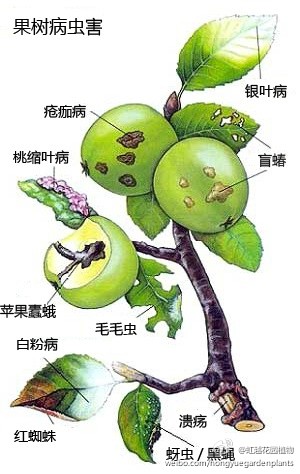
Complete Illustrated Guide to Flower Pests and Diseases: Quickly Identify Disease and Pest Symptoms
Pest and disease illustrations are always somewhat scattered. The few images below bring together illustrations of several dozen common flower pests and diseases, plus illustrations of fruit tree pests and diseases, rose pests and diseases, and tree pests and diseases.
-
How to identify a sick sheep? Ten methods to help you judge accurately
First, look at the eyes. A healthy sheep has nimble, bright, spirited eyes that are clean and moist. A sick sheep has dull eyes, drooping eyes with no spirit, and slow reactions. Second, look at the ears. A healthy sheep often holds its ears upright and flexible, while a sick sheep keeps its head low with drooping ears. The ears do not move. Third, look at the coat color. A healthy sheep has a neat, glossy, elastic coat. A sick sheep has a messy, lusterless coat. Fourth, look at rumination. A healthy sheep, regardless of feeding, starts ruminating 30 minutes later for 30-40 minutes, and ruminates 6-8 times in a day and night. A sick sheep ruminates less or stops. Fifth, look at movement. A healthy
-
How do you identify poisonous wild mushrooms? Master these identification methods
So far, more than 10,000 species of wild mushrooms (fungi) have been discovered and recorded nationwide, among which there are as many as 192 species of poisonous mushrooms (fungi), and in the Jiangsu-Zhejiang area there are more than 30 species of poisonous mushrooms. Wild mushrooms (fungi) generally grow during the plum rain season and under high-temperature, high-humidity conditions in summer and autumn, so incidents of poisoning from eating them also mostly occur during this period. Poisonous wild mushrooms (fungi) often have the following characteristics: (1) High brightness of color. (2) The surface of umbrella-shaped and other mushrooms (fungi) is fish-scale-like. (3) There are ring-shaped protrusions on the mushroom stem. (4) The mushroom
-
How to Identify and Control the Tea Green Leafhopper
The small green leafhopper, also known as the floating dust hopper, is the most important pest of tea plants. It damages tea plants by having its nymphs and adults pierce and suck the sap of young shoots, buds and leaves, causing the buds and leaves to yellow and lose their green color, the leaf veins to turn red, and the leaf texture to become coarse and old. In severe cases, the leaf tips and margins become reddish-brown and scorched, the buds and leaves shrivel, growth stops, and they may even be completely scorched, as if burned by fire. When affected leaves are made into dry tea, the amount of broken fragments increases, the taste is bitter and astringent, and both yield and quality are seriously affected. The adult small green leafhopper is 3.5-4.0 mm long, pale green to yellow-green, with 2 small green spots in the middle of the top of the head, and the mesothoracic scutellum
条件筛选