Domestically produced Xiongying drone born with 100 million pixels, can identify 1 cm objects on the ground, patrol mountains and count vegetables
The 2013 documentary "Beyond Beauty: Taiwan from Above" used aerial photography technology to present the beauty and sorrow of Taiwan, China. In addition to capturing breathtakingly beautiful scenery, aerial photography technology also plays an important role in land and environmental management and monitoring. Today (the 7th), the Agricultural and Forestry Aerial Survey Institute (hereinafter referred to as the Aerial Survey Institute) unveiled the first domestically produced fixed-wing drone, the "Xiongying." At an altitude of 1200 m, it can clearly inspect objects 8 cm from the ground, and at its lowest it can capture objects 1 cm from the ground. With high-spec imaging of 100 million pixels, it presents the face of the land more realistically.
Xiongying drone quick facts: wingspan 3 m, front-to-back fuselage length 2.4 m, weight 24 kg, top speed nearly 145 km/h. It is a large remote-controlled drone, requires a runway to take off, costs NT$9 million, and can only be operated by professional pilots who have undergone training and passed Civil Aviation Administration verification.
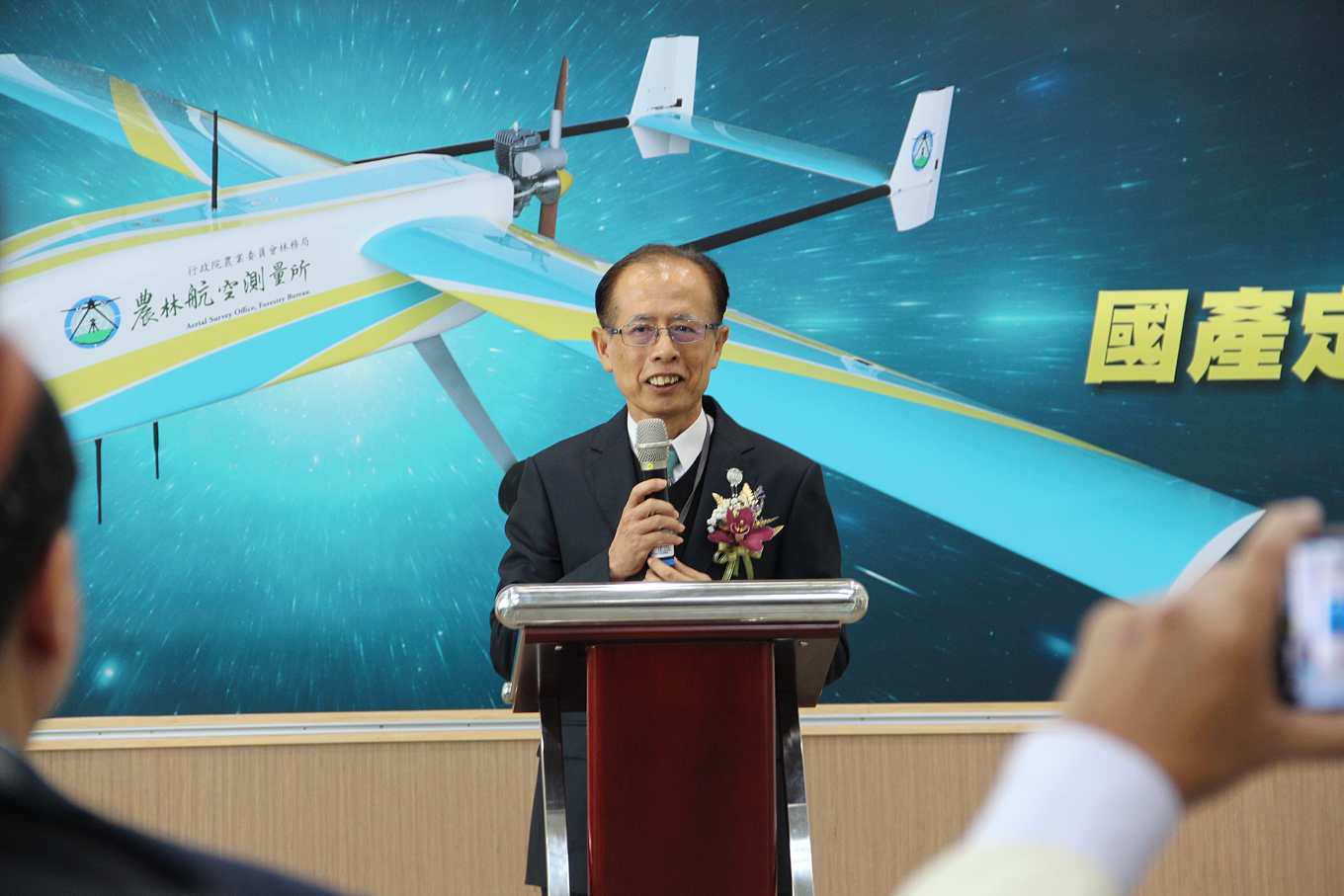
However, could such a high-spec, clearly imaging model create national security concerns? Guan Lihao stated that although the model and sensors can be purchased as long as there are sufficient resources, drone ownership registration, airframe equipment applications, and the training of professional pilots are required. Pilots also need to pass the Civil Aviation Administration's operating certificate, and finally, if conducting flights above 400 ft, prior approval must also be obtained.
After passing the barriers of equipment application and qualification review, there are also strict regulations during actual operation. For example, operations are not allowed in prohibited or restricted flight zones and within the areas around airports; flights are not allowed after sunset and before sunrise; drones may not be used to drop or spray any objects, and so on. There are quite strict regulations. Violators will be fined between NT$10,000 and NT$1.5 million depending on the degree of violation.
Quick knowledge: According to the draft "Remote-Controlled Drone Management Rules," there are 3 types of personnel operating certificates. Applicants for a learner operating certificate must be at least 16 years old, and when operating must be accompanied by someone at least 18 years old who also holds a valid operating certificate; applicants for a general operating certificate must be at least 18 years old and may operate only after passing the written test; and applicants for a professional operating certificate must be at least 18 years old, meet relevant experience requirements, and after passing a physical examination and both written and practical tests, be issued an operating certificate by the Civil Aviation Administration.