-
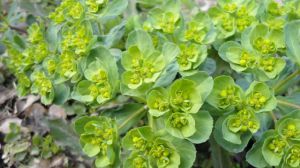
How to identify Euphorbia lunulata? Just remember these features
Stem: usually branched, very hard at the base. Leaves: the lower leaves are scale-like, while the leaves above the middle are narrowly linear-lanceolate. Flowers: overall yellowish-brown, with cup-shaped involucral bracts, usually blooming from April to June.
-
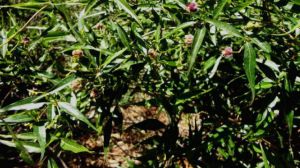
How to identify Periploca sepium? Master these methods to recognize it easily
Root and stem: the main root is cylindrical, the outer bark is grayish-brown, the inner bark is pale yellow, and the stem bark is grayish-brown. Leaves: 5-9 cm long, ovate-oblong, with a relatively pointed tip, dark green on the upper surface and light green on the underside. Flowers: purplish-red, the corolla tube is relatively short, 3 mm long, and the calyx lobes are ovate.
-
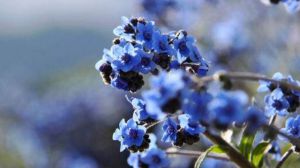
How to identify the blue-flowered Microula? Sharing practical identification methods and tips
Flowers: usually blue, the inflorescence branches at acute angles and is very compact, with no bracts. The filaments grow from the middle of the corolla tube and are about 5-6mm long. The corolla is 5-6mm long, with rounded lobes that have very distinct netted veins. Fruit: ovate, slightly concave on the back, flowering and fruiting from May to September, about 3-4mm long.
-
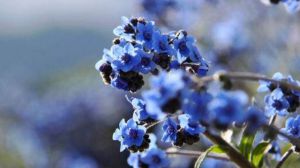
How to identify hound's tongue? A detailed guide to identification methods
Stem: The stem of hound's tongue is either single or several clustered together, and can grow to 15-60cm. Leaves: The basal leaves have petioles and are oblong-lanceolate or lanceolate; the stem leaves have no petioles and are lanceolate or oblong. Flowers: Blue, with rounded lobes and obvious reticulate veins.
-
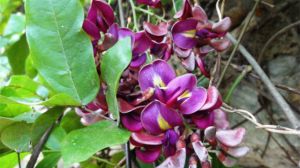
How to identify Millettia dielsiana? A detailed guide to identification methods
Leaves: Millettia dielsiana has pinnately compound leaves that are papery in texture and lanceolate, oblong or narrowly oblong in shape. Flowers: The paniculate inflorescence is terminal, about 40 cm long; the flowers are solitary and the corolla is purplish-red. Fruit: The pod is linear or oblong, flat, and covered with gray down on the surface.
-
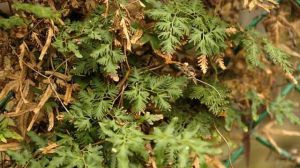
How to identify Lygodium japonicum? Mastering these identification methods is enough
Morphological identification: Lygodium japonicum is a perennial herbaceous plant, with a height of about 1 to 5 m. The rhizome below grows horizontally and is relatively tough in texture. Leaf identification: the small short branches on the stem are distributed symmetrically on both sides, and short hairs are sparsely distributed on the leaf rachis. In summer, fringe-like spikelets grow along the lower edges of the leaves.
-
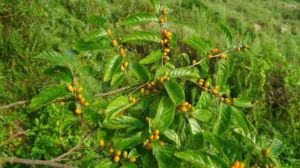
How to identify Rhamnella franguloides? These identification methods are easy to understand at a glance
Tree form characteristics: Rhamnella franguloides grows 2-9m tall, and its new branches are green, covered with relatively short, fairly dense soft hairs. Leaf characteristics: its leaves are obovate, green and hairless on the upper surface, yellow-green with hairs on the lower surface, and the leaf margins are serrated. Flower characteristics: its flowers have pedicels 1-4mm long, and the petals are obovate and yellow-green.
-
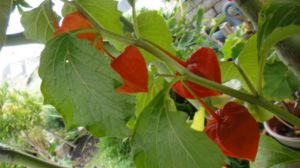
How to identify the Chinese lantern plant? Here are a few identification methods
Leaves: alternate, initially ovate in shape, gradually becoming ovate-cordate later, with serrated edges of varying sizes. Flowers: borne singly in the leaf axils, with a bell-shaped calyx and a yellow corolla. Fruit: a berry, spherical in shape and green in color, enclosed in an enlarged green persistent calyx that is ovate or broadly ovate.
-
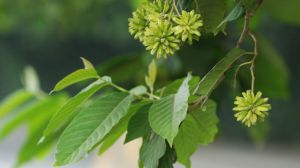
How to identify the Chinese happy tree? Mastering these identification methods is enough
Trunk: The Chinese happy tree is a tall deciduous tree, reaching a maximum height of over 20 m. The bark is gray, and the branches are relatively slender. New branches are purple-green, while those of many years are mostly brown. Leaves: The leaves of the Chinese happy tree have a papery texture and grow in an elliptical shape. They are relatively large, reaching 15-28 cm. The upper surface of the leaves is bright green, and the lower surface is light green. Flowers: The inflorescence of the Chinese happy tree is nearly spherical, and the petals are pale green. The flowering period is from May to July.
-
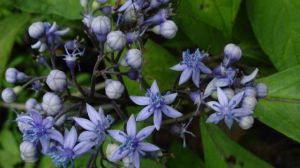
How to identify Dichroa febrifuga? Master the correct identification method
Leaves: The leaves of Dichroa febrifuga are usually elliptical, obovate, elliptic-oblong or lanceolate, with the apex gradually tapering to a point, serrated margins, and no hairs on the leaf surface. Flowers: Its flowers are terminal corymbose panicles, white or blue. Fruit: The berries are blue, usually 3 to 7 mm in diameter.
条件筛选