What to do when the leaves of the Japanese rose turn yellow? Identify the cause and control the amount of watering
The Japanese rose is a highly ornamental plant and is grown in many regions of our country. But even the most beautiful flower will lose its appeal if its leaves turn yellow. What should you do when the leaves of the Japanese rose turn yellow, and what are the causes? Let's take a look below.
I. What to do when the leaves of the Japanese rose turn yellow / Control the amount of watering
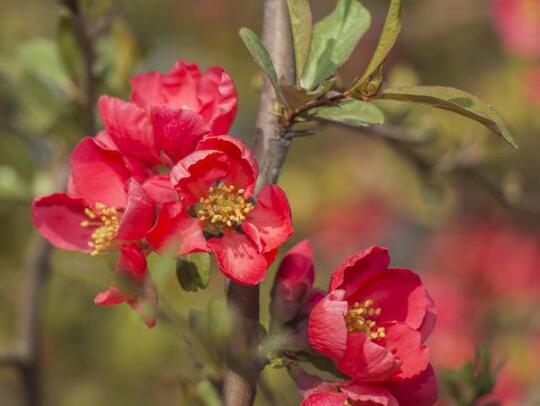
II. Causes of yellowing leaves on the Japanese rose
1. Improper fertilizing
During the cultivation of the Japanese rose, fertilizer is one of its main nutrients and an indispensable part. However, the amount of fertilizer still needs to be controlled, otherwise too much or too little can cause the leaves to turn yellow. As for exactly how to fertilize, you can refer to the article on how to grow the Japanese rose, where you can find the answer.
2. Improper watering
Among the causes of yellowing leaves on the Japanese rose, improper watering is a relatively common one; both overwatering and underwatering can cause the leaves to turn yellow, so when watering the Japanese rose you must always follow the principle of watering when the soil is dry.
3. Insufficient light
The Japanese rose is a light-loving plant, so sunlight is quite important to it. If it cannot get sunlight for a long time, the leaves will gradually turn yellow and drop off. So during cultivation you must make sure it receives sufficient light.
4. Poorly ventilated environment
When growing the Japanese rose, you must place it in a ventilated environment. If it grows for a long time in an unventilated environment, the Japanese rose will gradually turn yellow and wither, so the growing environment is still very important.
5. Pests and diseases appear
The appearance of pests and diseases is also a cause of yellowing leaves on the Japanese rose, and of course this is a problem that only arises from improper routine care. So during routine care you must be careful; as long as it is cared for well, this problem will not occur.
What causes Gardenia leaves to turn yellow_What to do when Gardenia leaves turn yellow?
Gardenia is a very common flowering plant in people's lives. What attracts people most is the fragrance its flowers give off when in full bloom, which is also why many people very much like growing Gardenia. However, during the process of growing Gardenia, some problems always arise, such as Gardenia leaves turning yellow, whether the Gardenia's fragrance is toxic, and so on. Today let's take a look together at what causes Gardenia leaves to turn yellow, and what to do when Gardenia leaves turn yellow.
[Introduction to Gardenia]
Gardenia is also known as Zhizi, Yuhehua, Baichanhua, Huangqi and so on, and is a perennial evergreen shrub plant of the order Gentianales, family Rubiaceae. Gardenia is mainly distributed in Sichuan, Jiangxi, Jiangsu, Anhui, Zhejiang, Hunan, Taiwan, China, Yunnan, Fujian, Guangdong and other places. Its branches and leaves are very luxuriant, and the leaves stay green all year round; when the flowers bloom they give off a captivating fragrance, and it is called an important garden ornamental plant. Not only can the Gardenia's flowers be appreciated, its fruit, leaves and roots all have very good medicinal value, with effects such as detoxifying and cooling the blood, clearing heat and promoting diuresis, and purging fire and relieving irritability.
[Growth habits of Gardenia]
Gardenia likes to grow in a sunny, warm and humid, fairly sun-facing environment. Its cold tolerance is relatively good, it is fairly tolerant of partial shade, and it fears waterlogging. It is suitable for growing in loose, fertile, well-ventilated acidic sandy soil. During cultivation it should avoid direct strong light and is suitable for growing in a relatively sheltered environment. The suitable growing temperature for Gardenia is 16 degrees Celsius, and in winter the temperature must not drop below zero degrees Celsius, otherwise it will enter a dormant state. In regions such as the Northeast, Northwest and North China it is suitable as a potted flowering plant, and it is a very typical acidic flowering plant.
[What causes Gardenia leaves to turn yellow]
1. Improper watering: Gardenia fears waterlogging. When growing it, too much watering will make the young leaves dull and lusterless, the leaves will turn yellow-green, and new leaves will not grow.
2. Improper light: Under relatively strong light, Gardenia leaves will develop yellow spots, and the leaves will also turn yellow. If Gardenia is placed in a shady spot for a long time, it will not get sufficient light, and the leaves will also turn yellow or drop off, so photosynthesis needs to be carried out in time.
3. Improper fertilizing: When growing Gardenia, too much or too concentrated fertilizer can also cause the plant's leaves to turn yellow. Generally the tips of new leaves will turn brown; although the leaves are fairly thick and fleshy, they have no luster at all and cannot fully unfold, while the old leaves will turn scorched yellow and hang down. Insufficient fertilizer can also cause Gardenia leaves to turn yellow or drop off. When Gardenia lacks nitrogen, the leaves will turn yellow, and the new leaves will grow very small and be fairly brittle. When it lacks potassium, the old leaves will turn brown, thereby affecting the ornamental value. When it lacks iron, the leaves will slowly turn pale yellow, then yellow or white, and finally slowly wither. When it lacks magnesium, the old leaves will turn yellow first, then the new leaves will also turn yellow, and finally the leaves will completely wither and drop off. When it lacks phosphorus, the old leaves will turn purplish red or dark red.
4. Unsuitable temperature: Too low a temperature will cause the leaves to turn yellow. In winter you must be well prepared, and in early spring or early winter you must focus on keeping it warm.
[What to do when Gardenia leaves turn yellow]
1. If the leaves have turned yellow due to too much watering, you can let the plant dry in a ventilated place and then put it back in the pot; the yellowed and withered parts of the plant will naturally drop off, the new leaves will grow fairly normally, and you should water it with enough water.
2. If the leaves have turned yellow due to too strong light, you can place the Gardenia in a relatively shady spot. And if the cause is insufficient light, give it sufficient light.
3. If the fertilizer concentration is too high, you can reduce the concentration of fertilizer in the soil. When it lacks iron, you can spray with ferrous sulfate; when it lacks magnesium, you can spray with boron-magnesium fertilizer.
4. In winter the growing temperature for Gardenia must not drop below zero degrees Celsius, otherwise the plant will enter a dormant state or freeze to death, so you must prepare well against freezing.
More related information: What do pink roses represent How to grow the mosquito-repellent plant The flower language of Magnolia How to grow wintersweet Cultivation of Canna
What to do when Lucky Bamboo leaves turn yellow_What are the causes?
Lucky Bamboo is one of the most common household potted plants, especially water-grown Lucky Bamboo, which looks very clean and comfortable and has very good ornamental value. There are many ways to grow Lucky Bamboo, both water culture and soil culture, and its varieties are also very numerous, including golden-edged Lucky Bamboo, silver-edged Lucky Bamboo, golden-hearted Lucky Bamboo, silver-hearted Lucky Bamboo and so on. Lucky Bamboo's leaves are a lovely green and very good-looking, and are especially loved by people. However, many people, due to improper growing methods during the cultivation of Lucky Bamboo, encounter the situation of Lucky Bamboo leaves turning yellow. Below let's take a look together at what to do when Lucky Bamboo leaves turn yellow, and what causes Lucky Bamboo leaves to turn yellow?
[Introduction to Lucky Bamboo]
Lucky Bamboo is a foliage-type plant, and the color of its leaves is very varied and very good-looking. Lucky Bamboo is also known as Wannianzhu, Kaiyunzhu, Fuguita, Zhuta and so on, and is a foliage plant of the genus Disporum in the family Liliaceae. It is native to Cameroon in western Africa and is a perennial green herbaceous plant, mainly grown as a potted ornamental plant. Its ornamental value is very high, and it symbolizes great fortune and prosperity, making it one of the very popular potted plants in China.
[Growth habits of Lucky Bamboo]
The Lucky Bamboo plant is fairly stout, and is generally planted in gardens, though there is also wild Lucky Bamboo. It likes to grow in a shady and humid environment; its stems and leaves are fairly thick and fleshy, and the leaves are dark green in color, with very good ornamental value. Lucky Bamboo's stems are very upright, and the leaves are deep green, staying evergreen in both winter and summer. Spring is the most suitable time to plant Lucky Bamboo, and the plant is generally harvested starting in December. It likes to grow in loose, fertile soil or in nutrient-rich water. It can be propagated either by potting or by inserting stems in bottles, and can be processed into Lucky Bamboo, curved bamboo and so on, thereby taking on characteristics such as elegance and grace, a free and easy posture, and slender stems and leaves, with very good ornamental value. The yield of Lucky Bamboo is very high, and its economic benefits are also very good, making it quite favored by people.
[What to do when Lucky Bamboo leaves turn yellow_What are the causes]
During cultivation, Lucky Bamboo's leaves very easily turn yellow, mainly due to improper cultivation management. The main causes are too much or too little water, too strong or too weak sunlight, and too concentrated or too little fertilizer. During cultivation, the yellowing of the leaves differs, and we must analyze it in order to improve it.
1. Water yellowing: The newly grown leaves are fairly dark yellow and lusterless, while the old leaves show no obvious change; the branches are fairly small and fairly yellow-green, and the new shoots are fairly shrunken. This is all caused by too much watering. It needs to be placed in a ventilated, shady environment to dry, and then the potting soil should be tidied up.
2. Drought yellowing: When Lucky Bamboo lacks water, its leaves will also turn yellow. Its leaf tips and leaf margins will dry out and wither, and the old leaves will drop off from the bottom upward, but the newly grown young leaves are fairly normal. You should water thoroughly and give it sufficient water.
3. Scorch yellowing: Too strong light will cause Lucky Bamboo leaves to turn yellow; the leaf tips and leaf margins will become scorched, and yellow spots will appear on the leaves. It needs to be placed in a relatively shady spot for growing.
4. Light-deficiency yellowing: If Lucky Bamboo is placed in a relatively shady environment for a long time, the leaves cannot absorb sufficient light, the leaves cannot form chlorophyll, and the leaves will also turn yellow. It needs to be placed in a spot with fairly sufficient sunlight for growing, but direct strong light should be avoided.
5. Fertilizer yellowing: When growing Lucky Bamboo, too much or too concentrated fertilizer will cause the leaves to turn yellow. Generally, dry brown appears at the tips of the new leaves; although the leaves are fairly thick and fleshy, they have no luster at all and have not fully unfolded, and the old leaves will turn yellow and then naturally drop off. You should stop fertilizing and instead water more, so as to wash out some of the nutrients.
6. Nutrient-deficiency yellowing: When there is insufficient fertilizer, Lucky Bamboo's leaves will be fairly pale in color, generally pale green or yellow. At this time you can check the potting soil, and if the soil is dry and caked you can carry out a soil change, applying more thin fertilizer or alum water, mainly with nitrogen fertilizer as the main fertilizer.
More related information: The symbolic meaning of plum blossoms Money Tree pictures How to plant arrowhead How to plant Sophora japonica What are the uses of black burreed