-
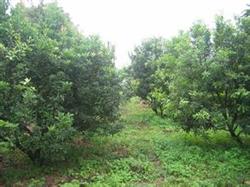
Want high yields from bayberry? Apply spring fertilizer in winter instead
1. The water chestnut bayberry gets its name because its fruit ripens to a purple-black color resembling a water chestnut. It is a famous superior variety in China, originating in Yuyao, and is the main cultivar of bayberry in Yuyao City, hence it is also called Yuyao bayberry. It has now been promoted throughout the province and in various southern provinces and regions. In Guizhou it is called science and technology bayberry, in Jiangxi it is called hybrid bayberry, and in Yunnan it is also known as large-tree bayberry...
-
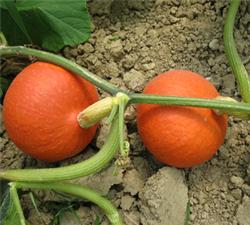
High-Quality New Pumpkin Varieties and Key Points of Spring Cultivation Techniques
Pumpkin is a nutritious and healthy vegetable, and the Western pumpkin (Cucurbita maxima) introduced from abroad has low fruit water content, high solids, high levels of non-reducing sugars and starch, a starch-to-total-sugar ratio exceeding 1, low crude fiber and high crude protein, so its eating quality and mouthfeel are excellent, and its quality greatly surpasses that of domestic local pumpkins, making it deeply...
-
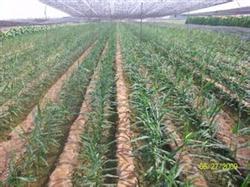
How to Grow Ginger in Northern China for High Yields? A Detailed Guide to Cultivation and Management Techniques
I. Pre-planting Preparation 1. Fine soil preparation and adequate basal fertilizer. It is advisable to choose a plot with fertile soil, good irrigation conditions, and no ginger blast disease, and to avoid continuous cropping as much as possible. On the basis of winter ploughing, carry out fine soil preparation early in spring, so that the soil is free of visible and hidden clods, loose on top and firm below. Increase the application of organic fertilizer, using high-quality chicken manure, manure from livestock pens free of diseased residues, cake fertilizer, and plant ash in combination; along with soil preparation, broadcast 4 cubic meters of high-quality decomposed chicken manure or 5000-10000 kg of high-quality pen manure as basal fertilizer. In high-fertility and high-water plots, open furrows at a row spacing of 60-65 cm ready for sowing, and apply 100 kg of soybean cake, 50 kg of ternary compound fertilizer, 50 kg of potassium sulfate, 2 kg of zinc fertilizer, and 1 kg of boron fertilizer in the furrows as seed fertilizer.
-
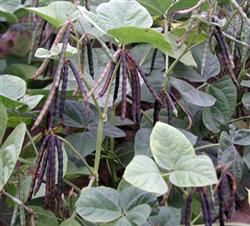
High-Yield Mung Bean Cultivation Techniques, Part Two: Detailed Explanation of Key Planting Points
V. Timely Hoeing and Ridging, and Topdressing. Currently, mung bean production involves low input and extensive management, resulting in relatively low yields, so field management should be strengthened. Especially during the seedling stage, mung beans grow slowly and are easily overwhelmed by weeds, which affects their growth and development, making timely management even more important. During the growth period, generally before flowering and pod setting, 3 rounds of inter-row cultivation and weeding should be carried out (three hoeings...
-
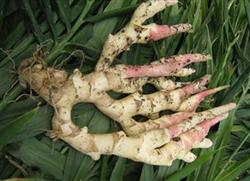
Key Management Techniques for High-Quality and High-Yield Ginger
1. Site selection: Choose sandy soil with deep, loose, fertile soil and convenient irrigation and drainage for planting; avoid continuous cropping. 2. Land preparation and basal fertilizer application: Before sowing, apply 1000-1500 kg of farmyard manure, 50 kg of calcium magnesium phosphate fertilizer, and 20 kg of compound fertilizer per mu as basal fertilizer, then plow and harrow thoroughly. Divide into beds and open furrows, each bed 1...
-
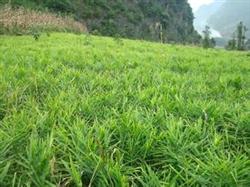
Detailed Explanation of High-Yield Formula Fertilization Techniques for Ginger
Ginger has a long growth period and a high fertilizer requirement. Under medium fertility conditions, to produce 2500 kg of ginger per mu, 25-40 kg of nitrogen, 10-22 kg of phosphorus (P2O5), and 30-50 kg of potassium (K2O) are needed. The absorption ratio of nitrogen, phosphorus, and potassium is 11:1:16 or 1:0.5:2. In addition, calcium, magnesium, boron, zinc, iron, and other medium and trace...
-
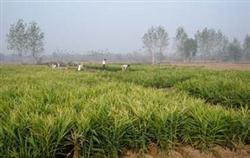
How to fertilize ginger for high yield? Detailed explanation of the key points of formula fertilization technology
Ginger has a long growing period and a high fertilizer requirement. Under medium fertility conditions, to produce general 2500 kg of ginger per mu, 25-40 kg of nitrogen, 10-22 kg of phosphorus (P2O5), and 30-50 kg of potassium (K2O) need to be applied. The absorption ratio of nitrogen, phosphorus, and potassium is 11:1:16 or 1:0.5:2. In addition, calcium, magnesium, boron, zinc, iron, and other medium and trace...
-
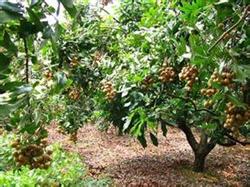
Detailed Explanation of High-Quality and High-Yield Cultivation Techniques for Longan
Supplementary nutrients to prevent fruit drop: Longan is in the young fruit growth stage, and the main work is to prevent fruit drop, prevent root rot, and ensure normal fruit growth and development. ① The current rainfall is very favorable for the growth of longan young fruit. In normally managed orchards, the young fruit grows well. Due to the earlier drought, many fertilized...
-
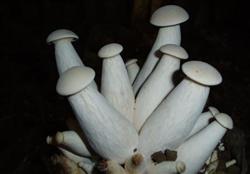
Two High-Efficiency Cultivation Techniques for the Shaggy Mane Mushroom and Cost Analysis
I. The 10,000-yuan courtyard-economy greenhouse model. 1. Greenhouse investment: (1) A bamboo-frame greenhouse 20 m long and 5 m wide, covering 100 sq m, requires 60 bamboo poles 4-5 m long, of which 40 are used as supports, inserted one about every 1 m, with 20 on each side, crossed and tied into an arch, and the other 20 used for horizontal...
-
Spring planting fertilization tip: Effective potassium application boosts high yields in spring corn
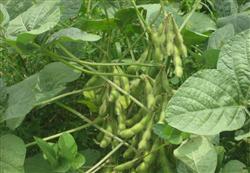
Delayed senescence (staying green and late-maturing) refers to soybeans that, when they should be maturing, still have green branches and leaves with vigorous growth and seeds that are not yet plump, though not shriveled pods or shriveled seeds. The main cause of delayed senescence is excessive application of nitrogen fertilizer or application too late, causing excessive vegetative growth, delaying maturity, and affecting yield. To prevent delayed senescence in soybeans, it is necessary to timely...
条件筛选