Want high yields from bayberry? Apply spring fertilizer in winter instead
1. The water chestnut bayberry gets its name because its fruit ripens to a purple-black color resembling a water chestnut. It is a famous superior variety in China, originating in Yuyao, and is the main cultivar of bayberry in Yuyao City, hence it is also called Yuyao bayberry. It has now been promoted throughout the province and in various southern provinces and regions. In Guizhou it is called science and technology bayberry, in Jiangxi it is called hybrid bayberry, and in Yunnan it is also known as large-tree bayberry...
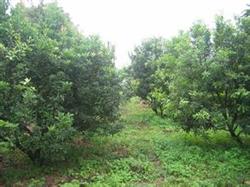 Bayberry is one of the fruit trees that blooms earliest in spring and bears the most fruit. When early spring temperatures are still low and accompanied by overcast and rainy weather, it begins to produce flower buds and successively blooms and sets fruit. By late spring and early summer it matures and is harvested, with only 2 to 3 months from flowering to fruit ripening. With flowers covering the whole tree and abundant fruit set, its nutrient requirements are especially strict. Relying only on some pre-bloom fertilizer and fruit-sizing fertilizer cannot meet its nutrient needs. It is best to apply the fertilizer meant for spring in winter in advance, so that sufficient nutrients accumulate in the bayberry tree, ensuring an adequate nutrient supply during flowering and fruiting and guaranteeing abundant fruit, large fruit, and excellent quality.
Specific method:
In winter, dig a ring trench 30 to 40 cm deep and 30 to 40 cm wide under the canopy around the canopy drip line. Then, for each tree over five years old, apply 30 to 40 kg of decomposed and rotted human, livestock and poultry manure, 2 to 3 kg of nitrogen-phosphorus-potassium (15-15-15) compound fertilizer, 3 to 4 kg of superphosphate or calcium-magnesium phosphate fertilizer, 0.5 to 1 kg of potassium chloride or potassium sulfate, 1 to 1.5 kg of magnesium sulfate, and 8 to 10 kg of biological bacterial fertilizer. Mix all the fertilizers thoroughly and evenly, spread them evenly in the ring trench, and cover with soil to completely cover all the fertilizer. After fertilizing, if the weather is dry, drench each tree with 80 to 100 kg of decomposed and rotted human and livestock manure water, biogas slurry, or clean water, evenly poured onto the soil covering the ring trench, to promote fertilizer dissolution and transformation, supply root absorption and utilization, and improve the fertilizing effect.
In addition, in winter, spray the leaves once every 10 to 15 days with a mixture of 0.1% borax, 0.1% magnesium sulfate, 0.2% urea, 0.3% monopotassium phosphate, and 800-times diluted humic acid active liquid fertilizer, spraying continuously 3 to 5 times, evenly wetting all branches and leaves inside and outside the canopy, to supplement various nutrients through the leaves and raise the nutritional level of the plant.