-
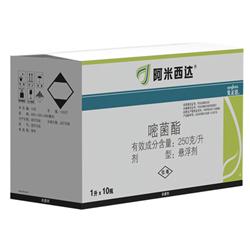
What kind of pesticide is Amistar? A comprehensive guide in one article
What is another name for Amistar? How does the Amistar fungicide work? What are the characteristics of the Amistar fungicide? Which diseases can Amistar control? The following brief introduction from Gengzhongbang Planting Network is for readers' reference. Amistar is also called azoxystrobin, English common name: Azoxyst...
-
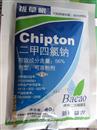
What are hormone-type herbicides? A complete guide
What hormone-type herbicides are there? How do hormone-type herbicides work? We'd like knowledgeable readers to help explain. 1. Phenoxycarboxylic acids: the main varieties are 2,4-D butyl ester and MCPA-sodium. Their mode of action is similar to indoleacetic acid; a tiny amount of 2,4-D can promote plant growth, while at high concentrations it inhibits the differentiation of meristematic tissues...
-
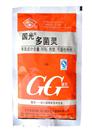
How to use carbendazim for the best results? A detailed guide to the correct usage
How should carbendazim be used well? What diseases can carbendazim control? How can it be used for the best results? Please provide guidance. Carbendazim belongs to the benzimidazole class and is a highly effective, low-toxicity systemic fungicide. Because it has obvious acropetal translocation properties, in addition to foliar spraying, it is also often used for seed dressing and soil drenching; as a broad-spectrum systemic...
-
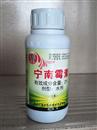
What Is Ningnanmycin? A Detailed Guide
What is Ningnanmycin? What diseases can Ningnanmycin control? How effective is Ningnanmycin? Please provide an introduction. Ningnanmycin is a new type of broad-spectrum biological pesticide with fungicidal, antiviral, growth-regulating and growth-promoting effects. It was discovered and successfully developed by the Chengdu Institute of Biology, Chinese Academy of Sciences, with...
-
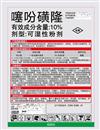
Thifensulfuron-methyl: A Detailed Guide to Its Effects and Application Methods
What are the effects of thifensulfuron-methyl? How is it used? We ask knowledgeable readers to help explain. On the market, thifensulfuron-methyl wettable powder herbicides at 10%, 15%, 20%, 25% and 75%, as well as a 75% thifensulfuron-methyl aqueous solution herbicide, are commonly seen. Many readers are still not very familiar with thifensulfuron-methyl herbicide...
-
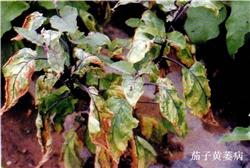
Which Diseases Can Fungicides Prevent and Control? A Detailed Guide to Their Scope of Application
Which diseases can fungicides prevent and control? What chemicals work well when mixed with fungicides? We also invite experienced readers to share their suggestions. As consumers pay more and more attention to food safety, highly toxic and high-residue chemicals in agricultural cultivation will gradually be replaced by environmentally friendly fungicides. Therefore, Zhongdi Network has compiled the diseases that fungicides can prevent and control...
-
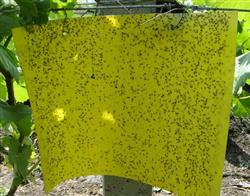
Detailed explanation of how to make sticky insect traps, a step-by-step guide
How do you make sticky insect traps? What pests can sticky insect traps control? We also ask experienced netizens to help introduce the production method. Sticky insect trap trapping technology is an effective physical control technique that uses the color taxis of insects to control pests. Using it saves costs, is green and environmentally friendly, and using it year-round can greatly reduce the number of pesticide applications,...
-
How is quizalofop-p-ethyl herbicide used? A detailed guide to its application methods
What is the herbicidal mechanism of quizalofop-p-ethyl herbicide? How is quizalofop-p-ethyl herbicide used? We ask knowledgeable readers to help explain. On today's agricultural input market, quizalofop-p-ethyl emulsifiable concentrate herbicides at 5%, 8%, 8.8%, 10%, 10.8% and 15% are commonly seen, but many readers do not understand the herbicidal mechanism and scope of application of quizalofop-p-ethyl herbicide...
-
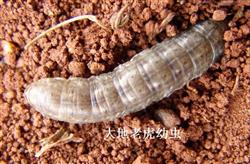
What kind of pest is the cutworm? A complete guide to control methods
What is a cutworm? How do you control cutworms? We also invite readers with control experience to share their advice. The cutworm is also called shangcan, dican, or root-cutting worm. Common cutworms include the large cutworm, the small cutworm, and the yellow cutworm. Therefore, Seedling Network has compiled detailed information on cutworms, listed below for readers' reference....
-
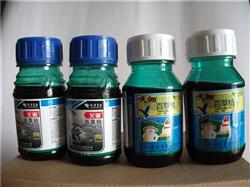
What is paraquat? A detailed guide to the paraquat herbicide
What is paraquat? What are the characteristics of paraquat? We ask knowledgeable readers to help explain. Paraquat has been on the market for many years, yet some readers still do not understand its characteristics; Zhongdi Network has compiled the characteristics of paraquat, listed in detail below for readers' reference. The herbicidal characteristics of paraquat: spec...
条件筛选