What kind of pesticide is Amistar? A comprehensive guide in one article
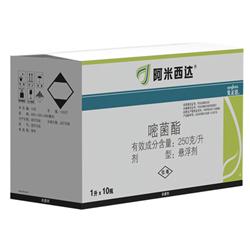
What is another name for Amistar? How does the Amistar fungicide work? What are the characteristics of the Amistar fungicide? Which diseases can Amistar control? The following brief introduction from Gengzhongbang Planting Network is for readers' reference.
Amistar is also called azoxystrobin, English common name: Azoxystrobin, and is a white opaque viscous liquid. Amistar is the world's first immuno-type fungicide used in large quantities for agricultural production, and is the agricultural fungicide with the largest usage and the highest sales in the world. It is widely used on open-field vegetables such as tomato and cucumber as well as protected-cultivation vegetables, on fruit crops such as grape, watermelon and melon, in urban landscaping projects, and in lawn maintenance for golf courses and football fields. It has good control effects on all fungal diseases, and has good crop safety and very outstanding environmental compatibility, making it the first-choice product for pollution-free vegetable and fruit bases and golf courses.
Amistar has a very broad fungicidal spectrum, and is effective against most pathogenic fungi among the four major groups of disease-causing fungi: Ascomycota, Basidiomycota, Deuteromycota and Oomycota. Amistar is a beta-methoxyacrylate fungicide. It is a mitochondrial respiration inhibitor that disrupts the pathogen's energy synthesis, that is, by blocking electron transfer from cytochrome Bcl to cytochrome C, thereby inhibiting mitochondrial respiration. It is effective against strains resistant to 14-demethylation enzyme inhibitors, benzamides, dicarboxamides and benzimidazoles. It has protective, eradicant, penetrant and systemic activity. It inhibits spore germination and mycelial growth and continuously inhibits sporulation.
Amistar has a good fungicidal effect throughout the entire course of crop disease development: before disease onset it blocks pathogen invasion, after pathogen invasion it can eliminate the pathogen within the plant, and in the late stage of disease it can reduce the production of new spores, providing full-course protection for crops.
Amistar can regulate the crop's internal growth environment, enhance vigor, strengthen stress resistance, promote early and rapid crop growth, advance the time to market, improve quality, delay crop decline, extend the fruiting period, and increase single-season income. It does not pollute the environment and is especially suitable for the production of green, pollution-free products.
Amistar is a low-toxicity pesticide, safe for humans, livestock and non-target organisms, harmless, and leaves no residue. The acute oral toxicity in rats is greater than 5000 mg/kg, and the dermal toxicity is greater than 4000 mg/kg. In soil, water and air it can quickly degrade through light and microorganisms, ultimately forming carbon dioxide, with no pollution to the environment.
Characteristics of Amistar:
1. Broad fungicidal spectrum: one pesticide controls multiple diseases, reducing the amount of pesticide used and lowering production costs
2. Increased disease resistance: less disease, vigorous growth, early and rapid growth, earlier time to market, higher selling price
3. Improved stress resistance: high yield even under poor climate conditions
4. Delayed senescence: lengthens the harvest period, increases total yield, and raises total returns
5. Long duration of effect: special effect period of 15 days, reducing the number of applications, less agricultural residue in vegetables, and more money from high quality at a premium price