How to tell good fertilizer from bad? Try these methods in everyday situations
How do you usually tell good fertilizer from bad? Here are some methods you can refer to for identifying the quality of fertilizer: 1. Packaging identification method ① Check the markings: Relevant national authorities stipulate that fertilizer packaging bags must indicate the product name, nutrient content, grade, trademark, net weight, standard code, factory name, factory address, production...
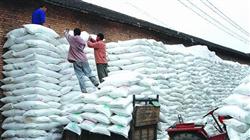
How do you usually tell good fertilizer from bad? Please introduce methods
You can refer to the following methods to identify the quality of fertilizer:
1. Packaging identification method ① Check the markings: Relevant national authorities stipulate that fertilizer packaging bags must indicate the product name, nutrient content, grade, trademark, net weight, standard code, factory name, factory address, production license number and other markings. If the above markings are absent or incomplete, it may be fake or inferior fertilizer. ② Check the sealing of the packaging bag: Pay special attention to fertilizer whose packaging bag seal shows obvious signs of having been opened, as this phenomenon may indicate adulteration.
2. Shape and color identification method ① Urea: white or pale yellow, in the form of granules, needles or prismatic crystals, with no powder or little powder. ② Ammonium sulfate: white or light-colored crystals. ③ Ammonium chloride: white or pale yellow crystals. ④ Ammonium bicarbonate: white or slightly gray crystals. ⑤ Superphosphate: dark gray, grayish white, pale yellow and other loose powdery substances, with many tiny pores in the lumps. ⑥ Calcium, magnesium and phosphorus fertilizer: grayish white, grayish green or grayish black powder, appearing extremely fine; under sunlight, pulverized glass-like objects can generally be seen and they sparkle. ⑦ Potassium sulfate: white crystals or powder. ⑧ Potassium chloride: white or pale red granules. ⑨ Agricultural zinc sulfate: white or slightly colored needle-shaped crystals. ⑩ Potassium dihydrogen phosphate: white crystals.
3. Smell identification method Ammonia water is a liquid with a strong pungent ammonia odor; ammonium bicarbonate is granules with an obvious pungent ammonia odor; triple superphosphate is a fine powder with a sour odor. If superphosphate has a very pungent, strange sour odor, it indicates that waste sulfuric acid was very likely used in the production process. This product is highly toxic and can very easily damage or burn crops to death; in particular, it must not be used in rice seedling fields.
4. Water dissolution identification method Take 1 gram of the fertilizer to be tested, place it in a clean glass tube, glass cup or white porcelain bowl, add 10 milliliters of distilled water or clean cooled boiled water and shake thoroughly, then observe its dissolution. What dissolves completely is nitrogen fertilizer or potassium fertilizer; what dissolves in water but leaves residue is superphosphate; what dissolves in water with no residue or very little residue is triple superphosphate; what dissolves in water but has a relatively strong ammonia odor is ammonium bicarbonate.
5. Heating identification method Place a clean piece of iron on a stove, put the fertilizer on it, and different fertilizers behave very differently. Urea melts quickly and volatilizes, while giving off a small amount of white smoke and an ammonia odor; ammonium sulfate melts slowly and releases an ammonia odor; ammonium nitrate burns and may even explode, while producing white smoke and an ammonia odor; ammonium chloride gives off a strong irritating odor, accompanied by white smoke, melts rapidly and disappears completely, and during melting the unmelted part can be seen to be yellow; superphosphate is unstable when heated, can be seen to emit slight smoke, and has a sour odor; calcium magnesium phosphate fertilizer shows no visible change when heated over fire; compound fertilizer, when heated over a flame, can be seen to produce white smoke and an ammonia odor can be smelled, and it cannot melt completely.
Click to get more compound fertilizer application techniques
Click to get more fertilizer application techniques