How to grow the four o'clock flower in a pot? Detailed guide to cultivation methods
The four o'clock flower is mostly propagated from seedlings by spring sowing. Because it has fairly strong vitality and a fairly strong ability to adapt to the environment, this flowering plant has a fairly strong capacity for self-seeding and is generally widely used in landscaping, courtyard beautification and other aspects. But the four o'clock flower can also be grown in pots, and every summer and autumn it can bloom with clusters of flowers, bringing a scene of a profusion of blossoms.
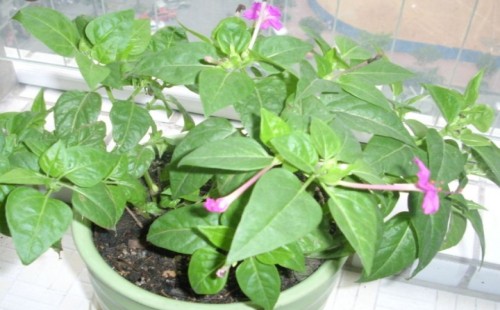
However, the flowering process of the four o'clock flower is rather magical. Although the flower colors are fairly rich, it usually only blooms from evening to early morning. So even when grown as a potted ornamental, you can often only catch a glimpse of its beauty at night. So how do you grow the four o'clock flower in a pot? Because the four o'clock flower has a fairly strong ability to adapt to the environment, its care and management methods are also fairly simple. Below, the editor briefly introduces the cultivation methods for potted four o'clock flowers.
1. Soil
The four o'clock flower is not demanding about soil; you mainly just need to mix the soil according to the standard potting soil formula for ordinary flowering plants. Usually a fertile, loose, breathable and permeable sandy loam rich in humus is enough. Such a soil environment is enough to grow the four o'clock flower well, and even with rough care, no major problems will appear.
2. Light
The four o'clock flower has a certain tolerance for shade and likes to grow in a semi-shaded environment, and in a relatively shady environment it often grows better. As a potted plant, it can usually be placed indoors for care and management, as long as the environment is kept well ventilated and the light is bright. If placed outdoors for care, shade measures should be taken in time when the summer sunlight is too strong, otherwise leaf drop is likely to occur.
3. Temperature
The four o'clock flower prefers a warm growing environment, and usually a temperature environment of around 18°C can fully meet its temperature needs. Seeds are more suitable for germination in a temperature environment between 15°C-20°C. But potted four o'clock flowers have fairly poor cold tolerance, and when the winter temperature is low, the parts of the plant outside the potting soil are prone to withering and dying, so in winter it should be placed in a warm place indoors and good insulation work should be done.
4. Watering
The four o'clock flower prefers a moist growing environment, so water it in time normally to keep the soil often moist; original but you also need to pay attention to air humidity, and when the air environment is fairly dry, you often need to spray more water to maintain moisture. Watering the four o'clock flower on hot days should be done in the morning and evening. Water in an appropriate amount, do not cause waterlogging in the pot, and even more do not let a hot, humid and unventilated condition occur, otherwise it may cause poor growth of the plant.
5. Fertilizing
The four o'clock flower does not need much fertilizer and does not depend on fertilizer. Even if you often forget to apply additional fertilizer, it does not matter; after all, its vitality is fairly strong and its ability to adapt to the environment is fairly strong, and even with rough care, no major problems will usually appear. And the dead leaves of the four o'clock flower falling into the pot can often serve as fairly good fertilizer. During the growing period, you can appropriately apply water-soluble fertilizer to meet the needs of rapid growth.
6. Pests and diseases
The four o'clock flower does not have many natural pests and diseases; it is just that when the weather is too dry it is prone to aphid infestation, and as long as you pay attention to keeping the environment moist, you can often avoid aphid infection. But you also need to avoid an overly hot, humid and unventilated environment, otherwise it may become infected with pathogens and cause disease. As long as the environment is kept well ventilated and the air humidity is suitable, it can often promote plant growth and at the same time also avoid pest and disease infection.