Four-Season Water Management Methods for Chinese Ash Bonsai
Chinese ash (Fraxinus chinensis) grows slowly, has a long lifespan, a beautiful tree form, and gnarled, intertwined roots. It is the finest among landscaping, bonsai, and root-carving varieties, and is hailed as a "living fossil" and the "king of bonsai." In daily water management work, the water regimen for Chinese ash bonsai can be summed up as "heavy watering." Heavy watering: there must be sufficient moisture, and slightly wet is better than dry.
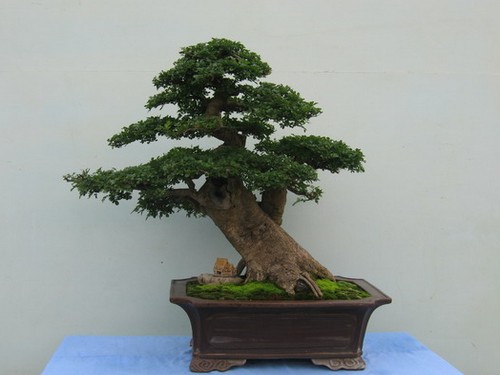
Water more in spring and water more in summer and autumn, and water well with anti-freeze water in winter. In spring, although the plant has already sprouted and grown leaves, the temperature is not high and humidity is high. Water the ground once every five to seven days, and water the foliage once every three days, adjusting flexibly according to the condition of the seedling's leaves and the soil.
In summer, temperatures are high and evaporation is great. This is the peak growing season for Chinese ash. Chinese ash is naturally robust, and likes water and fertilizer, so it needs more watering. Generally, water the ground thoroughly once every three to five days, and water the foliage twice a day. Determine the watering time and amount based on temperature and the tree's vigor. Foliage watering is generally done before 10 a.m. and after 3 p.m., which benefits tree growth.
Autumn is the last growing period for Chinese ash before winter. As the weather gradually turns cooler, the amount of water consumed by the plant also decreases with the influence of seasonal climate changes. Water the foliage once a day.
In winter, the plant gradually enters its dormant period. When the weather is cold, watering should be done in the morning, not easily in the evening, to prevent the soil humidity from being lowered after watering and affecting the nighttime root activity of producing nutrients. Water thoroughly with anti-freeze water before a cold wave arrives.