-
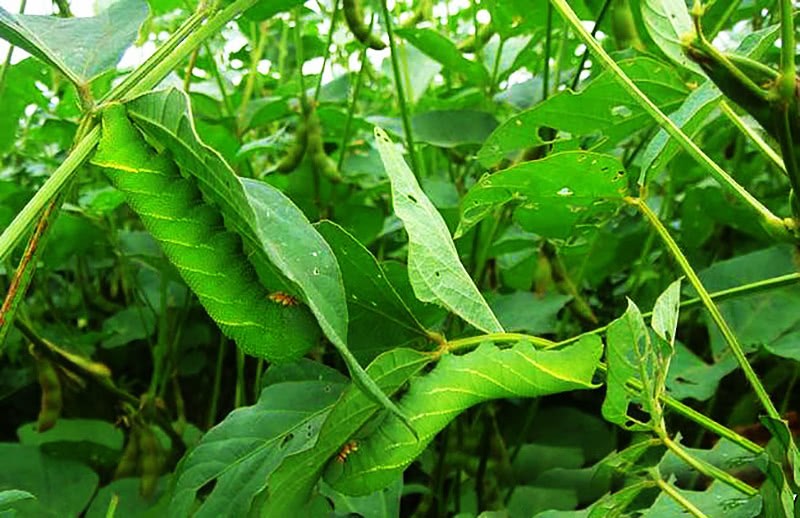
Don't throw away this wild thing found in soybean fields; it's a rare delicacy, and a single bowl can sell for 2000 yuan
In the rural areas of the past, life was not as good as it is now. Back then, rural children basically had no toys, and most of them went out into the wild to pick wild grasses and catch insects to play with, such as green foxtail, cocklebur, longhorn beetles, crickets, etc., ...
-

A Complete Guide to the Control Techniques for the Soybean Pod Borer
Control Techniques for the Soybean Pod Borer
-
Symptom Identification and Control Methods for Soybean Hawk Moth
Symptoms and Control of Soybean Hawk Moth
-
A Complete Guide to the Prevention and Control of Common Soybean Pests and Diseases
Common Soybean Pests and Diseases and Their Control Techniques
-
Detailed Explanation of Key Soybean Oil-Enhancing Cultivation Techniques
Soybeans can be divided into spring soybeans and summer soybeans according to the agroecological conditions of the production area and the planting period. Fertilization and management must consider both their common nutrient requirements and fertilization principles, and be combined with specific local production conditions to suit local conditions. Nutrient requirement characteristics: the flowering and podding stage is the peak period of nutrient absorption. The flowering and podding stage is both the dry matter...
-
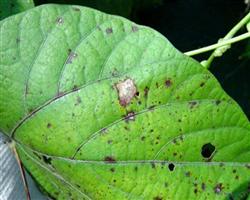
Detailed Explanation of Key Points for the Prevention and Control of Soybean Gray Leaf Spot
1. Symptoms: It mainly damages the leaves of adult plants and also infects seeds, seedlings, stems, and pods. On the cotyledons of seedlings grown from diseased seeds, round brown lesions appear. Later, irregularly shaped lesions may also form. When humid, the central part of the lesions on the underside of the leaves mostly produces a gray mold layer, which is the pathogen's conidia. 2. Control methods: ...
-
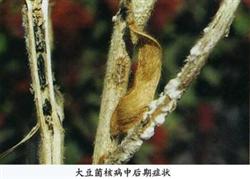
Production Technology for Drought Resistance and Early Maturity Promotion of Soybean During the Summer Hoeing Period
1. Symptoms: When infected at the seedling stage, the stem base turns brown and becomes water-soaked; under high humidity, cottony white mycelium grows; later the diseased part shrivels, turns yellow-brown and dies, and the seedlings lodge and die. Symptoms at the adult plant stage: Infection at the adult plant stage mainly affects the soybean (4458,-23.00,-0.51%) stem, and the upper leaves of plants in the field turn brown and die. Pods...
-
Three-Row Narrow-Furrow Dense Planting Supporting Cultivation Technology for Soybean on Ridges
The three-row narrow-furrow dense planting supporting technology for soybean on ridges is a new soybean cultivation model independently developed by agricultural science and technology personnel in the reclamation area, and it passed the scientific research achievement appraisal of the Inner Mongolia Science and Technology Department in December 2005. On the whole, this technology has reached the advanced level of soybean cultivation technology in similar areas in China, and in terms of mechanized rational dense planting...
-
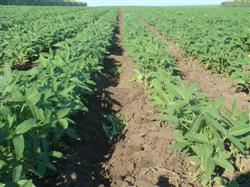
How to Replant Soybeans for Good Results After Seedling Gaps
In soybean production, gaps and missing plants in soybean rows are very common due to land preparation, sowing, climate, seed and other reasons, and are especially serious in some low-lying areas and wasteland. For this reason, adopting a simple and easy replanting method is particularly important. The time is generally between June 6 and 10, that is, aft...
-
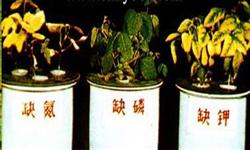
How to identify and remedy soybean nutrient deficiency? The methods explained clearly in one article
1. Nitrogen deficiency When soybeans are deficient in nitrogen, the leaves turn pale green, growth is slow, and the leaves gradually turn yellow. Nitrogen fertilizer should be applied in time as a top dressing, 5 kg to 7.5 kg of urea per mu, or a 1% to 2% urea aqueous solution can be used for foliar spraying, spraying once about every 7 days, for a total of 2 to 3 sprays. 2. Phosphorus deficiency In the early stage, the plant's leaf color...
条件筛选