Production Technology for Drought Resistance and Early Maturity Promotion of Soybean During the Summer Hoeing Period
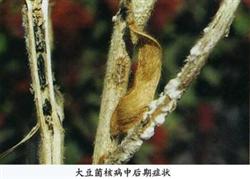
1. Symptoms: When infected at the seedling stage, the stem base turns brown and becomes water-soaked; under high humidity, cottony white mycelium grows; later the diseased part shrivels, turns yellow-brown and dies, and the seedlings lodge and die. Symptoms at the adult plant stage: Infection at the adult plant stage mainly affects the soybean (4458,-23.00,-0.51%) stem, and the upper leaves of plants in the field turn brown and die. Pods...
 I. Replenish water and increase soil moisture to promote seed germination and soybean growth
Actively develop water-saving irrigation and maximize the drought-resistant role of water-saving irrigation facilities. On the one hand, actively tap water sources, drill additional water-replenishment wells, and improve water supply capacity; on the other hand, use water scientifically and save water, and make every effort to fully utilize existing water sources, drought-resistance tools and facilities. Methods such as opening furrows on the ridge top and along the sides of the ridge top, filtering water for irrigation, shallow soil covering, and overnight compaction can be used to take water-replenishment measures as early as possible.
II. Quickly carry out field inspection and reseeding and ensure full stands
After sowing, field inspection should be carried out quickly. Begin checking soil moisture 3-5 days after sowing; for plots with severe moisture loss, take corresponding measures to replenish moisture; before emergence, check bud condition, and for plots with dried buds or spoiled seed, reseed with water in time; after emergence, check seedling condition and insect condition, and for plots with uneven emergence, missing seedlings, gaps in rows, or insect damage, reseed in time with early-maturing varieties or apply chemical control.
1. Reseeding. It is best to reseed with crops of relatively high economic value such as kidney beans, adzuki beans, and black beans. When reseeding with the same crop, early-maturing varieties with a growth period 10-15 days shorter can be selected.
2. For plots sown late where low temperature and drought have caused dried buds or spoiled seed, and for plots with particularly severe missing seedlings that need to be destroyed and replanted, early-maturing varieties or replacement crops should be selected, and decisive destruction and replanting should be adopted, along with dense planting cultivation methods, to fully utilize effective accumulated temperature and increase the yield of the replanted crop.
III. Promptly carry out deep loosening and hoeing to make every effort to resist drought, preserve soil moisture, and promote early maturity
1. Deep loosening in the furrow or one plowing before hoeing. After soybean cotyledons arch through the soil, immediately carry out deep loosening in the furrow to a depth of 20-25 cm. The deep loosening depth is generally 25-30 cm, which can loosen the soil, release cold and increase temperature, promote early and rapid growth of soybean seedlings, and achieve uniform and strong seedlings. At the same time, it enhances the soil's water storage and moisture conservation capacity, can reduce evaporation of water from the soil, and achieves the purpose of drought resistance and moisture conservation. Where there are no conditions for deep loosening, the practice of one plowing before hoeing can also be used.
2. Strengthen intertillage and hilling. For drought resistance and early maturity promotion, early hoeing, early plowing, and early management are very important. Throughout the entire soybean growth period, strive to achieve three hoeings and three plowings. The depth of intertillage should proceed from deep to shallow and then shallower according to root growth conditions, and should be accompanied by intertillage weeding, hilling soil toward the roots and gradually building up soil ridges, so as to improve drought tolerance and lodging resistance. The first pass is carried out from soybean emergence to before the first compound leaf unfolds, with deep plowing after hoeing and no hilling, at a plowing depth of 10-12 cm; the second pass is carried out 7-10 days after the first intertillage, when soybean seedlings are about 10 cm tall, at a plowing depth of 8-10 cm; the third pass is carried out 10-15 days after the second intertillage and should be completed before soybean canopy closure, at a plowing depth of 7-8 cm, with hilling reaching the first compound leaf node. In addition, in the later growth stage of soybean, for weeds not thoroughly removed by hoeing and plowing, pull one pass of large weeds before grass seeds form in early August.
IV. Select safe, economical, and efficient herbicides for timely post-emergence stem and leaf treatment
Weed infestation is a major enemy of soybean production. If not removed in time, it will seriously affect soybean yield. Therefore, for fields where chemical weeding has not been carried out or where pre-emergence soil closed treatment has poor weed control efficacy, at the 2-3 compound leaf stage after soybean emergence and the 2-4 leaf stage of weeds, to control grass weeds, use 5% quizalofop-p-ethyl emulsifiable concentrate 900-1500 ml per hectare, or 15% fluazifop-p-butyl emulsifiable concentrate 750-1000 ml, or 10.8% haloxyfop-R-methyl emulsifiable concentrate 450 ml, or 6.9% fenoxaprop-P-ethyl concentrated emulsion 750-900 ml, or 12.5% sethoxydim emulsifiable concentrate 1250-1500 ml, mixed with 450 kg of water for spraying. To control broadleaf weeds, use 25% fomesafen 1000-1500 ml per hectare, or 24% lactofen emulsifiable concentrate 450 ml, or 24% bentazone aqueous solution 1000-1500 ml, mixed with 450 kg of water for spraying.
V. Apply fertilizer according to seedling condition to accelerate the soybean growth process and promote earlier soybean maturity
Low temperature and continuous drought during the spring sowing stage caused weak early growth of soybean. In order to supplement crop nutrition, promote growth and development, and improve stress resistance, fertilizer should be applied in time. Fertilizer application should be timely and early to prevent nutrient deficiency, especially increasing potassium fertilizer, which can increase crop yield, improve quality, strengthen stalks, resist disease, and promote early maturity. When applying nitrogen fertilizer, the application amount should not be too large, and the application time should not be too late, to prevent excessive vegetative growth and late maturity.
1. Rhizosphere fertilizer application. It should be carried out after the second plowing and before the next plowing, applying 45-75 kg of urea per hectare, and immediately carrying out intertillage and hilling after fertilization.
2. Foliar fertilizer application. Apply once at the beginning of soybean flowering, or apply twice, once at the beginning of flowering and once at the early pod-filling stage, using 10 kg of urea plus 1.5 kg of potassium dihydrogen phosphate per hectare dissolved in 500 kg of water for spraying. Drought-resistant and maturity-promoting nutrient agents mainly composed of fulvic acid, amino acids, etc. may also be sprayed according to local conditions.
VI. Carry out scientific and timely irrigation to ensure high and stable soybean yields
Scientific irrigation at the soybean branching stage, flowering and podding stage, and pod-filling stage is an effective measure to address drought and ensure high soybean yield. Where conditions permit, timely irrigation should be carried out according to the drought situation at the time and the water requirements of soybean growth and development. Vigorously promote water-saving irrigation technologies such as sprinkler irrigation. The general irrigation amounts are: 30 mm from branching to flowering, 30-40 mm from flowering to podding, and 30-35 mm from podding to pod-filling. The sprinkler irrigation intensity should be less than the soil infiltration rate, with the principles of no surface runoff, no damage to soil structure, and no surface crusting, no missed spraying, and a repeat coverage of 100-200 mm.
VII. Strengthen forecasting and forecasting of diseases and insect pests and carry out timely integrated control
In the northern and eastern regions of Heilongjiang Province, continuous cropping and return cropping are relatively common, leading to severe occurrences of diseases and insect pests. Therefore, all localities should do a good job in forecasting and forecasting, make preparations, and timely guide control, so as to ensure improved soybean quality and a bumper harvest.
1. Aphids. When spot and patch occurrence occurs and 5-10% of plants have curled leaves or the rate of aphid-infested plants reaches 50%, the number of aphids per 100 plants reaches more than 1500, and the number of natural enemies is very small, use 35% methidathion emulsifiable concentrate 1000-1500 ml per hectare, or 10% imidacloprid 1500 g, or 22 bags per hectare of Dagongchen, mixed with 450-500 kg of water.
2. Red spider mites. When occurrence is found in the field, use 35% methidathion emulsifiable concentrate 1000-1500 ml per hectare, or 1.8% abamectin preparation or mixed preparation 150 ml, mixed with 450-500 kg of water for spraying.
3. Soybean pod borer. When the pod damage rate of the previous year reaches more than 5%, the control threshold is reached. Use 80% dichlorvos emulsifiable concentrate 1500-2000 ml per hectare to make toxic sticks, place 1 row every 4 ridges and 1 stick every 5 m for fumigation, or use pyrethroid pesticides for conventional spraying.
4. Meadow moth. When meadow moth outbreaks reach 1 insect per plant, pyrethroid pesticides can be used at 225-300 ml per hectare for conventional spraying.
5. Disease control. For fungal diseases such as soybean gray leaf spot and downy mildew, at the early stage of disease occurrence, 70% thiophanate-methyl wettable powder 1000-fold solution or 50% carbendazim suspension concentrate 5000-fold solution can be used for control; for sclerotinia stem rot, at the soybean flowering stage, spray 50% procymidone wettable powder 1500-fold solution on the ridge top surface, and spray once more after an interval of 7-10 days.