Detailed Explanation of Key Soybean Oil-Enhancing Cultivation Techniques
Soybeans can be divided into spring soybeans and summer soybeans according to the agroecological conditions of the production area and the planting period. Fertilization and management must consider both their common nutrient requirements and fertilization principles, and be combined with specific local production conditions to suit local conditions. Nutrient requirement characteristics: the flowering and podding stage is the peak period of nutrient absorption. The flowering and podding stage is both the dry matter...
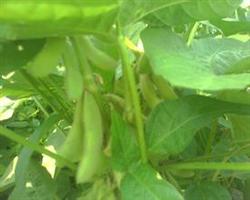 1. Variety selection and seed treatment (1) Select varieties with high oil content, strong resistance to pests and diseases, moderate maturity period, and the ability to fully mature before frost, mainly Kenjiandou No. 25 and Kenjiandou No. 27; (2) After the seeds are carefully selected before sowing, dress the seeds with borax at 0.1-0.3% of the seed amount.
2. Previous crop The best previous crop is corn, followed by wheat. Sugar beet stubble is the most unfavorable for oil formation, and continuous cropping of soybeans is also unfavorable for oil formation, so continuous cropping land should be avoided.
3. Sowing Early sowing at the appropriate time is conducive to increasing oil content. Locally, sowing must be completed before May 10.
4. Fertilization Applying potassium sulfate or potassium sulfate compound fertilizer both supplements potassium and increases sulfur, and can increase soybean oil content.
5. Foliar topdressing At the full flowering stage, aerial foliar spraying by aircraft of sulfur (concentration of 40 mg/kg) and boron (concentration of 200-10000 mg/kg) can increase oil content by 1-2 percentage points. Note that molybdenum and manganese should not be applied; molybdenum and manganese will reduce oil content.
6. Disease and pest control At the end of July and the beginning of August, aerial foliar spraying by aircraft of 2.5% deltamethrin 30 mL/mu to control pod borers and 50% carbendazim 100 g/mu to control gray leaf spot can both increase oil content. These two should be taken as routine measures in high-oil soybean production.
7. Density Dense planting is not conducive to increasing oil content, so density should be appropriately reduced. In this region, Kenjiandou No. 25 and Kenjiandou No. 27 require 280,000-300,000 plants per hectare.
8. Irrigation Where conditions permit, soybeans can be irrigated from the podding stage to the seed-filling stage to help increase oil content.
9. Harvest (1) When soybeans reach the yellow-ripe stage and more than 70% of the leaves have fallen, staged harvesting is conducive to increasing oil content; (2) At harvest, separate harvesting, storage, and sale by variety should be adopted to prevent mixed beans from reducing oil content.