How to identify and remedy soybean nutrient deficiency? The methods explained clearly in one article
1. Nitrogen deficiency When soybeans are deficient in nitrogen, the leaves turn pale green, growth is slow, and the leaves gradually turn yellow. Nitrogen fertilizer should be applied in time as a top dressing, 5 kg to 7.5 kg of urea per mu, or a 1% to 2% urea aqueous solution can be used for foliar spraying, spraying once about every 7 days, for a total of 2 to 3 sprays. 2. Phosphorus deficiency In the early stage, the plant's leaf color...
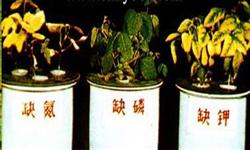
1. Nitrogen deficiency When soybeans are deficient in nitrogen, the leaves turn pale green, growth is slow, and the leaves gradually turn yellow. Nitrogen fertilizer should be applied in time as a top dressing, 5 kg to 7.5 kg of urea per mu, or a 1% to 2% urea aqueous solution can be used for foliar spraying, spraying once about every 7 days, for a total of 2 to 3 sprays.
2. Phosphorus deficiency In the early stage, the plant's leaf color is dark green, and later the veins between the lower leaves lose their green color. The plant is small, the leaves are small and thin, and the stems are hard. The flowering and maturity stages are delayed. Phosphorus fertilizer should be applied in time as a top dressing, 12.5 kg to 17.5 kg of superphosphate per mu, or a 2% to 4% superphosphate aqueous solution can be used for foliar spraying, spraying once about every 7 days, for a total of 2 to 3 sprays.
3. Potassium deficiency Irregular yellow spots appear from the leaf margins of old leaves and gradually expand, while the area near the midvein in the middle of the leaf and other parts remain green. The seeds are often shriveled and deformed. 4 kg to 6 kg of potassium chloride can be applied per mu, or a 0.1% to 0.2% potassium dihydrogen phosphate aqueous solution can be used for foliar spraying, spraying once about every 7 days, for a total of 2 to 3 sprays.
4. Iron deficiency In the early stage, the upper leaves turn yellow and are somewhat curled, while the veins remain green. When iron deficiency is severe, the newly grown leaves, including the veins, turn almost white, and brown spots quickly appear near the leaf margins. The old leaves turn yellow, wither and fall off. A 0.4% to 0.6% ferrous sulfate aqueous solution can be used for foliar spraying.
5. Manganese deficiency When soybeans are deficient in manganese, growth stagnates, pale green to white spots appear between the veins, and finally chlorosis appears, but at this time the veins are still green. A 0.01% to 0.02% manganese sulfate aqueous solution can be used for foliar spraying.
6. Zinc deficiency The young leaves gradually develop chlorosis. Chlorosis begins between the veins and gradually spreads to the entire leaf, and distinct green veins cannot be seen. A 0.1% to 0.2% zinc sulfate aqueous solution can be used for foliar spraying.
7. Boron deficiency Growth slows down, the young leaves turn pale green, the leaves are deformed, and the internodes are shortened. The meristem at the stem tip dies and the plant cannot flower. A 0.1% to 0.2% borax aqueous solution can be used for foliar spraying.
8. Molybdenum deficiency The leaf color is pale yellow, growth is poor, and symptoms of nitrogen deficiency appear. In severe cases, the midvein becomes necrotic. The leaves are deformed. A 0.05% to 0.1% ammonium molybdate aqueous solution can be used for foliar spraying. The specific time for foliar spraying should be after 4 p.m. on a rainless and windless day, and it is sufficient to spray the plant's functional leaves evenly.