-
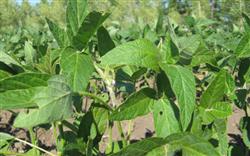
What are the management methods for summer soybean during the flowering and pod-setting stage?
How should summer soybean be managed during the flowering and pod-setting stage? Please provide guidance. During the flowering and pod-setting stage, soybean growth enters a vigorous period, and vegetative growth gradually reaches its peak; this is the period when soybean needs the most fertilizer and water in its entire life cycle. Sufficient fertilizer and water, strong light, and adequate carbon dioxide help promote soybean flowering and pod setting. Soybean yield...
-
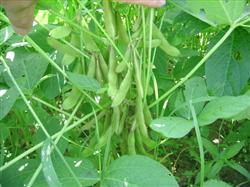
A Complete Guide to Weed Control Methods in Summer Soybean Fields
How to control weeds in summer soybean? Please provide methods. After summer soybean sowing, soil and climatic conditions favor weed germination and growth, and if chemical control is not carried out in time, it can easily lead to a weed infestation. In production, herbicides should be applied early for control based on the weed occurrence characteristics in summer soybean fields and the properties of the herbicides. Soil-incorporated treatment: after land preparation,...
-
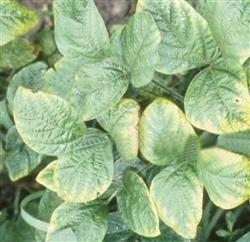
What symptoms appear when soybeans are deficient in boron and molybdenum?
What happens when soybeans are deficient in boron and molybdenum? Here is an introduction. Soybean boron deficiency: it causes leaves to become dark green and thickened, internodes to shorten, stunting, and clustered leaves to form. Flower buds turn white or light brown, and tissues become necrotic. In severe cases, scorch-like necrotic spots form along the leaf veins. Soybean molybdenum deficiency: the leaf color between the veins becomes paler and turns yellow, ...
-
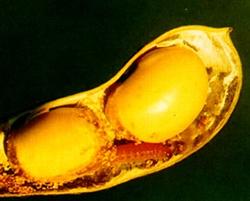
What Is the Soybean Pod Borer? A Detailed Guide to Soybean Cultivation and Control Methods
What is the soybean pod borer? How do you control it? Here is an introduction. The soybean pod borer, also known as the small red worm, belongs to the family Olethreutidae in the order Lepidoptera, and is commonly called the soybean pod-boring moth. The soybean pod borer larva has 4 instars in total; when newly hatched it is pale yellow, and after entering the pod and molting it turns milky white. The final-instar larva is 8 to 10 mm long, and when fully mature it turns red...
-
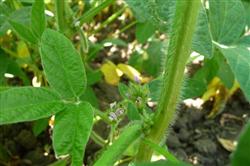
Soybean Cultivation: How to Manage Soybeans During the Flowering and Podding Stage?
How to manage soybeans during the flowering and podding stage? Please introduce the methods. During the flowering and podding stage of soybeans, the main goal is to achieve more flowers, earlier flowers, and uniform flowering, and to prevent flower and pod drop while increasing flowers and pods. This is the central task of management during this period. Manage according to the seedlings, combining preservation and control. For high-yield fields, control should be the main approach, avoiding ridge closure too early, and reaching...
-
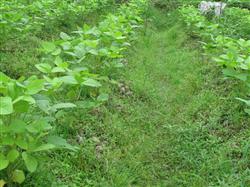
How can weeds be effectively controlled during soybean cultivation?
How do you control weeds when growing soybeans? The main weeds in soybean cultivation include monocotyledonous weeds such as crabgrass, barnyardgrass, goosegrass, lambsquarters, and foxtail; broadleaf weeds include redroot pigweed, eclipta, copperleaf, and velvetleaf. Summer soybeans are usually sown in June, during the hot and rainy season, when weeds emerge aggressively, at high density, grow vigorously, and are diverse in species, easily forming a weed infestation. Generally, weeds begin to emerge 5 days after soybean sowing, and the entire weed emergence period lasts about 60 days, which is extremely unfavorable for high soybean yields. For this reason, accurately mastering chemical weed control techniques is crucial.
-
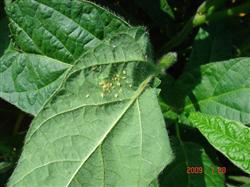
How to control soybean aphids? Growers, master these methods
How to control aphids when growing soybeans? Please provide methods. The soybean aphid is an important pest damaging soybeans. In recent years, due to the occurrence of warm winters and neglect of control, soybean aphid damage has worsened year by year. According to forecasts, soybean aphids will occur at a moderate-to-heavy level in 2000. For this reason, we have preliminarily studied their occurrence patterns and...
-
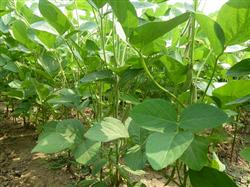
What is the role of pinching in soybean cultivation?
What is the use of pinching soybeans? Can any readers help explain? Reasons for pinching soybeans: If soil fertility is too high, water and fertilizer conditions are sufficient, or if there is abundant rain in the late growth period, soybeans are prone to excessive vegetative growth. This is especially prominent in varieties with indeterminate podding habit and in intercropped and relay-cropped soybeans. Once soybeans develop excessive vegetative growth...
-
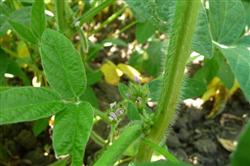
What are the causes of flower and pod drop in soybean cultivation?
Causes of flower and pod drop in soybean? Please provide an introduction and guidance on control methods. The main factors for flower and pod drop in soybean are: 1. Poor ventilation and light penetration; due to excessive planting density and poor planting techniques, excessive vegetative growth occurs, rows close too early, and light conditions in the lower part of the plant deteriorate, causing leaves to yellow and drop, reducing nutrient production and accumulation...
-
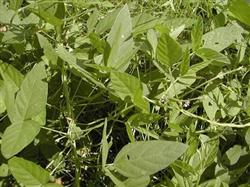
What causes many empty pods in soybean cultivation?
Why do soybeans have many empty pods? Please explain the reasons. The main factors for many empty pods in soybeans are: 1. Variety differences: early and mid-maturing varieties generally flower and set pods well, while among late-maturing varieties, some soybeans sown relatively late show flowering without pods or empty pods and shriveled seeds. This is because during the flowering and pod-setting period of soybeans, they encounter sustained high temperature and drought from late July to early-to-mid August, with temperatures reaching as high as 38-40°C.
条件筛选