How to Replant Soybeans for Good Results After Seedling Gaps
In soybean production, gaps and missing plants in soybean rows are very common due to land preparation, sowing, climate, seed and other reasons, and are especially serious in some low-lying areas and wasteland. For this reason, adopting a simple and easy replanting method is particularly important. The time is generally between June 6 and 10, that is, aft...
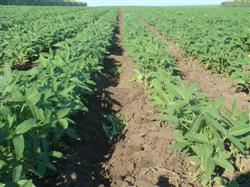
In soybean production, gaps and missing plants in soybean rows are very common due to land preparation, sowing, climate, seed and other reasons, and are especially serious in some low-lying areas and wasteland. For this reason, adopting a simple and easy replanting method is particularly important. The time is generally between June 6 and 10, that is, after the first hoeing of the soybeans and before the first ridging. Soybeans replanted at this time can have 90 growing days from emergence on June 20 to the first frost around September 20.
Variety For replanting soybeans, extra-early-maturing soybean varieties are generally used. Such as Beifeng No. 1 (96 days), Neidou No. 4 (90 days), Heihe No. 14 (90 days), Beijiang No. 1 (85-90 days) and Dongnong No. 41 (85 days).
Method Use a duckbill-type fertilizer applicator, adjust it to sow 5-7 seeds per hole, and one person can complete the work. The sowing requirement is one hole every 20 cm on 60 cm ridges, about 5500 holes per mu on average, with a seeding rate of 90 kg per hectare.
Precautions This technique is only suitable for general production fields and cannot be applied to seed fields.