-
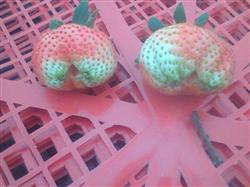
What are the methods for preventing and controlling deformed strawberries in greenhouses?
Using greenhouse cultivation is a good way to increase strawberry yields and income. However, because greenhouse cultivation is highly technical, especially during winter and early spring, when temperatures are low, light is weak, and the climate is changeable, improper management often leads to many abnormal fruits that are too thin, too fat, curved, flat in shape, or uneven on the surface...
-
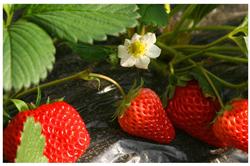
Detailed Explanation of Key Techniques for Protected Cultivation of Strawberries
Strawberry is a berry plant commonly cultivated around the world. It is rich in nutrients, with juicy, sweet-and-sour, tasty fruit. It propagates easily and delivers quick returns; with certain measures, planting in the same year can bear fruit in the same year. Like cucumbers, tomatoes and other vegetables, strawberry varieties with different ripening periods can be reasonably combined in planting or...
-
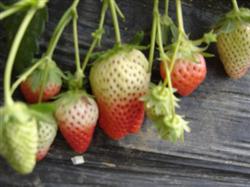
Field management of strawberries must be strengthened after harvest
After the strawberry berries are harvested, the plants enter a stage of vigorous growth, with a large number of runners developing, new crown branches growing faster, and new young plants forming, which is the second peak period of vegetative growth for the year. Afterwards, as the temperature gradually rises, growth begins to slow down, and around the beginning of autumn, flower bud differentiation begins and then the plants shift into the reproductive growth stage...
-
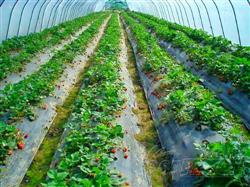
Detailed Explanation of Pollution-Free Cultivation Techniques for Strawberries in Plastic Greenhouses
(1) Variety selection: Choose varieties with early flower bud differentiation, shallow dormancy, and good cold resistance in low-temperature seasons, such as Chunxiang, Fengxiang, Lihong, Mingbao, Jingbao, Nyoho, and Hokowase. (2) Cultivating strong seedlings: 1. Carefully select mother plants. In March-April of the current year, select plants from the strawberry production greenhouse with vigorous growth, good inflorescence fruiting, few deformed fruits, well-developed root systems, and no pests or diseases as mother plants. Plant them in a dedicated seedling nursery to cultivate and propagate runner seedlings. Apply 2000-3000 kg of organic fertilizer and 10 kg of compound fertilizer per mu in the nursery. Make beds 2 m wide, with a planting row spacing of 1 m and a plant spacing of 0.3-0.4 m. After they establish, apply nitrogen fertilizer as early as possible, keep the soil moist, and remove all inflorescences that appear to promote runner growth.
-
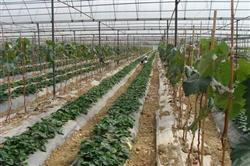
Intercropping strawberries has high economic returns and is a planting model worth trying
1. Intercropping in greenhouse strawberry fields: Fengxiang or Mingbao strawberries are planted by early September. Before the cold wave arrives from late October to early November, greenhouse film is covered. In winter, straw curtains are added outside, and plastic film plus small tunnels are used inside. Other management is the same as for greenhouse strawberries. On November 20, tomato and bell pepper seedlings are raised, and all seedlings are sold before April 20 of the following year. On March 5...
-
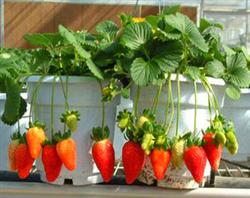
Strawberry Container Cultivation Techniques and Management Methods
Strawberry is a perennial herbaceous plant of the genus Fragaria in the rose family (Rosaceae). Its flowers are white and its fruit red, the plant is short, with leaves growing in clusters, and green leaves set off the red fruit as it creeps along the ground, full of charm. In warm-climate regions it does not shed its leaves in winter, and its flowering and fruiting period is long; from November to May of the following year it has both flowers and fruit, and it can be used to arrange flower beds and flower borders. When the fruit of a potted strawberry is bright red...
-

Detailed Explanation of Strawberry Growth Characteristics and Cultivation Techniques
Growth Characteristics and Cultivation Techniques of Strawberry The strawberry originates from South America, has a short growth cycle and relatively high yield, and is widely cultivated in China. Because of its good taste, high nutritional value and health benefits, strawberries are favored by people, leading...
-
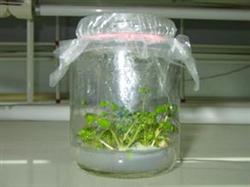
What are the cultivation characteristics of virus-free strawberry plants?
Production and application practice has proven that virus-free strawberries not only grow vigorously with uniform, consistent plants, but also show significantly improved yield and quality. Compared with virus-carrying plants, virus-free plants show a 17.7%-46.2% increase in plant height, 2.6%-17.2% in leaf area, 14.5%-41.9% in petiole length, 26.7%-89.5% more runners, and 7.8%-4...
-
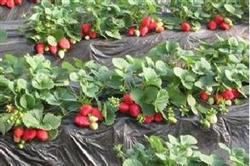
Correct Methods for Applying Bio-Organic Fertilizer to Strawberries
Strawberries are plants grown for their fruit, which is bright red and showy, tender and juicy, sweet and sour to the taste, and high in nutritional value. They are cultivated in China from Heilongjiang in the north to Guangdong in the south, and from Shanghai in the east to ** in the west. Over the course of a year, as the seasons change, the physiological functions of each organ of the strawberry plant also undergo regular changes; these are generally divided into...
-
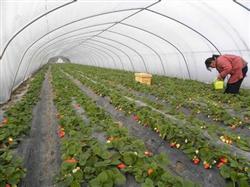
Simple, Easy-to-Learn and Efficient High-Yield Cultivation Techniques for Greenhouse Strawberries
In recent years, with the rapid development of strawberry cultivation, many farmers have not fully mastered strawberry cultivation and management techniques. Continuous cropping and repeated cropping often cause a series of problems such as major outbreaks of certain strawberry diseases, worsening soil-borne diseases, nutrient imbalance and physiological disorders; in strawberry production, slow development after seedling transplanting or excessive seedling growth...
条件筛选