Detailed Explanation of Key Techniques for Protected Cultivation of Strawberries
Strawberry is a berry plant commonly cultivated around the world. It is rich in nutrients, with juicy, sweet-and-sour, tasty fruit. It propagates easily and delivers quick returns; with certain measures, planting in the same year can bear fruit in the same year. Like cucumbers, tomatoes and other vegetables, strawberry varieties with different ripening periods can be reasonably combined in planting or...
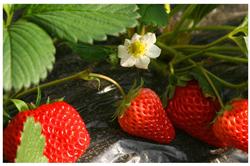
Strawberry is a berry plant commonly cultivated around the world. It is rich in nutrients, with juicy, sweet-and-sour, tasty fruit. It propagates easily and delivers quick returns; with certain measures, planting in the same year can bear fruit in the same year.
Like cucumbers, tomatoes and other vegetables, strawberry varieties with different ripening periods, when reasonably combined in planting or cultivated with different protective measures, can enable strawberry fruit to ripen at different times, extend the fresh fruit supply period, and also raise strawberry yield per unit area, generally increasing yield by more than 30%, with the highest increase reaching more than double. Not only that, adopting protected cultivation of strawberries will use land more economically, raise land labor productivity, and deliver very considerable economic and social benefits.
I. Crop Rotation Arrangement
The fruit ripening periods of different strawberry varieties differ, and the crop rotation arrangements for sunlight greenhouse strawberry production also differ. For planting a single-season variety, the rotation arrangement is strawberry as the previous crop and vegetables as the following crop, with fruit vegetables such as tomatoes, cucumbers and green beans being better vegetable choices. In the Dandong area, strawberries are generally planted from late September to early October, tomatoes are planted on the strawberry bed ridges in mid-February, strawberries begin to ripen in mid-March, the strawberry harvest ends in mid-April, tomatoes begin to come to market in late May and finish at the end of July, the land is left fallow for 1-2 months, and after artificial fertilization to build soil fertility, the next year's production cycle is carried out. For planting multi-season ripening strawberry varieties, generally each year is one production cycle spanning two years. Planting the Spanish strawberry variety Tudla, planting is from late September to early October, ripening occurs in early February, it ends at the end of June, the land is left fallow for 2-3 months, artificial fertilization to build soil fertility is carried out, and then the next year's production cycle proceeds.
II. Variety Selection
1. Mingxing-type varieties: American variety, plants grow relatively vigorously, spreading, branching ability relatively weak, leaves relatively large. The average single weight of the first-grade order fruit is 23 grams. It is a single-season variety, relatively strong in disease resistance and stress resistance, high-yielding, generally 1500-2000 kg per mu.
2. Honeoye: American variety, plants grow robustly, branching medium, leaves medium to large. The average single fruit weight of the first-grade order fruit is 25.2 grams. The flesh is slightly firm and fine-textured, suitable for transport and processing. This variety is disease-resistant and has good high-yield performance, generally about 2000 kg per mu.
3. Gorella: Dutch variety, plants upright and compact, branching ability medium, leaves elliptical. The average single fruit weight of the first-grade order fruit is 24 grams. The fruit is red, relatively firm, and the pith is relatively hollow. The plant is cold-resistant and disease-resistant. It is a single-season variety, high-yielding, generally 2000 kg per mu.
4. Hokowase: Japanese variety, plant growth is spreading, branching ability medium. The average single fruit weight of the first-grade order fruit is 17.2 grams, the skin is thin and not tolerant of storage and transport, the flavor is sweet and fragrant, and the quality is excellent. It is a single-season variety. The dormancy period is short, suitable for open-field and protected cultivation, generally 1000-1500 kg per mu.
5. Harunoka: Japanese variety, plants upright, branching ability medium, leaves relatively large, the average fruit weight of the first-grade order fruit is 17.8 grams, the juice is red, the taste is sweet and fragrant, and the quality is excellent. It is a single-season variety, with a short dormancy period, suitable for protected cultivation, generally 1500 kg per mu.
6. Changhong: Chinese variety, plant growth is medium, plant posture is spreading. The average single fruit weight of the first-grade order fruit is 18 grams. This variety is cold-resistant and disease-resistant, relatively high-yielding, and each crop of fruit ripens relatively concentratedly. It is a relatively ideal four-season variety suitable for commercial production, generally 1500-1800 kg per mu.
7. Tudla (TODLA): Spanish variety, plants upright, reproductive capacity medium, the average single fruit weight of the first-grade order fruit is 33 grams. The plant has relatively strong stress resistance, is disease-resistant, and high-yielding. It is currently the strawberry variety with the shortest dormancy period; under protected cultivation this variety ripens earliest, and under normal conditions can be harvested in January. It belongs to the multi-season varieties; greenhouse cultivation can successively produce 4-5 inflorescences, forming multiple fruit production periods, with continuous fruiting for 2-3 months, or 4 months under suitable conditions, generally 3000 kg per mu, with a maximum of 5000 kg per mu.
8. Kalt No. 1: Spanish variety, plants spreading, plants large. Growth vigor is strong, reproductive capacity weak. The average single fruit weight of the first-grade order fruit is 30 grams. The mouthfeel is delicate, the fragrance is rich, sweet and sour are palatable, and the quality is extremely excellent. The plant has strong resistance, a relatively long dormancy period, and is suitable for open-field and cold-frame cultivation, generally 2500-3000 kg per mu.
III. Seedling Cultivation
In strawberry production, the method mainly used for seedling cultivation is to select plantlets formed by runners and separate them from the mother plant to form new strawberry seedlings.
Mother plant management should focus on saving nutrients so as to promote the emergence of runners and cultivate robust daughter plants. Remove the mother plant's inflorescences; after the mother plant survives, any inflorescences produced should be removed promptly to accumulate nutrients and raise the seedling propagation rate. When the mother plant produces runners, the runners should be guided and pressed down promptly, and the produced runners should be guided toward bed surfaces with growth space; when the runners produce young leaves, use a small amount of fine soil at the front end to press them toward the ground, leaving the growing point exposed, to promote rooting. After entering August, when the runner daughter plants cover the bed surface, pinching should be adopted to promptly remove excess runners and control the number of growths. Generally each mother plant retains 5-6 runner plantlets, and excess runners are removed before they take root; by September-October, robust seedlings can be cultivated.
IV. Planting
1. Land preparation: prepare the land one week before planting, apply about 4000-5000 kg of high-quality farmyard manure per mu, deep plow 30 cm, level, and harrow fine; according to the planting density, raise ridges and make beds. Generally the bed height is 10-15 cm, the ridge bed surface width is 60-70 cm, the ridge bed spacing is 20-30 cm, and the ridge bed direction is consistent with the greenhouse orientation.
2. Planting Time
The planting time for sunlight greenhouse strawberry cultivation is determined by the seedlings and local temperature conditions. Generally seedlings can be planted before flower bud differentiation forms flower buds or after flower buds have formed. However, before low temperatures arrive, newly planted strawberries must be able to resume normal development. In the Dandong area, planting from September 10 to mid-October is preferable; secondarily, planting from mid-to-late July before strawberry flower bud differentiation is also possible.
3. Planting Density
Adopt wide and narrow row (or double row) planting. Usually on prepared ridge beds, plant double rows with a distance of 35-45 cm, hill spacing of 25-30 cm, planting 4000-4500 hills per mu, with 2-3 plants per hill. If planting single plants, plant spacing is 13-17 cm, using 8000-10000 seedlings per mu.
4. Planting Method
First, cover the ridge beds with plastic film along the beds and press the edges tightly, then punch holes in the plastic film on the ridge beds according to planting density, dig holes, and when planting seedlings, place the arched back side of the seedling facing outward so that the inflorescences are positioned on both sides of the bed. Then spread the seedling roots, add fine soil, and plant the seedlings; the base of the new stem of the seedling should be level with the bed surface. It is also possible to plant directly on the ridge beds without covering with plastic film.
V. Management After Planting
1. Soil Management
After strawberries are planted, the main management content is soil moisture. Because the indoor temperature is high, the soil moisture transpiration coefficient is large, and the air humidity is high, irrigation is generally carried out in the evening. Irrigation in the greenhouse should be thorough at one time; do not water frequently or sprinkle water, thereby regulating excessively high air humidity. After strawberries are planted, weeds can simply be removed promptly when found.
2. Plant Management
After strawberries survive planting, plant management mainly includes three contents:
First, removing runners. Promptly remove runners produced by the plants, removing them as soon as they appear, and remove them in a concentrated way outside the greenhouse for destruction. Second, removing dead leaves and weak buds. After strawberries survive, leaves continuously age, photosynthesis weakens, and diseased leaves appear; therefore, during the growing season, old yellow leaves, diseased leaves and weak lateral buds growing on the plants must be continuously removed to save nutrients and concentrate nutrients for fruit production. Third, thinning flower buds. Thin excess flower buds before flowering. Large-fruit varieties retain grade 1 and 2 order flower buds; medium- and small-fruit varieties retain grade 1, 2 and 3 order flower buds.
3. Temperature Regulation
Sunlight greenhouses raise room temperature by covering with plastic; because climate conditions differ among regions, the time for covering with film also differs. In the Dandong area, mid-November, before freezing, is the suitable time to install the film. After the sunlight greenhouse is covered with film, the temperature rises rapidly; at the initial stage, the highest temperature should not exceed 25°C, and when the temperature is higher, ventilation openings should be opened to cool it down. At night the temperature drops; it is preferable to keep the lowest temperature above 5°C. When the temperature continues to drop, insulation measures such as adding paper quilts or straw curtains over the plastic film should be adopted. In special years with low-temperature climate conditions, a brick fire wall can be built against the back wall of the greenhouse, and a stove can be lit for heating. After strawberries grow, the greenhouse temperature control indicators are: nighttime temperature above 2°C, daytime temperature below 30°C; during the flowering period, nighttime temperature above 7°C, daytime temperature 20-26°C.
4. Auxiliary Pollination During Flowering
Although strawberries set fruit by self-pollination, due to multiple factors such as high air humidity in the sunlight greenhouse, large temperature fluctuations, small ventilation volume, and few insects, pollination and fertilization of strawberries are unfavorable. Without auxiliary pollination, the fruit is small and deformed fruit increases; with auxiliary pollination, the fruit becomes larger, the fruit shape is uniform, and the yield is obviously increased. In the greenhouse, two methods can be adopted for auxiliary pollination of strawberries: first, placing bees in the greenhouse to have insects pollinate, which has the characteristics of saving labor and uniform pollination. Generally, two boxes of bees per mu of greenhouse are sufficient. Second, manual spot pollination, using a writing brush or cigarette paper tip for spot pollination.
VI. Harvesting, Packaging, Transport and Marketing
Harvesting: About 30 days after strawberry flowering, when the fruit color turns red, the berries are ripe. When picking, hold the fruit stalk with the hand and pull it off with force; pick once every 1-2 days, and each harvest should thoroughly pick all suitably ripe fruit. When harvesting, pick and place gently, and remove deformed fruit at any time. Grade and package diseased and insect-damaged fruit.
Packaging: Choose plastic (hard cardboard or thin wood) boxes 50-70 cm long, 30-40 cm wide and 15-20 cm high, line the boxes with soft paper or plastic foam, gently place the fruit into the boxes, arrange them neatly in the same direction, and make the fruit stalks of the upper layer sit among the fruit of the lower layer. Place large fruit in 3-5 layers; place small fruit in 5-7 layers, seal the lid at a fixed quantity, tie on labels, and indicate origin, variety, grade and quantity.
Transport: Use refrigerated trucks or trucks with canopies, spread straw curtains on the truck bed, place the fruit boxes tightly against one another, arrange one layer, cover with paper, then arrange the second layer crosswise, load to 3-5 layers, and add a protective cover on the topmost fruit boxes and seal the truck.
Storage: The temporary storage warehouse should be ventilated, cool and clean. Under conditions of 3-4°C, it can be stored for 2-3 days. For quick-freezing and cold storage, choose fruit with uniform shape and size, remove the calyx, wash clean with clear water, then place in a 2% potassium permanganate solution for disinfection, afterward rinse again with clear water, drain, and put into plastic boxes (bags), 5-10 kg per box, send into a quick-freezing room and quick-freeze for 5-7 hours in a freezing room at 25°C-30°C, then place in -18°C cold storage.