What are the cultivation characteristics of virus-free strawberry plants?
Production and application practice has proven that virus-free strawberries not only grow vigorously with uniform, consistent plants, but also show significantly improved yield and quality. Compared with virus-carrying plants, virus-free plants show a 17.7%-46.2% increase in plant height, 2.6%-17.2% in leaf area, 14.5%-41.9% in petiole length, 26.7%-89.5% more runners, and 7.8%-4...
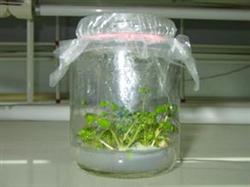
Production and application practice has proven that virus-free strawberries not only grow vigorously with uniform, consistent plants, but also show significantly improved yield and quality. Compared with virus-carrying plants, virus-free plants show a 17.7%-46.2% increase in plant height, 2.6%-17.2% in leaf area, 14.5%-41.9% in petiole length, 26.7%-89.5% more runners, 7.8%-45.1% in harvest yield, 8.7%-18.6% more fruits, 0.67%-24.1% in single fruit weight, and 3.8%-8.3% in soluble solids content. The growth characteristics of virus-free plants differ from those of ordinary plants, so cultivation practices should be adjusted accordingly to bring out the yield-increasing and quality-improving effects of virus-free plants.
(1) Virus-free plants have vigorous vegetative growth and very strong nutrient uptake. During the temporary planting and seedling-raising period, topdressing before the flower bud differentiation stage should be avoided, so as not to delay flower bud differentiation. Measures such as root cutting and removal of old leaves can be used to regulate the carbon-to-nitrogen ratio in the plant, which can advance the flower bud differentiation stage.
(2) Virus-free plants are thicker and taller. Under conditions of relatively large fertilizer application, they tolerate higher fertilizer concentrations better than virus-carrying plants. However, excessive fertilization should still be avoided in production fields, so as not to cause excessive plant vigor that affects fruit set. Compared with virus-carrying plants, virus-free plants should be planted at appropriately wider spacing.
(3) Virus-free plants tend to flower later, and their initial harvest period is correspondingly delayed, but their early yield and total yield are still higher than those of the control. Because the number of fruits set per inflorescence increases, the average yield per fruit decreases somewhat, so moderate flower and fruit thinning should be considered to promote fruit enlargement. When growth is excessively vigorous, gray mold and leaf blight are likely to occur, so old and diseased leaves should be removed early and pests and diseases controlled promptly; when cultivating in protected facilities, attention should also be paid to ventilation inside the greenhouse.
(4) The speed at which virus-free plants become reinfected during production varies depending on the production site and cultivation management methods. In places with a small production scale where aphids are controlled regularly, plants may still remain virus-free after 2 years of cultivation, and by the third year may only be mildly infected; in large-scale production sites, reinfection often occurs within a short period. Generally, new virus-free mother plants must be used every 2-3 years to propagate seedlings for production, and the original production seedlings should no longer be reused.