Correct Methods for Applying Bio-Organic Fertilizer to Strawberries
Strawberries are plants grown for their fruit, which is bright red and showy, tender and juicy, sweet and sour to the taste, and high in nutritional value. They are cultivated in China from Heilongjiang in the north to Guangdong in the south, and from Shanghai in the east to ** in the west. Over the course of a year, as the seasons change, the physiological functions of each organ of the strawberry plant also undergo regular changes; these are generally divided into...
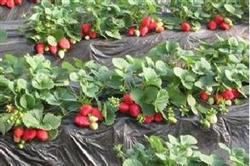
Strawberries are plants grown for their fruit, which is bright red and showy, tender and juicy, sweet and sour to the taste, and high in nutritional value. They are cultivated in China from Heilongjiang in the north to Guangdong in the south, and from Shanghai in the east to ** in the west. Over the course of a year, as the seasons change, the physiological functions of each organ of the strawberry plant also undergo regular changes; these are generally divided into five stages: the initial growth period, the flowering and fruiting period, the vigorous growth period, the flower bud differentiation period, and the dormant period.
The strawberry root system consists of fibrous roots and is shallowly distributed, with 70% of the roots distributed in the top 20 cm of soil. Strawberries are water-loving and fertilizer-loving crops, requiring sandy loam soil with strong fertilizer and water retention capacity, good aeration, and a loose texture. Fertilization must be rational throughout the entire growth period to ensure robust plant growth, abundant flowering, high fruit set, good fruit flavor, and high yield. Strong seedlings are the foundation of high quality, high yield, and high efficiency. Strong seedlings accumulate more nutrients in their tissues, have well-developed root systems, establish quickly after planting, and produce numerous plump flower buds, enabling them to bear large and abundant fruit. Applying sufficient basal fertilizer is the basic condition for strong strawberry seedlings. Choose loam plots that contain rich organic matter and various minerals and whose previous crop was not tomato, potato, eggplant, pepper, sugar beet, pea, or similar crops. Before planting, prepare the land and make beds, deep plowing the soil 30-40 cm, and apply sufficient basal fertilizer while deep plowing. Generally, apply 200 kg of bio-organic fertilizer per mu, combined with 10 kg of urea, 20-25 kg of superphosphate, and 10 kg of potassium sulfate. On the basis of sufficient basal fertilizer, in the north, apply 20 kg of bio-organic fertilizer per mu as a top dressing after strawberries are planted or have established, to promote root growth. In the Jiangsu-Zhejiang area, apply one top dressing after planting, applying 20 kg of bio-organic fertilizer per mu in mid-November or early December. In strawberry fields where sufficient basal fertilizer was not applied, three top dressings should be carried out. The first is applied before spring budbreak, generally 30 kg of bio-organic fertilizer per mu, to promote regreening growth and inflorescence development. The second is applied before flowering, 20 kg of bio-organic fertilizer per mu, to meet the nutritional demands of accelerated plant growth and flowering and fruiting. The third is applied after fruit harvest, 40 kg of bio-organic fertilizer per mu, to replenish the depletion of soil nutrients, restore the plant's growth vigor, allow the plant to undergo a second vegetative growth phase, and promote flower bud differentiation.