-
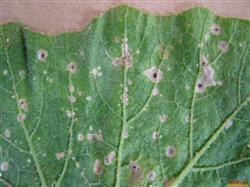
How to prevent and control pumpkin leaf spot disease when growing pumpkins?
What controls pumpkin leaf spot disease? What is pumpkin leaf spot disease? Please provide an introduction. Pumpkin leaf spot disease mainly damages the leaves and the flower axis. Leaf spots are circular to nearly circular or irregular in shape. The leaf margin is dark brown, the boundary between diseased and healthy tissue is distinct, and there are small black dots in the center of the lesion. In severe cases, the leaf spots merge, causing localized death of the leaves. The flower axis...
-
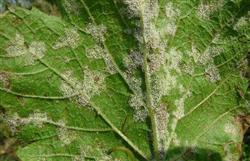
How do you prevent and control Phytophthora blight in pumpkin cultivation?
How do you prevent and control Phytophthora blight in pumpkins? Why does pumpkin Phytophthora blight occur? Please explain that pumpkin Phytophthora blight is mainly more severe in spring pumpkins, especially in rainy years with poor drainage, often causing large areas of rotten pumpkins. Besides harming pumpkins, this disease can also harm cucumbers, bottle gourds, watermelons, etc., and often occurs mixed with Fusarium wilt....
-
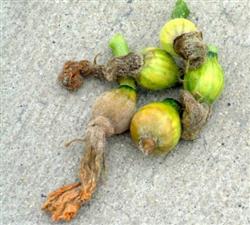
How to prevent and control gray mold in pumpkins? Practical methods explained clearly in one article
How is gray mold in pumpkins prevented and controlled? Why does gray mold occur? Please explain: gray mold in pumpkins mainly occurs on the fruit. Affected fruit usually begins to rot from spent flowers and grows a light grayish-brown mold layer, then spreads to the young fruit, first at the tip of the pumpkin and then upward, causing the young fruit to soften and rot. Affected...
-
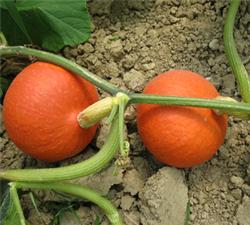
High-Quality New Pumpkin Varieties and Key Points of Spring Cultivation Techniques
Pumpkin is a nutritious and healthy vegetable, and the Western pumpkin (Cucurbita maxima) introduced from abroad has low fruit water content, high solids, high levels of non-reducing sugars and starch, a starch-to-total-sugar ratio exceeding 1, low crude fiber and high crude protein, so its eating quality and mouthfeel are excellent, and its quality greatly surpasses that of domestic local pumpkins, making it deeply...
-
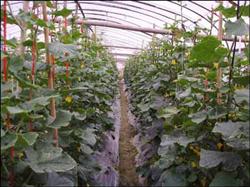
Key Techniques for Spring Greenhouse Cultivation of Winter Squash (Western Pumpkin)
1. Varieties: At present there are many varieties of Western pumpkin. According to the results of comparative trials of introduced varieties at our institute, the "Dongsheng" and "Yipin" selected by Taiwan Nung You Seed Co., Ltd.; and the "Juhong" series and "Lübao" selected by Jiangsu Chia Tai Seed Co., Ltd. of Thailand's Chia Tai Group "...
-
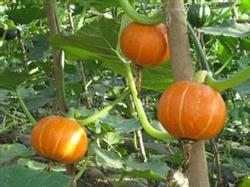
Key Cultivation Techniques for Western Pumpkin in Spring Greenhouses
Pumpkin is a nutritious and healthy vegetable, and the Western pumpkin introduced from abroad is deeply loved by consumers because its fruit has low water content, high solids, high non-reducing sugars and starch, a starch/total sugar ratio exceeding 1, low crude fiber, and high crude protein, giving it excellent taste and mouthfeel, with quality far surpassing domestic local pumpkins...
-
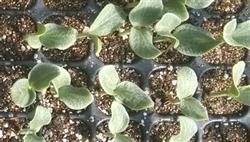
Detailed Guide to Early-Maturing Spring Cultivation Techniques for Japanese Pumpkin
Japanese pumpkin, also known as Western pumpkin, is a new type of vegetable pumpkin introduced in recent years from Japan, South Korea and other places as a high-quality pumpkin. This pumpkin has firm, fine flesh that is sticky or mealy, with excellent flavor, and the fruit is relatively small; when harvested as a vegetable, a single fruit generally weighs 1 kg. It is early-maturing with stable fruit set...
-
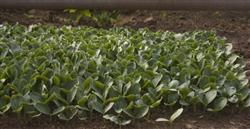
Key Technical Points for Raising Seedlings of Pumpkin in Solar Greenhouses with Vertical Trellis Cultivation for the Winter-Spring Crop
①Determining the sowing date The sowing date is mainly determined by the heat retention of the solar greenhouse. A solar greenhouse with good light transmission and good heat retention can be sown and raised as seedlings in late November. The melons are harvested in mid-March of the following year. Otherwise, the sowing date can be postponed to January of the following year. With the above-mentioned solar greenhouse, sowing and seedling raising are generally carried out from late December to early January of the following year...
-
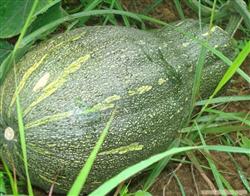
Key Points of Spring Cultivation Techniques for Honey Pumpkin
Honey pumpkin plants grow as vines. A single fruit weighs 2-3 kg, the fruit is about 36 cm long with a transverse diameter of 14.5 cm. The fruit is club-shaped, and when ripe it is orange-yellow with thick, orange-red flesh, fine-textured starch, and a sweet taste and excellent quality. It is early to mid-maturing, and can be harvested 85-90 days after transplanting. Spring planting is from January to March, autumn planting from July to August, with a yield of 2000 kg per mu....
-
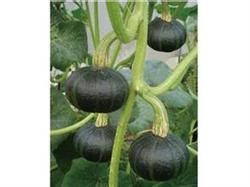
Detailed Explanation of Key Techniques for Spring Cultivation of Mini Pumpkins
Mini pumpkin is a first-generation hybrid bred by the Suzhou Vegetable Research Institute, a variety specifically for protected cultivation, with medium growth vigor, dark green leaves, vines 2.0-2.5m long, short internodes, medium branching, and both main and side vines can bear fruit. It has strong adaptability, fast growth, high yield, small individual size, golden yellow color, and good taste, suitable for long-distance...
条件筛选