-

-

Detailed Explanation of Key Points for Spring Management Techniques of Plum Trees
Key Points for Spring Management of Plum Trees
-

Crystal Grass Emerald Jade Plum of Douban Orchid, with lovely flower colors
Douban Orchid, also called Line-art Spring Orchid, as a member of the large family of Chinese orchids, has a long history of cultivation in Yunnan Province, with many varieties, wide distribution and rich resources. After years of selection, cultivation, development and utilization by orchid circles, some excellent varieties have appeared among Douban Orchids, attracting the attention of the orchid world and increasingly favored by orchid art lovers at home and abroad. Among them, Emerald Jade Plum, developed by Mr. Zhang Qilin, standing director and deputy secretary-general of the Dali Prefecture Orchid Association, combines crystal flowers, plum petals, flying shoulders, hard lips, crystal-clear color and strong fleshy texture
-
What kind of fruit is the Fucheng apricot plum?
Originating in Fucheng County, Hebei Province. The fruit is oval, with an average single-fruit weight of 70g and a maximum fruit weight of 120g. The fruit apex is slightly concave, the suture line is shallow, and the two sides are asymmetrical. The fruit surface is orange-yellow, with a red blush on the sunny side, smooth, without fuzz, and the skin is relatively thick. The flesh is yellow, dense and fine in texture, with moderately abundant juice, sweet and sour and palatable, of superior quality. The soluble solids content is 16.0%, and the titratable acid content is 1.8%. The fruit is relatively tolerant of storage and transport. A dual-purpose variety for fresh eating and processing. The tree vigor is moderate, the tree posture is semi-spreading, the germination rate is high, and the branching ability is strong.
-
Detailed Introduction to New American Red-Fleshed Plumcot Varieties
Plumcot is an emerging fruit obtained through a complex hybridization process between apricot and plum. Its fruit is richly aromatic with excellent flavor, and it also has fine characteristics such as large fruit, early fruiting, high and stable yield, a long harvest period, good storage tolerance, strong adaptability and high economic value. Red-fleshed plumcots are extremely rare on the market and bring very high cultivation returns. Three new American red-fleshed plumcot varieties with different ripening periods are introduced here. 1. Flavor Rose. The earliest-ripening new American red-fleshed plumcot hybrid variety; its fruit is flat in shape, turns purple-black when ripe, with a smooth and glossy, very attractive skin
-
How does the 'Dinosaur Egg' plumcot perform when introduced in Tianshui, Gansu?
We introduced the new plumcot cultivar 'Dinosaur Egg' from the Economic Forestry Research and Development Center of the Chinese Academy of Forestry, planted the seedlings in the trial orchard in March of that year, they fruited the following year, and entered full bearing in the 4th year, with high economic returns. The introduction performance and key cultivation techniques are described below. (1) Introduction performance ① Fruit economic traits The fruit is nearly round, with a longitudinal diameter of 5.5-6.3cm, a transverse diameter of 5.6-6.6cm, an average single fruit weight of 120.0g, and a maximum single fruit weight of 145.0g. The skin is yellow-red, the flesh is pink, the texture is crisp, the stone clings, coarse fiber is low, juice is abundant, the flavor is sweet and fragrant, and the quality is superior, with a soluble solids content of 17.80%. It is tolerant of storage and transport and can be stored for 20 days at room temperature.
-
Dry branch plum is easy to grow, offering both ornamental flowers and medicinal benefits
Dry branch plum is native to Siberia and the Mongolian Plateau, and has many names reflecting its characteristics, such as two-color blood tonic grass, fly-catching flower, fly rack, salt cloud grass, catchfly, etc. Dry branch plum resembles plum blossoms, never fades, never withers; the fresh flowers are just as uniquely beautiful as the dried ones, and it is praised as "the flower that never withers." Dry branch plum blooms in all four seasons; the flowers are purple or pink at first and turn white as they mature, hence the name two-color blood tonic grass. This flower is a precious Chinese herbal medicine; the whole plant including the root is used medicinally, and it can activate blood circulation, stop bleeding, warm the middle
-
What kind of fruit tree is Java plum? Characteristics and uses
Java plum, also known as Hainan Syzygium, is native to India and the Malay Archipelago. The fruit is dark purple to black, 1.0-2.0 cm long; improved varieties have fruit the size of a chicken egg, with thin skin, thick flesh and abundant juice, slightly sour and slightly astringent, eaten fresh or salted; unripe fruit can be made into vinegar, and ripe fruit can be brewed into wine. It is suited to tropical climates and also grows well on calcareous soils.
-
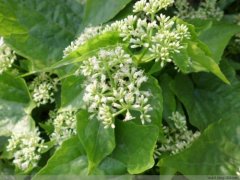
Big and plump strawberries grown with mile-a-minute weed biochar-based fertilizer and vinegar liquid
Mile-a-minute weed biochar combined with vinegar liquid produces big and plump strawberries. Want to learn how? Then read the introduction below. Huang Ying-pin, senior researcher at the Ecosystem Technology Laboratory of the Central Branch of the Industrial Technology Research Institute, says that mile-a-minute weed (Mikania micrantha) is native to Central and South America, harms crop growth, is known abroad as the "mile-a-minute weed", and is also regarded as the "green cancer" of the plant world. Mile-a-minute weed spreads rapidly in Taiwan, China, and is a plant that forestry units want to eradicate as quickly as possible, but it is not entirely useless. Research has shown that mile-a-minute weed is rich in micropores and is a very good charcoal material, which can be converted into "biochar" and "vinegar liquid" through carbonization technology; biochar can be used for soil improvement, and combined with vinegar liquid it becomes a pest and disease control agent or a plant growth promoter.
-

Plum Blossom Cultivation Key Points and Care Techniques Explained
1. Planting In the south it can be planted in the ground; in the Yellow River basin, cold-hardy varieties can also be planted in the ground, but in cold northern regions they should be grown in pots and overwintered indoors. Planting can be done anytime from after leaf fall to before spring bud break. To improve the survival rate, avoid damaging the root system and transplant with a soil ball. For ground planting, choose a spot sheltered from the wind and facing the sun
条件筛选