-

What fruit is the Dinosaur Egg? Introduction to the plumcot variety Dinosaur Egg
The plumcot is a new fruit obtained by crossing apricots and plums. The Dinosaur Egg fruit is nearly round, a large-fruited type, with a longitudinal diameter of 5.2--6.3cm and a transverse diameter of 5.6--6.6cm, an average single fruit weight of 126g, and a maximum fruit weight of 145g, clingstone, with the fruit surface turning yellow-red when ripe, the flesh bright red like blood, crisp, sweet and refreshing in texture, and a soluble solids content of 18%--19%. The fruit ripening period is early to mid-August, the development period is 135d (days), and the chilling requirement is 400--500h (hours). Extremely
-
Summer Management Methods and Care Points for Dianthus plumarius
Dianthus plumarius, commonly known as groundcover dianthus, belongs to the family Caryophyllaceae and the genus Dianthus. It is native to Austria and Siberia, is a perennial herb, and looks overall like a bluegrass-type lawn. It is an excellent material for arranging flowerbeds, flower borders and large-scale planting. Because Dianthus plumarius has a long flowering period, bright flower colors, blooms in three seasons, stays evergreen all year round, and is drought-tolerant and cold-tolerant, it has been widely introduced in recent years. In summer, due to high temperatures and relatively abundant rain, the roots of dianthus are very prone to rot. As for watering, since Dianthus plumarius is tolerant of drought and poor soil, the timing and frequency of watering should depend on dry weather
-
What are the values and uses of Dianthus plumarius?
Dianthus plumarius values and uses. Dianthus plumarius is evergreen, with elegant leaf shapes, brilliant flower colors, fragrant flowers, and a long blooming period. It is widely used to embellish large urban green spaces, plazas, parks, street-side green areas, courtyard green spaces, flower beds, and flower borders, and is deeply loved by people. It is also used by people as a potted plant, placed in the home, for home flower appreciation.
-
What are the propagation methods for Dianthus plumarius?
Dianthus plumarius is a perennial herbaceous plant with rhizomes, swollen nodes, and opposite simple leaves. The plant height is 10-15 cm. It stays green all year round and blooms in three seasons. It has wide adaptability, resists severe cold (it can withstand low temperatures of minus 35°C), tolerates drought and poor soil (it only needs watering once a month and rarely needs fertilizer), and its flowers are very beautiful (during full bloom the flowers can cover the ground). It is not very strict about soil pH either (it can be planted in soil with a pH between 5 and 8), has strong tillering and differentiation ability, propagates easily, and grows quickly. Dianthus plumarius
-
What plant is Dianthus plumarius? A complete guide
Dianthus plumarius is a perennial herbaceous plant in the family Caryophyllaceae, genus Dianthus. The plant grows 20 to 30 cm tall, clump-forming, with linear-lanceolate, blue-gray leaves. Flowers are solitary or in clusters of a few, pink or white, blooming from May to July. The fruit is a capsule, ripening from July to August. Dianthus plumarius is native to Europe and has recently been introduced and cultivated in China. It prefers sunlight but is also fairly shade-tolerant, and in North China it can overwinter in the open ground, remaining evergreen even after frost. Its suitable growing temperature is 15°C to 30°C, and it thrives in loose, fertile sandy loam. It is propagated by seeding, division, and cuttings. Seeding is generally done in September in open-ground seedbeds
-
Key cultivation techniques for growing peach, apricot and plum that flower and bear fruit on the same tree
To meet people's need for enjoying both flowers and fruit, we used peach trees as rootstock and grafted early-, mid- and late-maturing plums, apricots and peaches onto the same tree. After 4a (years) of trials, complete success was achieved: in the year of grafting a certain crown formed and flowering occurred, in the 2nd year each tree bore 70-80 fruits, the flowering period lasted about 45d (days), the full-bloom period reached about 25d (days), and the fruit-bearing period lasted as long as 6 months. It allows enjoyment of both flowers and fruit, and the fruit can be eaten as well, and it is deeply loved by the general public. The key techniques are summarized below.
-
Characteristics and Origin of the Tancheng Xingmei Plum Variety
Native to Tancheng County, Shandong Province. The fruit is nearly round, with an average single fruit weight of 48.8 g and a maximum fruit weight of 73.7 g. The fruit apex is flat or slightly pointed, the suture is shallow, and the two sides are asymmetrical; the stalk cavity is broad and deep. The ground color of the fruit surface is orange-yellow, turning orange-yellow when ripe, with fine hairs, and the skin is relatively thick. The flesh is orange-yellow, dense and fairly fine in texture, juicy, sweet and tart and palatable, with an apricot aroma, and of superior quality. The soluble solids content is 13.3%, total sugar content 6.7%, titratable acid content 1.7%, and 100 g of fresh flesh contains
-
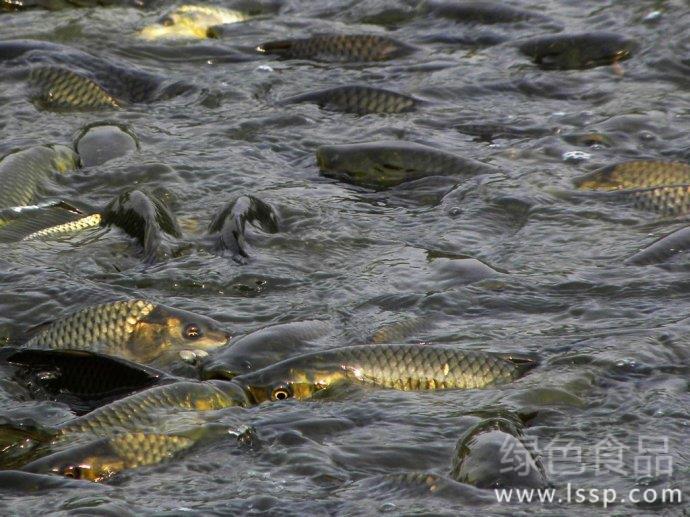
The plum rain season is a high-risk period for aquaculture. How should fish ponds be managed?
The plum rain season, a disaster season for aquaculture: how to manage fish ponds well during the plum rain season
-
Apricot Preserved Plum
1. For material selection, mostly seven-ripe green apricots are used, requiring uniform size, thick flesh, and few fibers. 2. Pretreatment: the raw apricots are promptly pickled in 20% salt water, with one layer of apricots and one layer of salt; after the vat is full, seal the top with salt, and after 7-10 days, take them out to make the base. They may also be kept in the brine for more than one month, but they must be turned once a week. 3. Making the base: spread the pickled apricots on mats or a concrete surface to dry, without breaking the skin or exposing them to rain; artificial drying may also be used. 4. Desalting: soak the salted base in clean water for 24 hours, changing the water once every 2-3 hours, until the base
-
Introduction to the Characteristics and Cultivation Techniques of the Longting Apricot-Plum Variety
Mainly produced in Xintai City, Shandong. The fruit is relatively large and nearly round. The average single fruit weight is 47.5 grams, and the largest fruit weighs 95 grams. When ripe, the fruit is entirely golden yellow, with smooth and glossy skin. The flesh is golden yellow, fine and somewhat firm, with a moderate amount of juice and an aroma; it is sweet-sour and palatable, of superior quality. The soluble solids content is 11.5%, total sugar 8.0%, and titratable acid 2.0%. The stone is medium-large and semi-clinging. It can be stored at room temperature for 10-12 days and is suitable for long-distance transport. The tree is vigorous, with an open canopy and strong adaptability; it is drought-resistant, cold-resistant, tolerant of poor soil, and resistant to
条件筛选