-
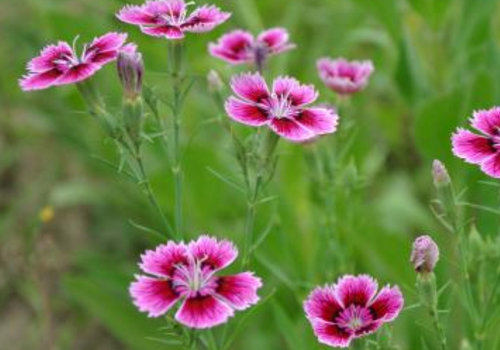
How to Grow Rainbow Pink (Dianthus barbatus) Seeds? A Detailed Guide to Its Differences from Dianthus plumarius
Rainbow Pink is a type of plant that many people know about, and a great many people are familiar with it. So how do you grow Rainbow Pink seeds? And what is the difference between it and Dianthus plumarius? How to grow Rainbow Pink seeds: Propagation is commonly done by sowing, cuttings, and division.
-
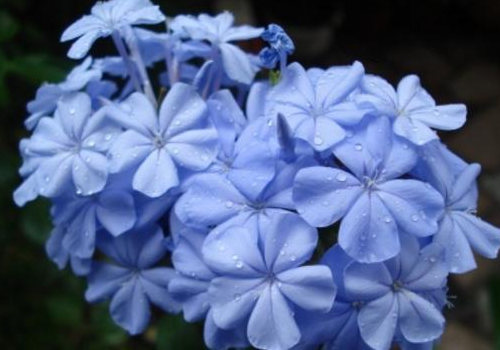
Blue Plumbago (Plumbago auriculata) Cultivation Methods and Pollination Techniques
How should Blue Plumbago grown at home be cared for so that its branches and leaves flourish? How to grow Blue Plumbago? How to pollinate: How to grow Blue Plumbago: 1. Blue Plumbago is mostly propagated by seed propagation, cuttings propagation or division propagation. The cutting method is mostly carried out in early summer, at a temperature of 20-25°C
-

Detailed Explanation of Key Technical Points for Storing Peaches, Plums, and Apricots
1. The warehouse must be disinfected before loading. 2. For storage, choose late-maturing peaches and plums, which should be harvested at 70-80% maturity. 3. When harvesting, pay attention to the following points: ① Harvest with the fruit stalk attached. ② Handle gently. ③ Harvesting should be done on a clear morning after the dew has dried, or in the afternoon after 3-4 o'clock. Harvesting at noon or with dew is unfavorable for storage. ④ Irrigation in the peach and plum orchard is prohibited one week before harvest. ⑤ Peaches and plums harvested after rain are not resistant to storage.
-
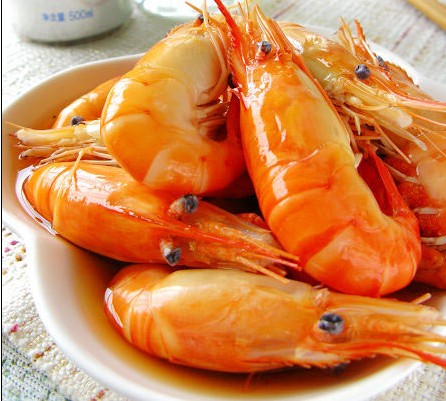
Detailed guide to freshwater shrimp farming: easily raise plump, delicious shrimp
The secrets of delicious freshwater shrimp farming revealed
-
Introduction to Apricot-Plum Varieties: Three High-Quality, High-Efficiency New Cultivars
1. Tezao Maiqian Apricot. A bud sport variety from China, it is an extremely early-maturing, high-yielding excellent cultivar with strong tree vigor and vigorous growth. It can bear fruit in the second year after planting. The average single fruit weight is 85 g, with a maximum of 125 g. The fruit is orange-yellow with a red blush on the sunny side. It matures extremely early, about 1 week earlier than Jintaiyang, and can mature in southern Shandong by May 18. It has the rich aroma and sweet flavor of Chinese apricots, overcomes the shortcomings of low fruit set rate and low yield in Chinese apricot cultivars (Hongfeng, Zaohong, Zaohe), and also has the advantages of early fruiting and high yield of European apricots (Jintaiyang, Kate). It is an excellent apricot cultivar with excellent overall traits.
-
What kind of plum blossom cultivar is Yanxing Mei?
The crown of the "Yanxing" plum tree is ovate; the branches are purplish brown, with irregular longitudinal striations, and the lenticels are small and dense; the large branches are the same color as the trunk, growing upright and slanting outward, with 1 flower borne on short, medium, and cluster flower branches, and a few on long flower branches. The flowering period is in early May, the flower diameter is 1.9-2.2 cm, the flower buds are obovate when opening, with no central hole, and water-red; shallow bowl-shaped to jade dish-shaped; both the front and back are pale yellowish white, with 5 petals; 5 sepals, pale dull dark purple, recurved, and the pedicel is short; the stamens radiate and are shorter than the petals; 1 pistil, well developed; the flower center is normal. The flowers are particularly dense and set fruit easily.
-
What are the summer pruning techniques for Golden Plum Jujube? Explained clearly in one article
The tree shaping and pruning techniques for Golden Plum Jujube after the orchard is established are an important part of production management. It is an important management measure carried out on the basis of comprehensive soil, fertilizer and water management, according to the growth and development characteristics of jujube trees and in combination with environmental conditions. Through shaping and pruning, strong and firm scaffold branches with a reasonable distribution are cultivated, and an appropriate number of fruiting branches and a tree structure with good ventilation and light penetration are maintained. According to the different seasons, shaping and pruning are often divided into winter pruning (dormant period pruning) and summer pruning (growing season pruning). The commonly used summer pruning methods are as follows: 1. Jujube head
-
Detailed Explanation of Key Points for Storage and Fresh-keeping Techniques of Peaches, Plums and Apricots
Peach, plum and apricot (including cherry) fruits all contain a hard stone and belong to the drupe category of fruits, sharing common characteristics in fruit development and postharvest physiology. It is precisely because the fruit contains a hard stone that a double-S growth curve appears during growth. Peach, plum and apricot fruits have high respiration intensity; all have a respiration peak, so they all belong to the climacteric type of fruit, which determines that they have basically similar storage, transport and fresh-keeping technical measures. However, as tree species and varieties differ, the storage, transport and fresh-keeping techniques adopted also differ. Peaches and plums generally
-
New shrimp farming technique makes shrimp grow plump and strong
Xu Zhihua, a shrimp farmer in Fengma No. 1 Village, Hengli Town, Nansha District, Guangzhou, China, contracted 60 mu of ponds to raise whiteleg shrimp (Litopenaeus vannamei). In 2007, under the guidance of agricultural technicians, he used enzyme bacteria technology and fish-and-shrimp fertilizer, achieving a net income of 5000 yuan per mu. Xu Zhihua conducted comparative trials in two ponds. Pond No. 1 was sprayed with enzyme bacteria and fertilized with fish-and-shrimp fertilizer to enrich the water, with 50,000 shrimp fry stocked per mu. He applied fertilizer frequently and lightly, and throughout the whole process he used no water-purifying agents or bactericidal drugs, yet there was no shrimp surfacing or death, and the shrimp survival rate was above 95%. 4
-
What causes soybean pods to be not plump? How to prevent it
Soybean pods that are not plump seriously affect the high yield and quality of soybean. Through investigation, research and analysis, the main causes are: 1. Insufficient nutrition in the late stage. Soybean consumes a lot of nutrients after flowering, and in various places when soybean is intercropped or relay-cropped, no fertilizer is applied and no topdressing is done. After full flowering of soybean, nutrition is insufficient, leaves turn yellow prematurely, plants are short, stems are thin, and leaves are small. This makes late pods or weak pods of the same node flower cluster unfilled, and it often occurs on sloping barren land and in varieties with many flowers and many pods. 2. Nutritional imbalance. In fertile land, or when nitrogen fertilizer is excessive in fertilization, under shaded conditions of intercropping and relay cropping, carbon assimilation is weak
条件筛选