-
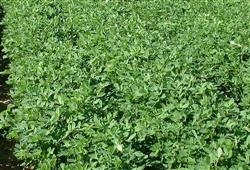
What trace element fertilizers can be applied to peanuts?
Which trace element fertilizers can be applied to peanuts? Please give an introduction. Trace elements play a role in the growth and development of peanuts that major elements (such as nitrogen, phosphorus, potassium, etc.) cannot replace. Scientifically increasing the application of trace element fertilizers is an important measure for high quality and high yield of peanuts. Iron fertilizer: for every 1 ton of dry matter formed by peanuts, 264...
-
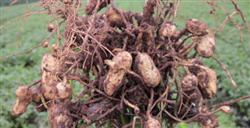
What are the harms of continuous peanut cropping? A detailed guide
What are the harms of continuous peanut cropping? Please note that continuous peanut cropping has the following harms: 1. It causes severe soil nutrient deficiency. Because peanut roots have a large number of rhizobia, they are not very sensitive to nitrogen. Continuous cropping leads to soil nutrient deficiency that cannot meet the nutrients needed by peanuts, thereby affecting the normal growth and development of peanuts. The longer the continuous cropping...
-
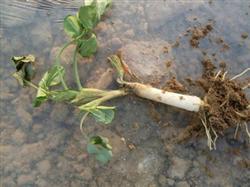
How to prevent and control peanut stem rot? A comprehensive analysis of practical methods
How to prevent and control peanut stem rot? Please explain. Peanut stem rot, commonly known as "rotten neck disease", generally occurs in the middle and late stages. After infection, the plant quickly withers and dies; in the late stage, infected plants' pods often rot or the kernels fail to fill, causing serious losses. The incidence rate in ordinary fields is 20%-30%, and in severe cases reaches 60%-70%, or even results in no harvest at all....
-
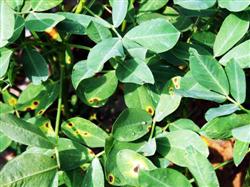
How to prevent premature senescence in peanuts? Master the control methods
How to prevent premature senescence in peanuts? Please advise: to prevent premature senescence in peanuts, the following points should be followed: 1. Site selection. Choose fields with relatively high fertility, and apply sufficient base fertilizer, plow deeply 25-30 cm early, and sun the ridges. Apply 2000 kg of rotted barnyard manure or 25-35 kg of cake fertilizer, 50 kg of ternary compound fertilizer, 50 kg of phosphate fertilizer, zinc fertilizer... per mu.
-
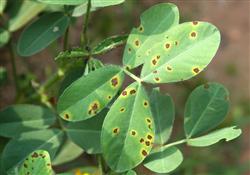
Peanut Cultivation Techniques: What Are the Common Diseases in the Late Stage of Peanut Growth?
What diseases occur in the late stage of peanuts? Please provide guidance. In the late stage of peanut growth, leaf spot disease is the main problem. The common leaf spots are brown spot and black spot, commonly known as spot disease and black rot. Affected leaves show destroyed chlorophyll, causing early flower drop and unfilled pods. Symptoms: Brown spot mainly occurs on leaves...
-
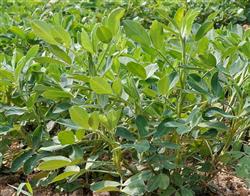
Detailed Explanation of Key Management Techniques for Peanuts in the Late Growth Stage
How should peanuts be managed in the late growth stage? Please provide guidance. The main management points for peanuts in the late growth stage are as follows: Drain excess water to prevent pod rot. After the Start of Autumn, if there is excessive rain and poor field drainage, it can easily cause peanut root rot, withered stems and leaves, and a reduced full-pod rate; in severe cases, the pods rot or sprout. Therefore, when there is excessive rain in the late stage...
-
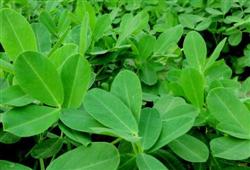
Detailed Explanation of Key Management Techniques for Summer Peanut Cultivation
How to manage peanuts well in summer? Please provide an introduction to the management methods. The main summer peanut management methods are as follows (for reference): 1. Intertillage and weeding. Peanuts need 3~4 intertillages during the growth period. The first intertillage is carried out after full seedling emergence together with seedling clearing; the intertillage should be shallow to avoid burying the seedlings; the second intertillage is carried out 15...
-
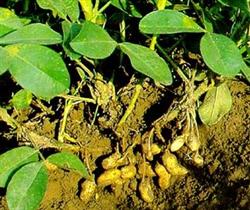
Peanut Cultivation Techniques: An Analysis of Peanut's Fertilizer Absorption Characteristics
How does the peanut absorb fertilizers? Please explain. Peanut kernels are rich in protein and fat, and forming these substances requires large amounts of nutrients. According to research, producing every 100 kg of peanut pods requires 6.8 kg of pure nitrogen (N), 1.3 kg of phosphorus (P2O5), and 3.8 kg of potassium (K2O). Nitrogen is needed the most, followed by potassium, and phosphorus the least...
-
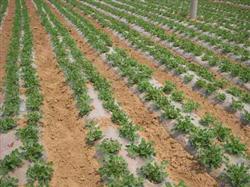
What are the key technical points for the cultivation and management of summer-sown peanuts?
How should summer-sown peanuts be managed? Please provide guidance. Summer-sown peanuts can be managed by referring to the following methods: 1. Check seedlings and reseed. After sowing, check the seedling emergence promptly. If gaps in the seedlings are found, promote germination and reseed in time. 2. Intertillage. During the seedling stage of peanuts, clearing the plants should be combined with intertillage. Generally, a small hoe can be used to dig away the soil around the base of the peanut seedlings to form a "small hollow", exposing the two cotyledons and the lateral buds in the leaf axils above the ground. At the same time, weeding can also be carried out in combination with intertillage.
-
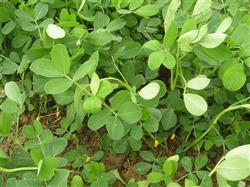
Peanut Growing Techniques: How to Manage Peanuts During the Mid-Growth Stage?
How to manage peanuts during the mid-growth stage? For guidance on managing peanuts during the mid-growth stage, refer to the following methods: 1. Skillfully apply flower and pod fertilizer. During the mid-growth stage, the vegetative growth and reproductive growth of peanuts simultaneously reach their peak from the early peak period. Not only do stems and leaves grow rapidly, but the plants also flower abundantly and produce pegs, with large numbers of pegs...
条件筛选