What are the key technical points for the cultivation and management of summer-sown peanuts?
How should summer-sown peanuts be managed? Please provide guidance. Summer-sown peanuts can be managed by referring to the following methods: 1. Check seedlings and reseed. After sowing, check the seedling emergence promptly. If gaps in the seedlings are found, promote germination and reseed in time. 2. Intertillage. During the seedling stage of peanuts, clearing the plants should be combined with intertillage. Generally, a small hoe can be used to dig away the soil around the base of the peanut seedlings to form a "small hollow", exposing the two cotyledons and the lateral buds in the leaf axils above the ground. At the same time, weeding can also be carried out in combination with intertillage.
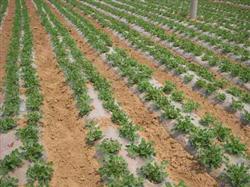
How should summer-sown peanuts be managed? Please provide guidance.
Summer-sown peanuts can be managed by referring to the following methods:
1. Check seedlings and reseed. After sowing, check the seedling emergence promptly. If gaps in the seedlings are found, promote germination and reseed in time.
2. Intertillage. During the seedling stage of peanuts, clearing the plants should be combined with intertillage. Generally, a small hoe can be used to dig away the soil around the base of the peanut seedlings to form a "small hollow", exposing the two cotyledons and the lateral buds in the leaf axils above the ground. At the same time, weeding can also be carried out in combination with intertillage.
3. Irrigate in drought and drain in waterlogging. When peanuts encounter drought, watering can be carried out in combination with sprinkler irrigation. Do not use flood irrigation, so as to avoid soil compaction. If there is too much rainwater, high soil moisture and low ground temperature, it will affect pod filling, cause pod rot, and reduce yield and quality. Therefore, drainage and waterlogging prevention should be carried out in time.
4. Prevent and control diseases and pests. If white grubs, mole crickets or wireworms are found, methods such as toxic soil or toxic grain can be used for control, or 50% phoxim 1500-fold solution can be used for root drenching; for aphids, dimethoate or phoxim 1500-2000-fold solution can be used for spraying; peanuts are most susceptible to leaf spot disease and rust in the middle and late stages. For leaf spot disease, use 75% thiophanate 1000-fold solution 70-80 kg per mu or carbendazim 800-1000-fold solution 70-80 kg per mu for spraying. In the early stage of rust disease, spray 20% triadimefon EC 30-40 ml per mu.
5. Foliar topdressing to prevent premature senescence. In the late growth stage of peanuts, the root absorption capacity weakens while the leaf absorption capacity is still vigorous. If nutrient supply is insufficient, the top leaves are prone to falling off and the stems and leaves senesce prematurely. At this time, foliar spraying of 0.2%-0.3% potassium dihydrogen phosphate aqueous solution or spraying 0.3%-0.4% urea and superphosphate mixed solution 1-2 times should be carried out in time to prolong the functional period of the leaves, prevent premature senescence, and increase the full-pod rate.
6. Timely chemical regulation. After the full flowering stage of peanuts, use 15% paclobutrazol 20-25 g per mu or mepiquat chloride aqueous solution 10-15 ml, mixed with 45 kg of water for spraying. During chemical regulation, attention should be paid to heavier regulation for those with a tendency to excessive growth, larger planting density, fertile soil, high fertilization level, and more rainy weather, and lighter regulation otherwise. When mixing the chemicals, stir evenly, mix and spray immediately, and ensure good atomization to prevent excessive local spraying concentration from causing phytotoxicity and affecting yield.
7. Timely harvest. Generally, when peanuts enter the late podding stage, most of the nutrients in the plant have been transported to the pods. At this time, the plant shows signs of senescence, the top stops growing, the remaining leaves on the stems turn yellow, the basal and middle leaves fall off, most pod shells harden, the reticulate pattern is clear, the kernels are plump, the seed coat becomes thin, and the seeds show the color of the original variety, harvesting can be carried out.
Click to get more peanut cultivation techniques
Click to get more grain crop cultivation techniques