Detailed Explanation of Key Management Techniques for Peanuts in the Late Growth Stage
How should peanuts be managed in the late growth stage? Please provide guidance. The main management points for peanuts in the late growth stage are as follows: Drain excess water to prevent pod rot. After the Start of Autumn, if there is excessive rain and poor field drainage, it can easily cause peanut root rot, withered stems and leaves, and a reduced full-pod rate; in severe cases, the pods rot or sprout. Therefore, when there is excessive rain in the late stage...
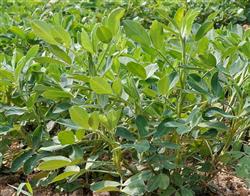
How should peanuts be managed in the late growth stage? Please provide guidance.
The main management points for peanuts in the late growth stage are as follows:
Drain excess water to prevent pod rot. After the Start of Autumn, if there is excessive rain and poor field drainage, it can easily cause peanut root rot, withered stems and leaves, and a reduced full-pod rate; in severe cases, the pods rot or sprout. Therefore, when there is excessive rain in the late stage, ditches should be cleared in time to drain excess water so as to ensure high quality and high yield of peanuts.
Irrigate in drought to increase full pods. In the late growth stage, the water requirement of peanut plants decreases, and the soil moisture content should be 50%-60% of the maximum field water-holding capacity. Although the water requirement is low at this stage, roots are prone to decline in droughty weather, causing the top leaves to fall off and stems and branches to wither, which reduces the full-pod rate. Therefore, when the soil moisture content is lower than 40% of the maximum field water-holding capacity, irrigation should be carried out immediately to protect the roots and leaves and increase the full-pod rate. When irrigating, use small amounts of water with rapid furrow irrigation or sprinkler irrigation; avoid flooding irrigation.
Foliar topdressing to protect the top leaves. Although the nutrients required by peanuts in the late growth stage are relatively few, they greatly affect yield formation and improve pod plumpness. The absorption capacity of peanut roots weakens in the late stage. Starting from the late pod-setting stage, spray the leaves once every 7-10 days with a 1%-2% urea solution or a 0.2%-0.3% potassium dihydrogen phosphate solution, for 2-3 consecutive sprays, each time spraying 50 kg of fertilizer solution per mu, so as to prolong the functional period of the upper 4-6 leaves on the stems and branches and improve pod plumpness.
Do a good job of the three preventions to promote increased yield. Prevent excessive vine growth: For fields with good water and fertilizer conditions and vigorous peanut growth, when a large number of pegs enter the soil, spray 30-40 g of 15% paclobutrazol powder per mu mixed with 40-50 kg of water, or 30 mL of 20% Zhuangfeng'an mixed with 40 kg of water. It is best to spray in the afternoon, avoid repeated spraying and missed spraying, and respray if rain occurs within 8 hours after spraying. Prevent premature senescence: For peanut fields with insufficient basal fertilizer application or high-yield peanut fields, spraying foliar fertilizer in the late growth stage is an effective measure to achieve high quality and high yield of peanuts. From 30-50 days before harvest, spray a mixture of 1% urea and 0.5% potassium dihydrogen phosphate, each time spraying 50 kg of fertilizer solution per mu, once every 10 days, generally 2-3 sprays, which can improve pod plumpness. Prevent diseases and pests: Because there is more rainfall and higher humidity in the late growth stage of peanuts, it is necessary to do a good job of controlling leaf spot disease and white grubs and cotton bollworms.
Click to get more peanut cultivation techniques
Click to get more food crop cultivation techniques