Peanut Cultivation Techniques: What Are the Common Diseases in the Late Stage of Peanut Growth?
What diseases occur in the late stage of peanuts? Please provide guidance. In the late stage of peanut growth, leaf spot disease is the main problem. The common leaf spots are brown spot and black spot, commonly known as spot disease and black rot. Affected leaves show destroyed chlorophyll, causing early flower drop and unfilled pods. Symptoms: Brown spot mainly occurs on leaves...
What diseases occur in the late stage of peanuts? Please provide guidance.
In the late stage of peanut growth, leaf spot disease is the main problem. The common leaf spots are brown spot and black spot, commonly known as spot disease and black rot. Affected leaves show destroyed chlorophyll, causing early flower drop and unfilled pods.
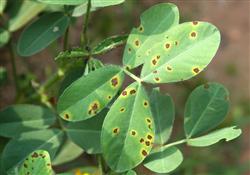
Symptoms: Brown spot mainly occurs on the leaves; in severe cases, it also appears on stems, leaves, petioles and stipules. On the leaves, it initially appears as yellowish-brown round or nearly round small spots, which after enlargement become brown spots with a diameter of 1-10 mm. The underside of the leaves is also brown or light brown, with an obvious yellow halo around it. Black spot and brown spot are roughly similar in appearance. If leaf spot disease is not controlled in time, yields generally decrease by 10%-20%, and in severe cases can reach 40%. The insect pests are Noctuidae moths.
Control methods: Begin control when the diseased leaf rate of peanut plants reaches 10%-15%, spraying once every 10-15 days, for 2-3 consecutive sprays. Use 50% carbendazim wettable powder 50 ml/mu diluted in 15-20 kg of water for uniform spraying, or 50% thiophanate-methyl 50 ml/mu diluted in 15-20 kg of water for uniform spraying; 75% chlorothalonil wettable powder 50 ml/mu diluted in 15-20 kg of water for uniform spraying can also be used.
Click to get more peanut cultivation techniques
Click to get more grain crop cultivation techniques