Peanut Growing Techniques: How to Manage Peanuts During the Mid-Growth Stage?
How to manage peanuts during the mid-growth stage? For guidance on managing peanuts during the mid-growth stage, refer to the following methods: 1. Skillfully apply flower and pod fertilizer. During the mid-growth stage, the vegetative growth and reproductive growth of peanuts simultaneously reach their peak from the early peak period. Not only do stems and leaves grow rapidly, but the plants also flower abundantly and produce pegs, with large numbers of pegs...
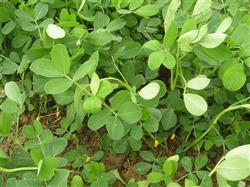
How to manage peanuts during the mid-growth stage? Please advise
During the mid-growth stage, peanuts can be managed by referring to the following methods:
I. Skillfully apply flower and pod fertilizer
During the mid-growth stage, the vegetative growth and reproductive growth of peanuts simultaneously reach their peak from the early peak period. Not only do stems and leaves grow rapidly, but the plants also flower abundantly and produce pegs, with large numbers of pegs entering the soil to develop into pods, increasing the demand for nutrients. Therefore, for fields that were not top-dressed during the seedling stage, apply 7.5-10 kg of urea, 25-30 kg of superphosphate, and 10 kg of potassium sulfate per mu at the early flowering stage; at the full flowering stage, combined with earthing up, apply 20-30 kg of gypsum powder per mu to promote pod development and increase the full-pod rate. In addition, if the young leaves turn yellow-white and lose green color, spray a 0.3%-0.5% ferrous sulfate aqueous solution.
II. Earth up to welcome pegs
Earthing up can thicken the soil layer, allowing pegs to enter the soil earlier and set fruit earlier. Earthing up should be done when the field has just closed the rows, a few pegs have entered the soil, and before large numbers of pegs enter the soil. The method is: tie a grass ring onto the hoe hook, hoe deeply and pull forcefully, piling soil on both sides of the peanut base, but do not bury the stem base. Earthing up is generally done twice, with the second about 10 days after the first.
III. Watering and drainage
The flowering-peg stage and pod-setting stage are critical water-demand periods for peanuts, and they are very sensitive to moisture, so attention must be paid to water management. The suitable soil moisture content during the flowering-peg stage and pod-setting stage is 60%-70% of the maximum field water-holding capacity. Water timely when drought occurs. The watering method should be sprinkler irrigation or rapid small-flow furrow irrigation; never use flood irrigation. Drain promptly after rainfall to avoid large numbers of rotten pods and reduced yield and quality.
IV. Control plant growth to ensure steady growth
During the mid-growth stage, peanuts are prone to lodging after excessive vegetative growth, leading to severe yield reduction. Therefore, for medium- and high-yield peanut fields, at the end of the full flowering stage, when the main stem exceeds 40 cm in height, spray 50 g of 15% paclobutrazol wettable powder mixed with 50 kg of water per mu to control top growth and promote root growth, preventing plant lodging.
V. Pest and disease control
The main pests and diseases in the mid-growth stage of peanuts include leaf spot disease, white grubs, and cotton bollworms. For leaf spot disease, at the early stage of onset, spray 40% carbendazim suspension concentrate at 1000 times dilution or 50% thiophanate wettable powder at 1500-2000 times dilution, spraying once every 7-10 days for 2-3 consecutive sprays, using 50 kg of spray solution per mu each time. For white grubs, control should be carried out during earthing up to welcome pegs by applying 2.5-3 kg of 3% isofenphos-methyl granules per mu or 0.25 kg of 50% phoxim mixed with 30-40 kg of fine soil to make toxic soil, spreading it along the rows near the plants, followed by intertillage and earthing up. For cotton bollworms, spray 20% fenvalerate at 1500 times dilution for control.
Click to get more peanut growing techniques
Click to get more grain crop growing techniques