-
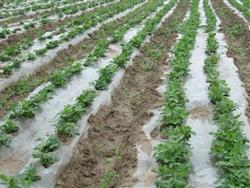
High-yield technique for large-scale film-mulched spring peanut sowing with pod sowing, moisture borrowing and dry sowing
Pod sowing with film mulching is an effective measure for early sowing of spring peanuts by borrowing soil moisture, ensuring full stands, resisting drought and increasing yield. The Agricultural Technology Extension Center of Linmu County began trials and demonstrations in 1987, and from 1992 to 1993 the implemented area reached 8,520 hectares, with average unit yields reaching 3,982.5 kg/ha and 4,057.5 kg/ha, increases of 13.9% and 16....
-
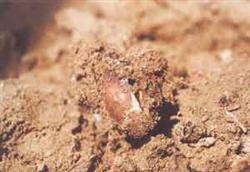
How to prevent and control seed rot after sowing spring peanuts
After sowing spring peanuts and before emergence, seed rot often occurs, with severe cases reaching a rot rate as high as 20%, causing missing plants and broken rows to varying degrees. Causes of seed rot: poor seed quality or improper storage, or too long a storage period; low-lying terrain, heavy clay soil, poor texture, and high soil water content, resulting in a long emergence time for seeds; poorly consolidated seedbed preparation, which affects the...
-

What are the precautions for growing peanuts? Keep these key points in mind
Precautions for growing peanuts
-
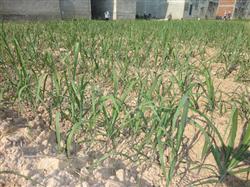
Detailed Explanation of the Cultivation Technique of Interplanting Spring Peanuts with Sugarcane
Sugarcane originated in tropical and subtropical regions and was formerly limited to cultivation south of the Yangtze River. In recent years, through the unremitting efforts of scientific and technological workers, the sugarcane planting area in the Huang-Huai River basin has expanded year by year. During the planting process, the sugarcane stem cannot be used for high-temperature bud cultivation; if stems are used for bud cultivation, sugarcane cultivation will not succeed. To...
-

How to carry out good field management when growing peanuts?
Field management for peanut cultivation
-
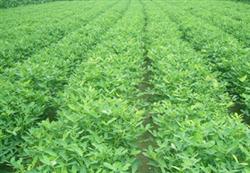
Key Technical Points and Fertilization Methods for Topdressing Summer Peanuts
Fertilization should follow the "two topdressings, one spray, four supplements" approach. Specifically: the two topdressings are, first, early topdressing before the peanut plants form a full cluster, with 10 kg urea, 15 kg diammonium phosphate and 10 kg potassium chloride; the second topdressing is at the early stage of young pod swelling, generally 10 kg urea per mu. The one spray is in the late growth stage, per mu...
-
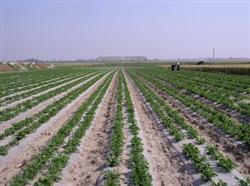
What are the high-yield cultivation techniques for summer peanuts?
Summer peanuts mostly refer to peanuts grown after wheat harvest. Their growth period is 30-40 days shorter than that of spring peanuts, and each growth stage is correspondingly shortened. Growth is fast in the early and middle stages, and temperatures are low in the late stage, which is unfavorable for pod development. Therefore, the following measures should be taken. (1) Select early-maturing, high-yield varieties. (2) Sow early by seizing the time. In spring, every day counts; in summer, every hour counts...
-
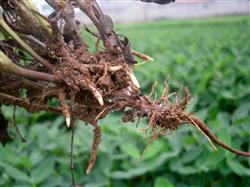
How to identify peanut root rot? Recognizing the typical symptoms is key
Peanut root rot is most severe during the peak flowering and podding stage. It mainly damages the roots of peanuts. After a peanut is infected, yellowish-brown water-soaked lesions form on the root crown, and the diseased area gradually turns dark brown. In the underground part of the diseased plant, the main root becomes wet and rotted, the root cortex turns brown and rots, is easily peeled off and shed, and there are no lateral roots, or the lateral roots are few and short, with the main root looking like a rat's tail...
-
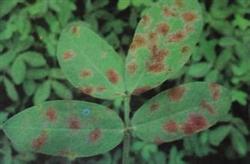
How to identify peanut leaf blight? A simple method anyone can understand at a glance
Peanut web blotch, also known as cloud-pattern blotch or net-blotch, was first discovered in the United States in the mid-1940s. In the late 1970s, China's Liaoning Province reported the occurrence and damage of this disease for the first time. In recent years, the disease has been fairly common in production areas in northern China, with relatively severe damage, generally reducing yield by about 20%, and in severe cases reducing yield by 4...
-
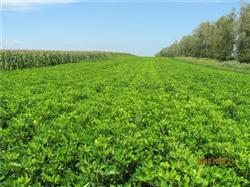
What principles should be followed when fertilizing peanuts?
(1) Farmyard manure as the main fertilizer, with chemical fertilizers as a supplement. In China, most peanuts are grown in hilly areas, where the soil layer is thin and fertility is low. Farmyard manure is mainly organic fertilizer, rich in nutrients, able to improve the soil, build up soil fertility, and has a long-lasting fertilizer effect. Chemical fertilizers are quick-acting fertilizers; although they also contain the nutrient elements peanuts need, compared with...
条件筛选