-
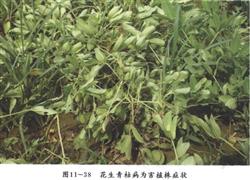
How to prevent and control peanut bacterial wilt? Understanding the patterns of occurrence is key
Peanut bacterial wilt, commonly known as "green wilt", "seedling death", "plague", and "vine death", is a major disease in peanut-growing areas. In ordinary plots, the disease incidence is 10%-25%, and in severely affected plots the incidence reaches over 50%. Peanut bacterial wilt is a typical vascular disease that can occur throughout the entire growth period of peanuts, but...
-
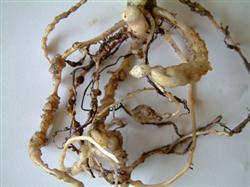
Practical Tips for Using Calcium Fertilizer to Boost Peanut Yields
Peanut root-knot nematode disease is a major disease of peanuts, generally reducing yields by 20-30%, and in severe cases by 70-80%, or even resulting in total crop loss. 1. Symptoms This disease mainly damages the roots. All parts of the peanut that can enter the soil (roots, pods, etc.) can be harmed by nematodes. About half a month after sowing, when the peanut taproot begins to grow, the nematodes...
-
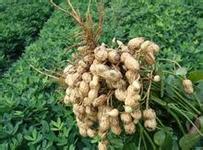
What kind of soil conditions do peanuts need for high yields?
(1) Deep full soil layer. For a high-yield field, the full soil layer should be more than 50 cm deep. 99% of the peanut root system is distributed within 50 cm, while the main root reaches deep, more than 1 m down, so a deep soil is very important for the growth and development of the peanut root system. (2) Loose and active cultivated layer. A thickness of 30 cm is the loose, active and fertile cultivated layer, and...
-
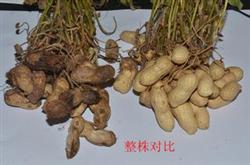
Integrated control of peanut pod rot to achieve both higher yield and better quality
Peanut pod rot, also known as "peanut rotten pod disease," has become fairly common in recent years in the major peanut-producing areas of our province, including Daming, Xinle, Dingzhou, Xingtang and Luanxian, and it becomes even more severe in fields planted continuously to peanuts for many years when the pod-setting stage coincides with a rainy year. According to surveys, affected fields suffer at least a 20% yield loss, ...
-
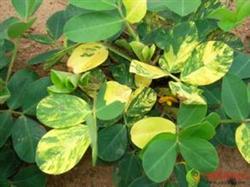
What are the control methods for peanut viral diseases?
Peanut disease is one of the major diseases of peanut, seriously affecting the yield and quality of peanut, and it is especially severe in the production areas of northern China. For peanut viral diseases, except for bud blight, which is mainly transmitted by thrips, other diseases such as mild mottle disease, yellow mosaic disease, and common mosaic disease are transmitted through seeds and aphids, and seed-borne infected tubers...
-
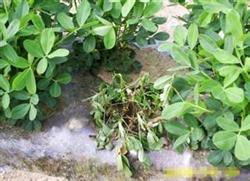
How to prevent and control peanut bacterial wilt? These methods must be mastered
The period of peanut flowering and peg penetration is the outbreak period of peanut bacterial wilt, and during this period attention should be paid to spraying for control. Control method: when peanuts begin to show buds, spray the leaf surface once every 10-15 days with a 1500-fold 70% hymexazol aqueous solution, or a 600-fold 20% thiodiazole-copper aqueous solution, evenly wetting all leaves, until water droplets begin to...
-
For high peanut yields, manage these four key points well in the late stage
The late growth stage of peanuts runs from when 50% of the plants show filled pods to when most pods mature and are harvested. The growth characteristics of this period are: vegetative growth gradually declines and stops, the pods gradually fill out and become plump, and the increase in pod weight generally accounts for 500%-70% of the total pod weight, making it the main period for pod yield formation. Field management technical measures for this period...
-
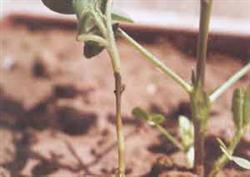
How to prevent and control peanut southern blight? Detailed practical methods
Peanut southern blight generally begins to occur in large numbers in early to mid-June. Comprehensive control measures are as follows: for lower-lying fields, dig good ditches to help drain standing water and lower the water table; sloping peanut fields should also have good ditches so that water does not accumulate after rain. Apply more calcium and potassium fertilizer. After the initial flowering stage, in combination with building up soil and hilling the beds, apply 40-5...
-
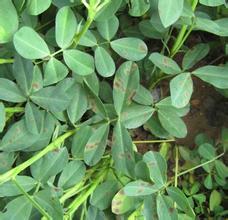
Control Methods and Technical Key Points for Peanut Web Blotch
Peanut web blotch, also known as brown stripe disease and cloud-pattern blotch disease, often occurs mixed with leaf spot disease, and can cause early defoliation of peanut leaves, severely affecting peanut yield. I. Disease occurrence pattern The disease mostly begins during the flowering stage, with the peak period from pod setting to maturity, mainly damaging leaves, initially producing circular or irregular...
-
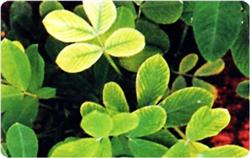
Detailed Explanation of Pest Control Methods During Peanut Growth
I. Causes of Iron Deficiency in Peanuts Peanut is one of the crops relatively sensitive to the iron element. Although iron is not a component of chlorophyll, it is an indispensable condition for chlorophyll synthesis, a constituent of the cytochrome oxidase and peroxidase related to respiration, and participates in the oxidation-reduction processes within the plant. Due...
条件筛选