-
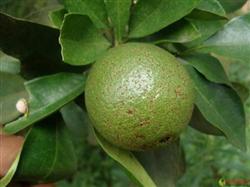
What damage do thrips do to navel oranges? Fruit growers must be on alert
What damage do thrips do to navel oranges? How can navel oranges be protected against thrips? We also ask experienced readers to help explain. Thrips are tiny insects, generally only about 1mm long, hard to spot with the naked eye, and they require a magnifying glass of more than 10x to be seen clearly; the main pest of citrus is the citrus thrips, which has a considerable...
-
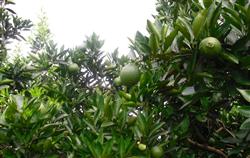
Navel Orange Cultivation Techniques and Orchard Management Methods
How to manage a navel orange orchard well? Please give a detailed introduction. Navel orange orchard management is divided into mature orchards and young orchards. For detailed methods, please refer to the following list. 1. Management methods for mature navel orange orchards: 1. Navel orange fruit retention methods: (1) From after flower drop to the second physiological fruit drop period, spray the leaves with 0.15% Huangjia natural brassinolide at 5000 times plus new-type nutrient liquid fertilizers such as Jinkuizi L, P, K extract at 500 times, Yelüling at 500 times, etc.) 2 to 3 times;
-
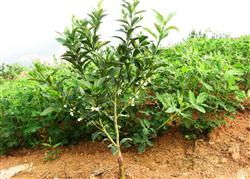
Navel Orange Cultivation Techniques: How Should Navel Orange Trees Be Pruned?
How should navel orange trees be pruned? Here is an introduction to the methods. When planting navel oranges, you can refer to the following pruning methods: 1. Pruning methods for young navel orange trees: Focus on developing the canopy, and prune lightly, avoiding excessive thinning and heavy heading back. On the basis of trunk determination of the nursery stock, cultivate the main branches in the 1st and 2nd years, and select and retain...
-
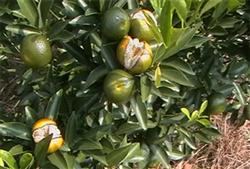
Navel Orange Cultivation Techniques: How to Prevent and Control Physiological Diseases of Navel Oranges?
How to prevent and control physiological diseases of navel oranges? Please provide an introduction. The main physiological diseases of navel oranges are fruit cracking, sunburn, and navel yellowing. For control methods, please refer to the following list: Control methods for navel orange fruit cracking. For navel orange fruit cracking, first select varieties (lines) with strong cracking resistance. Generally, varieties (lines) with oval fruit shape, small navel or closed navel have better cracking resistance, such as Newhall and others. Second, strengthen scientific management to enhance tree vigor. Especially during the drought period after the plum rain and before the autumn rains arrive, water management must be done particularly well, with timely irrigation or watering (sprinkling) to keep the soil moist and promote normal fruit growth and development. Third, during the rapid fruit expansion period, spray foliar potassium fertilizer 2 to 3 times consecutively.
-
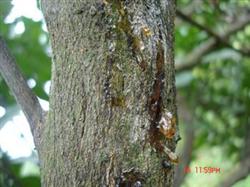
What to do about gummosis on navel orange trees? Analysis of control methods
What to do about gummosis on navel orange trees? What causes gummosis on navel orange trees? Please advise. After navel orange trees enter June, temperatures rise, rainfall is plentiful, and with high temperature and high humidity, various pests and diseases begin to occur in large numbers. Gummosis is a fungal disease caused by Phytophthora, mainly damaging the trunk, followed by large branches, weakening the tree...
-
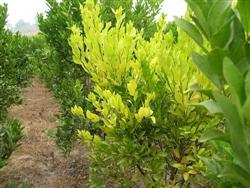
How to manage Gannan navel oranges through the four seasons? A detailed guide to growing techniques
How to manage Gannan navel oranges through the four seasons? Please explain the methods. The four-season management methods for Gannan navel oranges can refer to the following methods: 1. Protect autumn shoots in autumn. Autumn shoots are the main fruit-bearing mother branches of navel oranges. Depending on different climatic conditions, promote the growth of autumn shoots. Generally, one week after Minor Heat, apply nitrogen fertilizer according to the fruit load of the plant to stimulate budding. After Major Heat...
-
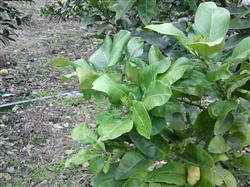
How to fertilize mandarin oranges? A detailed explanation of the key cultivation techniques
How to fertilize mandarin oranges? Which nutrients are best to apply to mandarin oranges? Please give guidance. The essential elements during the growth of mandarin oranges are: nitrogen, phosphorus, potassium (major elements), calcium, magnesium, sulfur (secondary elements), zinc, manganese, iron, copper, boron, molybdenum (trace elements). Each nutrient has a certain function, and a deficiency...
-
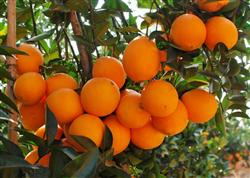
How should navel oranges be planted to achieve high yields?
How can navel oranges be planted for high yields? Please provide a detailed introduction to the planting methods. The following methods can be used for planting navel oranges: 1. Build the orchard to high standards. When building an orchard on a hillside, first build contour reverse-slope terraces, then dig trenches and apply base fertilizers such as rice straw, pig and cattle pen manure, phosphate fertilizer and lime. The base fertilizer amount under each tree's planting hole is required to be no less than 100 kg...
-
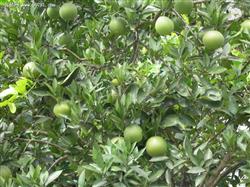
Detailed Explanation of Key Management Techniques for Navel Orange in June
How to manage navel orange in June? Please provide a detailed introduction to the management methods. The main points of navel orange management in June are as follows: I. Management of mature trees 1. Continue to remove summer shoots to protect fruit. 2. Weed and loosen the soil, and mulch the tree disc for mature trees with smaller canopies that have not yet closed their rows. 3. Continue to prevent navel yellow fruit drop; apply a mixture of navel-yellow inhibitor and 70% thiophanate-methyl at 600 times dilution to the navel of the fruit, which can prevent infectious navel yellow fruit drop.
-
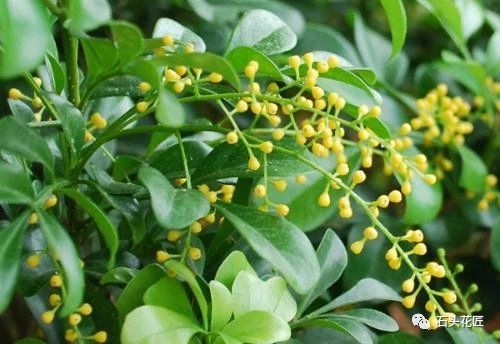
Give the orange jasmine a little beer and it will grow vigorously, with glossy leaves and nonstop blooms
Speaking of orange jasmine (Murraya paniculata), as a woody flowering plant it is a very easy plant to grow. This season is exactly when it blooms, and not just once, but continuously from June to October, flowering and fading over and over, so in terms of care you need to pay special...
条件筛选