Navel Orange Cultivation Techniques: How to Prevent and Control Physiological Diseases of Navel Oranges?
How to prevent and control physiological diseases of navel oranges? Please provide an introduction. The main physiological diseases of navel oranges are fruit cracking, sunburn, and navel yellowing. For control methods, please refer to the following list: Control methods for navel orange fruit cracking. For navel orange fruit cracking, first select varieties (lines) with strong cracking resistance. Generally, varieties (lines) with oval fruit shape, small navel or closed navel have better cracking resistance, such as Newhall and others. Second, strengthen scientific management to enhance tree vigor. Especially during the drought period after the plum rain and before the autumn rains arrive, water management must be done particularly well, with timely irrigation or watering (sprinkling) to keep the soil moist and promote normal fruit growth and development. Third, during the rapid fruit expansion period, spray foliar potassium fertilizer 2 to 3 times consecutively.
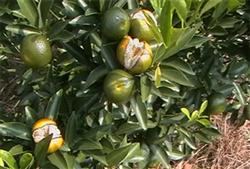 How to prevent and control physiological diseases of navel oranges? Please provide an introduction.
The main physiological diseases of navel oranges are fruit cracking, sunburn, and navel yellowing. For control methods, please refer to the following list:
Control methods for navel orange fruit cracking
For navel orange fruit cracking, first select varieties (lines) with strong cracking resistance. Generally, varieties (lines) with oval fruit shape, small navel or closed navel have better cracking resistance, such as Newhall and others. Second, strengthen scientific management to enhance tree vigor. Especially during the drought period after the plum rain and before the autumn rains arrive, water management must be done particularly well, with timely irrigation or watering (sprinkling) to keep the soil moist and promote normal fruit growth and development. Third, during the rapid fruit expansion period, spray foliar potassium fertilizer 2 to 3 times consecutively.
For foliar potassium fertilizer, you can choose 0.2% monopotassium phosphate or 0.3% potassium sulfate compound fertilizer, and in early to mid-July, use a mixture of 200 mg/L "920" plus 800-fold methyl thiophanate solution and an appropriate amount of fragrant paste, which can heal the cracks and prevent fruit cracking from recurring.
Control methods for navel orange sunburn
Covering the orchard with straw and other materials to preserve moisture is the foundation for preventing sunburn. Planting forage grass or interplanting green manure in the orchard can reduce sunburn. In high-temperature seasons, do not spray pesticides such as machine oil emulsion and lime sulfur mixture, so as not to aggravate the occurrence of sunburn. In the early stage of sunburn, paste white paper on the surface of sunburned fruit and pull branches and leaves to shade the fruit, so as to reduce direct sunlight exposure.
In the high-temperature seasons of summer and autumn, regular irrigation or spraying water can prevent and reduce the occurrence of sunburn.
Control methods for navel orange navel yellowing
For navel yellowing, first start with cultivating strong and vigorous tree vigor, appropriately increase nitrogen fertilizer, and improve the tree's nutritional level and nitrogen metabolism function. Second, before flowering, pull strong and vigorous autumn shoots into a drooping or horizontal state, so that most flowers face downward when they open, reducing sun-facing fruit and preventing the occurrence of navel yellowing.
From early to mid-June to mid-to-late July, combined with fruit preservation, spray 30-40 mg/L "920" solution twice consecutively. From late July to late August, use 600-fold "navel yellowing inhibitor" solution to coat and spray the navel part of the fruit, in order to inhibit the occurrence and spread of navel yellowing.
Click to get more navel orange cultivation techniques
Click to get more fruit cultivation techniques