How to fertilize mandarin oranges? A detailed explanation of the key cultivation techniques
How to fertilize mandarin oranges? Which nutrients are best to apply to mandarin oranges? Please give guidance. The essential elements during the growth of mandarin oranges are: nitrogen, phosphorus, potassium (major elements), calcium, magnesium, sulfur (secondary elements), zinc, manganese, iron, copper, boron, molybdenum (trace elements). Each nutrient has a certain function, and a deficiency...
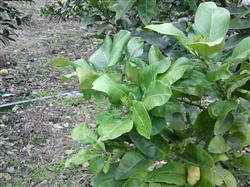 How to fertilize mandarin oranges? Which nutrients are best to apply to mandarin oranges? Please give guidance
The essential elements during the growth of mandarin oranges are: nitrogen, phosphorus, potassium (major elements), calcium, magnesium, sulfur (secondary elements), zinc, manganese, iron, copper, boron, molybdenum (trace elements). Each nutrient has a certain function, and the lack of any one nutrient will affect citrus growth; conversely, an excess of certain nutrients can also cause toxic effects. On the other hand, various nutrients have their own inherent proportions and interactions, and if the proportions are unbalanced (especially trace elements), adverse symptoms will appear, affecting yield or quality. These elements can all be supplemented by applying compound fertilizers and organic fertilizers.
Fertilization of mandarin orange trees can be divided into spring shoot fertilizer, flower-fall small fruit fertilizer, autumn shoot fertilizer, flower bud differentiation fertilizer, and pre-harvest (post-harvest) fertilizer. The reasons for fertilizing at each stage are described below:
1. Spring shoot fertilizer:Apply about 20 days before the spring shoots sprout (generally in February), mainly with quick-acting nitrogen fertilizer. However, for young vigorous trees and trees bearing fruit for the first time, it is advisable to "fertilize upon seeing buds" and determine the amount based on the number of flowers, so as to control the length of spring shoots and make it easier to retain fruit. Lime powder can be broadcast to neutralize soil acidity, along with spraying some foliar fertilizer. For example, spray 0.15% borax, 0.3% magnesium sulfate, 0.3% monopotassium phosphate, 0.3% urea, nutritional nucleotides, etc.
2. Flower-fall small fruit fertilizer:Apply when flowers begin to fall, using compound fertilizer plus urea, etc. Apply more when there is more fruit and less when there is less fruit; this can significantly increase the fruit-setting rate. Generally, for a tree yielding 25 kg, applying 0.2-0.4 kg of compound fertilizer per tree is appropriate. But attention must be paid to controlling the sprouting of summer shoots. During the summer shoot period, nutrients are supplied to the young fruit by foliar topdressing.
3. Autumn shoot fertilizer:Cultivating the fruiting mother branches is the key fertilization of the year and should account for 30%-40% of the total annual fertilizer amount, mainly with quick-acting nitrogen fertilizer, which can be combined with decomposed organic fertilizer and applied 10-20 days before the shoots are released. Fertilization should be combined with irrigation so that the autumn shoots emerge uniformly. If dry peanut bran or dry chicken manure, etc. is buried, it generally needs to be applied 40-60 days in advance to promote autumn shoots. A small amount of this autumn shoot fertilizer can also be reserved as shoot-strengthening fertilizer to be applied after the autumn shoots sprout or during the greening period.
4. Flower bud differentiation fertilizer:Generally applied in November before flower bud differentiation, mainly by burying soil manure, organic fertilizer, or compound fertilizer. Its main role is to promote flower bud differentiation in citrus.
5. Pre-harvest (post-harvest) fertilizer:For old trees, weak trees, heavily fruiting trees, and late-maturing varieties (such as ponkan, etc.), a quick-acting fertilizer can be applied once before or after harvest to promote early recovery of tree vigor, reduce winter leaf drop, and facilitate flower bud differentiation. Young vigorous trees may skip this fertilization. After harvest, add outside soil to the entire orchard once; especially for paddy-field citrus with shallow roots, earthing up helps protect the root system through winter and increases the nutrient-absorbing area and fertility.
Click to get more mandarin orange cultivation techniques
Click to get more fruit cultivation techniques