How should navel oranges be planted to achieve high yields?
How can navel oranges be planted for high yields? Please provide a detailed introduction to the planting methods. The following methods can be used for planting navel oranges: 1. Build the orchard to high standards. When building an orchard on a hillside, first build contour reverse-slope terraces, then dig trenches and apply base fertilizers such as rice straw, pig and cattle pen manure, phosphate fertilizer and lime. The base fertilizer amount under each tree's planting hole is required to be no less than 100 kg...
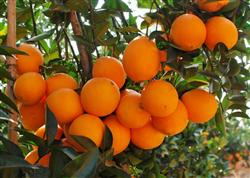
How can navel oranges be planted for high yields? Please provide a detailed introduction to the planting methods
The following methods can be used for planting navel oranges:
1. Build the orchard to high standards. When building an orchard on a hillside, first build contour reverse-slope terraces, then dig trenches and apply base fertilizers such as rice straw, pig and cattle pen manure, phosphate fertilizer and lime. The base fertilizer amount under each tree's planting hole is required to be no less than 100 kg. Plant spacing 3 m, row spacing 4 m, sow green manure between rows, and plant windbreak forests and shelterbelt forests along the main roads and around the orchard (Paliurus ramosissimus is preferred).
2. Expand the planting holes and improve the soil, and manage fertilizer and water well. Carry out hole expansion and soil improvement every autumn, and apply crop straw, livestock and poultry manure, biogas residue fertilizer, cake fertilizer, etc. by layered burying. Deep soil improvement for the whole orchard is required to be completed within three years. The amount of base fertilizer applied through hole expansion for each tree each year is no less than 75 kg. For young trees, topdressing should be light and frequent, once a month from March to August, mainly with quick-acting nitrogen fertilizer, appropriately combined with phosphorus and potassium fertilizer. After entering the fruiting stage, apply heavy fertilizer and reduce the frequency. From April to May, spray gibberellin at a concentration of 50 mg/L or other fruit-preserving agents plus 0.2%-0.3% potassium dihydrogen phosphate solution to preserve flowers and fruits. In July and October, apply fruit-strengthening fertilizer and post-harvest fertilizer well. From July to October, if summer drought or autumn drought occurs, drought prevention and drought resistance measures must be taken promptly to ensure that the navel orange trees safely pass through the drought period.
3. During the growing season of navel orange trees, various diseases and pests should be controlled promptly. Such diseases include citrus canker, scab, gummosis, and navel yellow disease, and such pests include citrus red mite, rust mite, leafminer, scale insects, and whitefly.
4. Prune reasonably. For pruning young trees, focus mainly on shaping, bud removal and shoot control; for fruiting trees, focus on summer pruning and winter pruning, promptly remove summer shoots, and in mid-to-late July shorten spring shoot vegetative branches by leaving 5 leaves, while also heading back strong branches and fruiting mother branches that have dropped flowers and fruits, so as to promote autumn shoots. Because navel oranges have strong shoot-forming ability, properly thin overly dense autumn shoots in early winter, leaving 2-4 healthy autumn shoots on each base branch.
Click to get more navel orange planting techniques
Click to get more fruit planting techniques