-
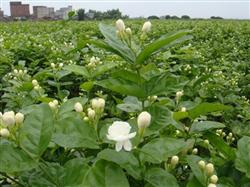
What are the methods for growing high-quality jasmine?
How do you grow high-quality jasmine? Please explain the methods. Jasmine belongs to the Oleaceae family, genus Jasminum, a perennial evergreen small shrub native to tropical and subtropical regions. The jasmine branches are slender, and the twigs are angular, sometimes hairy, and slightly vine-like. The leaves are simple and opposite, glossy, broadly ovate or elliptical, with prominent veins, a slightly wrinkled leaf surface, and leaves...
-
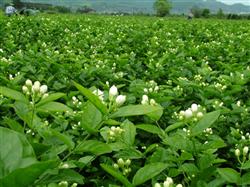
How do you grow jasmine to get a high yield?
How can jasmine cultivation achieve a high yield? Please advise. For high-yield jasmine cultivation, you can refer to the following methods: 1. Reasonable close planting. It is best to choose fertile sandy loam with convenient drainage and irrigation. Deeply plow and prepare the soil, and make turtle-back-shaped beds 1.3 m wide. The planting row spacing is 65 cm, the hole spacing is 33 cm, and the hole depth is 25 cm. Apply 3000 kg of farmyard manure and 25 kg of superphosphate per 667 sq m as base fertilizer at the bottom of the holes. Plant 3 plants per hole, with a plant spacing of 10 cm, in a triangular arrangement. Plant about 10,000 plants per 667 sq m. After planting, cover with soil and press firm, level the bed surface, and water thoroughly to settle the seedlings.
-
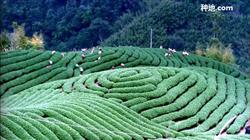
What are the pollution-free pest control methods for high-mountain tea?
How do you grow high-mountain tea? Please guide. 1. What is high-mountain tea? Tea produced in areas above 600 m elevation is generally called high-mountain tea. With its advantages of superior quality, no pollution and low (or even no) pesticide residue, high-mountain tea is increasingly winning people's hearts and has become the preferred tea beverage for consumers. Tea...
-
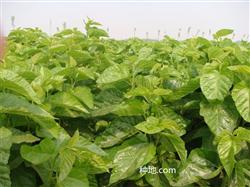
How to fertilize mulberry trees for high yields? These methods you need to master
What kind of fertilization method can make mulberry trees high-yielding? Please advise. Mulberry is a crop with a high fertilizer requirement, and sufficient fertilizer must be applied to obtain high yields. The annual fertilizer amount for one mu of mature mulberry forest is 240 jin of urea, 200 jin of superphosphate, 40 jin of potash fertilizer, and 2000 jin of organic fertilizer. It is applied in 4 rounds throughout the year, with spring fertilizer in mid-March...
-
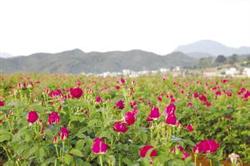
Detailed Explanation of High-Yield Cultivation Techniques for 'Mo Hong' Edible Roses
Edible roses have a certain ornamental value, and their fragrance fills the air; their unique aromatic flavor and excellent taste make them loved by people from all walks of life, and they are widely used in the food industry, daily cosmetics, etc. The rose series and sugar-free rose jam developed by the Food Research Institute of the Yunnan Academy of Agricultural Sciences have aroused great interest and attention from developers,...
-
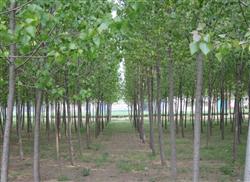
Detailed Explanation of Key Cultivation Techniques for Fast-growing and High-yield Poplar Plantations
In order to achieve fast growth, high yield, and high quality and efficiency in poplar, scientific cultivation techniques must be applied. Based on the research results and practical experience of poplar cultivation techniques in our province, the following key technical points should mainly be mastered: 1. Site selection. Selecting afforestation land suitable for poplar growth is the basic condition for achieving fast-growing and high-yield poplar...
-

Detailed Explanation of Key Techniques for High-Efficiency Marigold Cultivation
High-Efficiency Marigold Cultivation Techniques
-
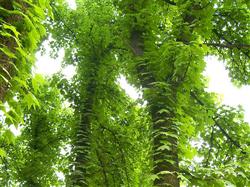
Detailed Guide to High-Yield Cultivation Techniques for Leaf-Use Ginkgo
1. Site selection The site conditions for a leaf-use ginkgo plantation require flat terrain, good drainage and irrigation, and fertile loam or sandy loam; a leaf-use ginkgo plantation should not be established on saline-alkali land or thin mountain land. 2. Planting techniques A leaf-use ginkgo plantation can be established by direct sowing, or by planting seedling trees or cutting-propagated plants. Planting can be done in spring or autumn...
-
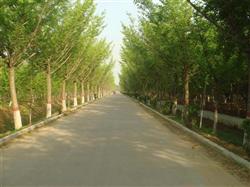
Dwarfing and high yields in ginkgo: skillful pruning is the key
Ginkgo has strong adaptability and a wide cultivation range, making it suitable for use as a street tree. The following introduces the cultivation techniques for ginkgo as a street tree: 1. Seedling selection requirements: The seedlings should be robust, with well-developed root systems, whitish xylem, and root bark that is slightly red and tightly attached to the xylem. If the root system turns black, even if the trunk is green, it may still...
-
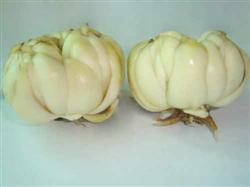
Detailed Guide to High-Yield Cultivation Techniques for Edible Lilies
Lilies are a cross-year crop. After planting in the autumn of the first year, they do not break through the soil and emerge until the following spring, spending nearly half a year developing and growing underground in the meantime. To achieve high yields, the following technical steps should be grasped in cultivation: 1. Select suitable improved varieties. Lilies are divided into two major categories, edible and medicinal, with more than 10 varieties in total. Edible...
条件筛选