Detailed Explanation of High-Yield Cultivation Techniques for 'Mo Hong' Edible Roses
Edible roses have a certain ornamental value, and their fragrance fills the air; their unique aromatic flavor and excellent taste make them loved by people from all walks of life, and they are widely used in the food industry, daily cosmetics, etc. The rose series and sugar-free rose jam developed by the Food Research Institute of the Yunnan Academy of Agricultural Sciences have aroused great interest and attention from developers,...
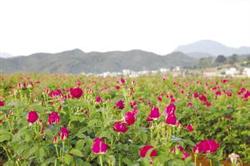
Edible roses have a certain ornamental value, and their fragrance fills the air; their unique aromatic flavor and excellent taste make them loved by people from all walks of life, and they are widely used in the food industry, daily cosmetics, etc. The rose series and sugar-free rose jam developed by the Food Research Institute of the Yunnan Academy of Agricultural Sciences have aroused great interest and attention from developers, and the market prospects are very optimistic. Roses have a cultivation history of many years in Hongta District, and edible roses were introduced from Hangzhou in 1989, adding a new spice variety to Hongta District, but the planting scale was small and could never meet market demand. The edible rose 'Mo Hong' currently covers more than 30 mu, mainly distributed in Xiao Tian Fang, Luohe, Hongta District, with a yield of 200-500 kg per mu, and up to 700 kg under good planting and management, with a per-mu output value of 1,400 yuan-4,900 yuan, having good ecological, economic and social benefits.
1 Characteristics and Traits of 'Mo Hong'
It belongs to the genus Rosa in the family Rosaceae, a deciduous or semi-evergreen shrub, with clustered branches, plant height 60-80 cm, large hooked prickles, pinnately compound leaves, usually 5-7 leaflets, leaf surface smooth, glossy, hairless, flowers often several or solitary, long pedicels, deep flower color, red with black, single flower weight 6-14 g, average 7.5 g, flowering period from March to October, and flowers can be seen almost all year round. In the first year of planting, the yield of fresh flowers per mu is 200-300 kg, and after the third year it enters the full flowering period, with a yield of 500-700 kg per mu. It has the characteristics of strong adaptability, many branches, easy full blooming, long flowering period, relatively high fertilizer requirements, and difficulty in propagation by cuttings. It also prefers light; with sufficient light, the plant grows vigorously, the flowers are large and brightly colored. The optimum temperature is 20-30°C, and it grows vigorously from April to October, with branches generally blooming. It grows poorly when the daily average temperature is above 35°C, and enters dormancy below 5°C. It grows best in loose, fertile, slightly acidic soil with high organic matter content.
2 Key Points of Cultivation Techniques
2.1 Seedling Propagation
One-year-old Hangzhou rootstock or Rosa multiflora can be used for grafting by cuttings. After grafting, 'Mo Hong' has better adaptability, and grafting should be carried out before the buds sprout in early spring. The one-year-old seedlings after grafting can be used as production seedlings after short pruning.
2.2 Timely Planting
Planting in mid-to-late December is appropriate. Before planting, dig the planting furrows well and apply sufficient base fertilizer, with 1,000 kg of farmyard manure and 20 kg of ternary compound fertilizer per mu.
2.3 Pruning Time and Methods
Winter pruning is generally carried out before January 10; delaying it will cause bleeding and affect tree vigor. For pruning during the growing season, short pruning can be carried out immediately after the entire inflorescence has finished flowering and been harvested, and some are thinned out. The distribution of branches can be adjusted at any time to improve ventilation and light transmission.
2.4 Fertilizer and Water Management
'Mo Hong' has few fibrous roots and produces new branches and flowers multiple times a year, so it has relatively high requirements for fertilizer and water. The soil should be slightly acidic, fertile, and loose without ?. Apply farmyard manure deeply once in winter. During the growing season from April to September, apply diluted farmyard manure about once every 15 days, and at the same time apply 20 kg of ordinary calcium superphosphate and 5-8 kg of potassium sulfate with irrigation. Irrigate once with clean water when buds sprout in early spring, and thereafter drain and irrigate according to the weather.
2.5 Pest and Disease Control
The main pests and diseases of 'Mo Hong' include brown spot, powdery mildew, aphids, red spiders, etc. Because it is mostly used for food, avoid chemical control during the flowering period; basically do not use pesticides during the full flowering period. Powdery mildew on a few pedicels can be controlled by pruning.
2.6 Flower Harvesting
Generally, harvest when the flower buds are 2/3 open or just opening, and the daily harvesting time should be after the dew has dried and before 10 a.m. Flowers for food use are generally processed on the same day they are harvested, and should not be squeezed or piled up, otherwise the fresh flowers will heat up and ferment, losing their fragrance.