Dwarfing and high yields in ginkgo: skillful pruning is the key
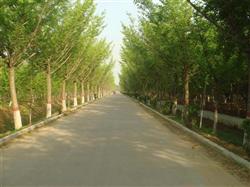
Ginkgo has strong adaptability and a wide cultivation range, making it suitable for use as a street tree. The following introduces the cultivation techniques for ginkgo as a street tree: 1. Seedling selection requirements: The seedlings should be robust, with well-developed root systems, whitish xylem, and root bark that is slightly red and tightly attached to the xylem. If the root system turns black, even if the trunk is green, it may still...
 Cultivating ginkgo seedlings grown from seed takes 20 years to flower and bear fruit, but by using grafted seedlings with dwarfing, close planting, early fruiting, and high-yield cultivation techniques, it is possible to achieve fruiting in three years and benefit in five years. Growth habits of ginkgo: 1. Seedling-grown ginkgo has very strong apical dominance and can grow into a tall tree; after grafting, apical dominance is weakened, the tree posture opens up, and branches are distributed in layers. 2. Young trees have strong sprouting ability and weak branching ability; only the tips of branches can produce 1 to 2 long shoots, while the rest are short shoots. 3. Short fruit branches bear fruit. Short fruit branches can be less than 1 cm long. Whether a short shoot can become a fruit branch is related to nutritional status; if a short shoot has 10 thick, fleshy leaves, it is likely to become a fruit branch. Cultivating grafted seedlings: From high-yielding, high-quality 30- to 40-year-old fruiting trees, cut fully developed, plump-budded one-year-old branches as scions, with a female-to-male ratio of 50:1. The shaping of grafted dwarf ginkgo should begin in the nursery; 3 to 4 scions can be grafted onto the rootstock, which helps cultivate the first layer of main branches in a short time. If only one scion is grafted, after it sprouts it should be made to grow upright; otherwise it will cause difficulties in shaping. Shaping and pruning: 1. Tree structure: In production, a three-main-branch, two-layer open-center form can be used, with a trunk height of 30 to 80 cm, the first layer of three main branches evenly distributed, and the second layer of 2 to 3 main branches distributed alternately with the first layer's three main branches, with an intra-layer spacing of 60 cm, an inter-layer spacing of 80 to 100 cm, and 2 to several side branches borne on each main branch, with side branch spacing of 30 to 40 cm, and a main branch opening angle of 60 degrees. 2. Trunk determination height: For grafted seedlings using one- or two-year-old rootstocks, with a planting density of 4 x 1.5 m, the trunk can be set at 30 cm to 50 cm; for grafted seedlings using 3-year-old rootstocks, with a planting density of 4 x 3 m, the trunk can be set at 80 cm. 3. Tree form cultivation: Cultivating the first layer of main branches takes 3 to 4 years; during cultivation, methods such as propping, pulling, and hanging should be used to continuously adjust the tree posture. While cultivating the first layer of main branches, pay attention to cultivating the second layer of main branches. Generally, it is difficult to form a trunk on the first layer of main branches, and it becomes a cup-shaped form; advantage should be taken of the rootstock's strong root-sucker ability to cultivate a strong root-sucker shoot and make it become the trunk above the first layer, letting it grow to 2 to 2.5 m, and grafting scions on it to grow into the second layer. 4. Pruning: (1) More heading back and less thinning out: For the various types of branches produced, use laying out as much as possible, and carry out heading back on the extension branches of main branches and on parts where branches are needed. (2) Timely pinching: From early May to early June, timely pinch the auxiliary nurturing branches. (3) Girdling, inverted bark grafting, and notching: For vigorous auxiliary nurturing branches, from late June to early July, on sunny days, use the inverted bark technique of ring girdling to promote flower formation; the girdling width is 1/10 of the branch diameter, which can greatly promote flower differentiation. According to the author's many years of experiments, the flower formation rate of inverted bark reaches about 95%. For parts lacking branches, notch above the bud to promote sprouting.