-

Full Analysis of the Key Technical Points for Lotus-Rice-Fish Integrated Farming
"Lotus-rice-fish" integrated farming refers to a co-culture model in which both rice is planted and fish are raised during the growing period of lotus root. The relevant integrated farming techniques are briefly introduced below. 1. Reasonable site selection. Choose gray mud fields with sufficient water sources, strong water retention capacity, and medium or above fertility. Fields with water-quality concerns, cold-waterlogged fields, and perennial lotus fields are not suitable for selection. 2. Select improved varieties. For lotus seeds, choose excellent varieties with large grains, a long flowering period, and high yield; for rice, it is advisable to choose early-maturing or early-to-medium-maturing varieties, such as Minke Zao No. 8, Zhefu 218, etc.; for fish, mainly stock common carp.
-
Breed Characteristics and Farming Techniques of the Guangxi Three-Yellow Chicken
Guangxi Three-Yellow Chicken (also called Xindu Chicken, Nuodong Chicken, Da'an Chicken, Madong Chicken, Jiangkou Chicken). Origin (or distribution): produced in Guiping, Pingnan, Tengxian, Cangwu, Hexian, Lingxi, Rongxian and other places in southeastern Guangxi. Main characteristics: roosters have dark reddish-brown plumage, with neck feathers lighter in color than the body feathers. Wing feathers often have black edges. Tail feathers are mostly black. Hens are all yellow-feathered, but the primary and secondary wing feathers often have black edges or black spots, and the tail feathers are also mostly black. Single comb, red earlobes, orange-yellow iris. Beak and shanks yellow
-
Detailed Explanation of Color Fox Breeding Technology, Mastering the Key Points of Color Fox Farming
Foxes are canids, divided into two genera. The genus Vulpes includes the silver fox (i.e. silver-black fox), red fox, and color fox; the genus Alopex includes the blue fox and colored arctic fox. Color foxes and colored arctic foxes are mutant varieties arising from coat color variation, because fox coat color variation occurs under natural conditions, and the general mutation rate is only one in one hundred thousand or one in one million. Rarity makes things precious, and a single high-quality color fox pelt sells for as much as several thousand US dollars. Foreign research and farming of color foxes has a history of over 50 years, and currently there are more than 30 color types of color foxes. In order to develop
-
What key factors must be emphasized in healthy farming of Ezo scallops?
Since the 1980s, floating-raft farming of Ezo scallops has developed rapidly in Changhai County, Liaoning Province. At present, the farming area has reached more than 100,000 mu, and it has become an important local famous, special, and high-quality marine aquaculture species, occupying a very important position in the development of the marine fishery economy. Although Ezo scallop farming technology has been rapidly promoted, during operations, due to negligence in certain technical links, the mortality rate during farming has continued to rise, and the specifications, quality, and fullness of commercial scallops have declined somewhat, thereby affecting the economic benefits of the industry. Based on many
-
The dace is an aquatic improved species with relatively high economic value for farming.
Dace is also known as river fish and slippery fish. There are more than 20 species of dace worldwide, distributed only in China, Japan, Korea and the eastern part of the former Soviet Union. China has about 10 species of dace, mainly distributed in the waters of northern China. The species vary by region; those with mature farming technology and relatively high economic value include: 1. Baikal dace. Mainly distributed in the **Burqin area of China. This fish is a small to medium-sized precious fish, weighing 100-200 grams, with excellent flesh flavor, strong reproductive capacity and high population yield. 2. Northeast dace. Most are distributed
-
New shrimp farming technique makes shrimp grow plump and strong
Xu Zhihua, a shrimp farmer in Fengma No. 1 Village, Hengli Town, Nansha District, Guangzhou, China, contracted 60 mu of ponds to raise whiteleg shrimp (Litopenaeus vannamei). In 2007, under the guidance of agricultural technicians, he used enzyme bacteria technology and fish-and-shrimp fertilizer, achieving a net income of 5000 yuan per mu. Xu Zhihua conducted comparative trials in two ponds. Pond No. 1 was sprayed with enzyme bacteria and fertilized with fish-and-shrimp fertilizer to enrich the water, with 50,000 shrimp fry stocked per mu. He applied fertilizer frequently and lightly, and throughout the whole process he used no water-purifying agents or bactericidal drugs, yet there was no shrimp surfacing or death, and the shrimp survival rate was above 95%. 4
-
Fish Farming: Suitable Dosages of Medication for Several Fish Species
The dosage must not be too high, otherwise it may cause phytotoxicity to the cultured species. In particular, fish such as freshwater pomfret (piaractus brachypomus) and mandarin fish are sensitive to certain medications, and improper use can easily cause death. 1. Freshwater pomfret. Freshwater pomfret is most sensitive to organophosphorus pesticides. Therefore, the use of medications such as trichlorfon and dichlorvos is prohibited. 2. Mandarin fish. Mandarin fish is relatively sensitive to medications such as trichlorfon and copper chloride. When the concentration of trichlorfon is above 0.2 ml/L, or the concentration of copper chloride is above 0.7 mg/L, it can cause poisoning and death in mandarin fish. Therefore, it is necessary to master
-
Five Essential Elements Every Pig Farming Beginner Must Know
Traditional pig farming emphasizes the four major elements of "epidemic prevention, feed, disinfection, and management," while current pig farming, in addition to the above four major elements, also requires a good health care system, which is the fifth major element. Regarding the arrangement of these major steps, the previous traditional arrangement had major flaws. Based on the actual situation of the current pig farming industry, we need to have a new understanding of the arrangement of pig farming elements.
-
3 Management Points for Safe and Efficient Pig Farming in Winter
Winter temperatures are low and the weather is cold, which is not conducive to the normal growth and development of pigs and also makes them prone to disease. Therefore, safe pig farming in winter should revolve around the theme of cold protection, and specifically the following three aspects should be grasped: 1. Raising the temperature. There are many ways to raise the temperature of pig housing, but there are four simple, economical and practical methods: 1. Cover open-style pig housing with plastic film. It is best to cover with double-layer plastic film. Although the cost is somewhat higher than single-layer plastic film covering, the insulation effect is better. This
-
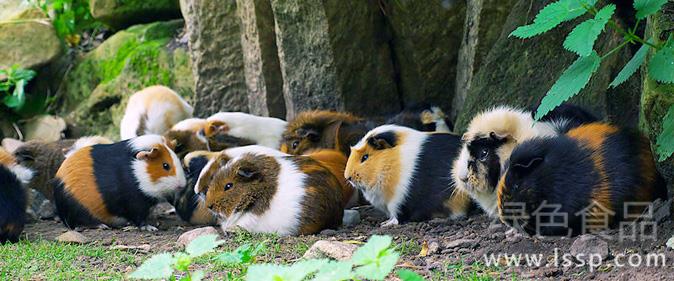
Detailed Guide to Guinea Pig Farming: Low Cost, Low Technical Difficulty
Introduction to Guinea Pig Farming Techniques: Low Cost, Low Technical Difficulty
条件筛选