-

The prospects for yellow catfish polyculture are good, and this farming model is worth paying attention to
Yellow catfish, also known as gayazi, huangga, angsi and so on, is an important economic fish in China's freshwater aquaculture. The flesh of yellow catfish is tender, nutritious and delicious, and market demand has continued to grow rapidly in recent years. Because the yield from natural waters and pond culture is very limited, it is difficult to meet the growing market demand, which has kept the market price of yellow catfish high for a long time. Polyculture of yellow catfish in ponds requires little investment and offers high returns, and the farming prospects are generally viewed favorably. Pond conditions: Ponds for polyculturing yellow catfish should be chosen with good water source conditions and no pollution
-
Four key points for fish farming at the start of spring
1. Fertilization: In early spring, when the pond water temperature stabilizes at 8°C to 10°C, start applying additional fertilizer to cultivate natural food organisms in the water. The amount of fertilizer should be determined based on the fertility of the water and the quality of the fertilizer. Generally, apply 60 to 90 kg of human and animal manure per mu, or 100 to 150 kg of livestock manure. If chemical fertilizer is used, follow a nitrogen-to-phosphorus-to-potassium ratio of 1:1:0.5. When applying, first crush it, mix it with water, and splash it evenly over the entire pond. The total amount per mu is 3 to 7 kg, with each application spaced 5 to 10 days apart. Keep the pond water a yellowish-brown or yellow
-
Integrated fish-and-goose farming model boosts farmers' income by 30 percent
Mixed farming of fish and geese is, for fishermen, a scientific farming model with "ten benefits and not a single drawback." This model makes full use of water surface and land resources, and under the same conditions increases economic returns by up to 30% compared with raising fish or geese alone, making it an effective new path to prosperity for fishermen. Advantages of integrated fish-and-goose farming: geese are fully automatic, energy-saving and highly efficient aerators for fish ponds. When fish and geese are raised together, farmers need not worry about oxygen depletion in the water caused by weather changes, because in low-pressure weather geese will rush to jump into the water, bathe and chase each other, churning up the water
-
Detailed Practical Techniques for Healthy Grass Shrimp Farming
Grass shrimp, scientific name Penaeus monodon, also known as black shell shrimp, belongs to the family Penaeidae. Because this shrimp prefers to inhabit areas with aquatic plants, it is called grass shrimp. Grass shrimp have the characteristics of fast growth, omnivorous feeding habits, wide salinity tolerance, short farming cycle, large individual size, delicious meat, rich nutrition, and high adult shrimp yield. Therefore, this shrimp has become an important current farming target. The healthy farming techniques are introduced as follows: 1 Shrimp Pond 1.1 Pond Selection The pond should be built in areas with flat terrain, little silt, abundant water sources, good water quality, no pollution
-
Introduction to the Characteristics and Farming Techniques of the Jingxi Large Hemp Duck Breed
Origin (or distribution): Jingxi, Debao, Napo and other counties in Guangxi. Main characteristics: large body size, rectangular trunk, and plumage colors divided into three types, namely the dark hemp type (horse duck), the light hemp type (phoenix duck) and the black-and-white type (crow duck). Head plumage colors are respectively dark green, finely speckled black-and-white, and bright green; shanks and webs are respectively orange-red or brown, orange-yellow, and dark brown. Birth weight is 48 grams; adult body weight is 2.7 kg for males and 2.5 kg for females. Slaughter measurements: at 90 days of age, male ducks have a semi-eviscerated rate of 84.0
-
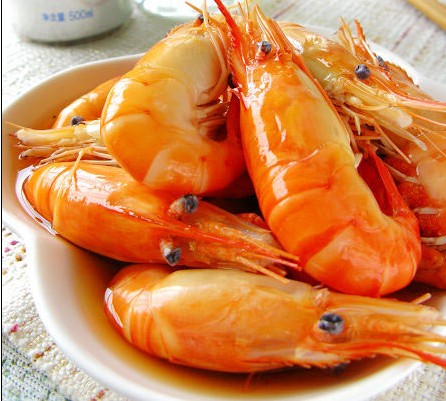
Detailed guide to freshwater shrimp farming: easily raise plump, delicious shrimp
The secrets of delicious freshwater shrimp farming revealed
-
How can poultry farming profits be improved? Breaking out of five misconceptions is key
How to improve poultry farming profits: breaking out of five misconceptions is key
-
A farming method for cage polyculture of grass carp and silver carp in reservoirs
The so-called "cage-in-cage in reservoir cages" means placing 4 small cages inside 1 large cage, and "grass carp on top, silver carp below" means raising grass carp in the small cages and bighead carp in the upper and lower interlayers between the small cages and the large cage (the small cages are 5 m high, the large cage is 5.5 m high, and the interlayer is 0.5 m high). The grass carp in the small cages are intensively cultured at high density by feeding compound pellet feed, while the bighead carp in the large cage mainly use grass carp feces and drifted feed as bait, with no special feeding, in an extensive, low-density grazing-style culture. This farming model
-
Four Diseases to Guard Against in Golden Coin Turtle Farming
During the rearing of golden coin turtles, deteriorating pond water, excessive stocking density, mixed rearing of large and small turtles, improper feeding, cold damage and heat damage and other reasons often cause turtles to become ill or die. The four diseases that golden coin turtles are prone to and their prevention and treatment methods are introduced as follows: 1. Red neck disease. Symptoms: This disease mostly occurs in the plum rain season. Red spots appear on the diseased turtle's abdomen, the throat and neck swell, the neck stretches out and cannot be retracted, appetite decreases, and reactions become sluggish. When the condition is severe, there is bleeding from the mouth and nose, intestinal inflammation and erosion, and generalized redness and swelling, without
-
New Shrimp Farming Technique: How to Fatten Up Shrimp
Xu Zhihua, a shrimp farmer in Fengma Yicun, Hengli Town, Nansha District, Guangzhou, China, contracted 60 mu of ponds to farm whiteleg shrimp (Litopenaeus vannamei). In 2007, under the guidance of agricultural technicians, he used enzyme bacteria technology and fish-shrimp fertilizer, achieving a net income of 5000 yuan per mu. Xu Zhihua conducted comparative trials in two ponds. Pond No. 1 was sprayed with enzyme bacteria and fertilized with fish-shrimp fertilizer, with 50,000 shrimp fry stocked per mu. He applied fertilizer frequently and lightly, and throughout the entire process did not use water purification agents or bactericidal drugs, yet there was no shrimp surfacing or death, and the shrimp survival
条件筛选