-

How to Calculate the Economic Benefits of Snake Farming
Experts say: raising one good snake is better than raising one pig. Because wild snakes are becoming increasingly scarce, snake prices on the market have been rising steadily year after year, and snake prices vary greatly throughout the four seasons, with winter prices about 2~3 times higher than in ordinary seasons. Early spring is the highest peak of snake price increases for the whole year. In addition, prices in early autumn and late autumn are also not the same. Taking one artificially bred female snake as an example, it breeds an average of 10~18 young per year, and some can breed as many as more than 20. If sold as small snake hatchlings, each is priced at about 3~10 yuan. If the bred
-
What are the key techniques for efficient fox farming?
1. Vaccinate on schedule and pay attention to drug prevention. Vaccinate twice a year, once in November-December when keeping breeding stock and once in June-July, 3 weeks after the cubs are separated and weaned, using vaccines for canine distemper, viral enteritis, encephalitis, etc., to vaccinate each animal individually, and use the deworming drug Chongkexing to deworm the foxes both internally and externally once. 2. Keep the sheds dry and sanitary. Wash the water bowls and feed bowls frequently, and promptly remove feces and leftover feed from the cages and sheds; regularly spray the ground of the whole site and the cages and sheds with Baidusha solution. 3. Sci
-
What are the key management points for the middle and late stages of shrimp farming?
In the middle and late stages of shrimp ponds after the body length reaches 7-8 cm, due to increased feed input, shrimp excrement gradually accumulates, and together with dead algae, residual feed, and the oxidative decomposition of organic matter at the pond bottom, the pond water quality, substrate, microorganisms, and so on have undergone great changes. The specific changes in the water environment and shrimp in the middle and late stages of shrimp farming are: pH gradually rises, the water color changes from clear green and yellow-green to brown and tea-green, transparency decreases, and turbidity increases; the pond bottom turns black and has a foul odor, and the number and types of harmful microorganisms increase.
-
How to Carry Out Selective Breeding and Breed Conservation in Jian Carp Farming
Any superior breed, if selective breeding and breed conservation are neglected, will often lead to breed degradation, reduced yield and deterioration of other traits. Jian carp has stable genetic traits and can, through within-breed reproduction, pass the superior traits of this breed on to its offspring. However, different carp breeds easily interbreed and become mixed, individuals within the same breed also differ, and the living environment can have a considerable effect on the traits of a breed. Therefore, attention must be paid to selective breeding of superior stock: according to the breed's standards, fish with good traits in all relevant respects should be selected as broodstock for rearing and allowed to reproduce.
-
What is the relationship between the farming of the four major Chinese carps and meteorological conditions?
Fish live in water, but they are also closely related to meteorological conditions. Temperature: fish are ectothermic animals, and the water temperature is their body temperature. The water temperature directly affects their life metabolism. The suitable temperature range is 10 to 33°C, and the optimal temperature is 25 to 30°C. Below 10°C they begin to hibernate. At 10 to 15°C they begin to feed and grow slowly. At 15 to 20°C their appetite increases and they grow faster. At 20 to 30°C they grow fastest. Above 30°C their growth slows again. Therefore, when feeding, pay attention to
-
A Comprehensive Analysis of Key Points for Drug Use in Fish Farming
In recent years, China's aquaculture industry has developed rapidly, and the degree of intensification in aquaculture has also been increasing quickly. At the same time, the aquaculture environment has been continuously deteriorating, causing a decline in the immunity and disease resistance of cultured species, while the incidence of disease has increased significantly. Moreover, due to factors such as mutations in pathogenic bacteria, new diseases and difficult-to-treat diseases have frequently emerged. At present, these diseases are mainly treated with medication. This article discusses the development, classification, factors affecting drug action, and problems existing in the use of fishery drugs in China. I. The Development of Fishery Drugs
-
How to prevent and treat common diseases in ayu (sweetfish) farming?
I. Vibriosis 1. Pathogen: mainly Vibrio anguillarum. 2. Symptoms: depending on the species of Vibrio infecting the fish, it can be roughly divided into three types: yellow-liver type, pointed-intestine type and ulcerative type. Sick fish swim weakly, have darkened body color, protruding eyeballs and skin hemorrhages that in severe cases extend deep into the muscle layer; there is congestion and then ulceration on the inner surface of the operculum, the base of the fins and the tip of the snout; the anus is red and swollen; the gills are pale; the liver of sick fish is enlarged, in some cases entirely faded to a yellowish-earth color, in others partially faded and congested; blister-like structures filled with bloody fluid appear in the liver of sick fish; the gallbladder is enlarged, and the
-
What kind of fish is the red drum? Breed characteristics and farming techniques
Breed name: red drum English name: redfish Common names: redfish, red croaker, spotted tail fish, channel bass Scientific name: Sciaenops ocellatus Biological characteristics (1) Morphological characteristics The red drum is spindle-shaped, laterally compressed, with a slightly raised back that is highest at the origin of the dorsal fin. The head is medium-sized, the mouth cleft is relatively large and terminal, and the teeth are small, closely arranged and fairly sharp. There are two pairs of nostrils, the rear pair oval
-
The Rhine goose is a new breed in goose farming.
The Rhine goose originated in the Rhineland region of Germany. In 1999, the relevant department of Jilin Province began introducing 3000 sets of parent-stock Rhine breeding geese from abroad, and the promotion situation is currently good. The Rhine goose has a relatively large body size; generally, the weight of an adult male goose is 5-6 kg, and that of an adult female goose is 4.5-5.5 kg; it gains weight quickly, and at 8 weeks of age the goose's weight can reach about 4.3 kg; the meat quality is relatively good; it has strong adaptability, and whether in the cold north or the hot south, it grows very well.
-
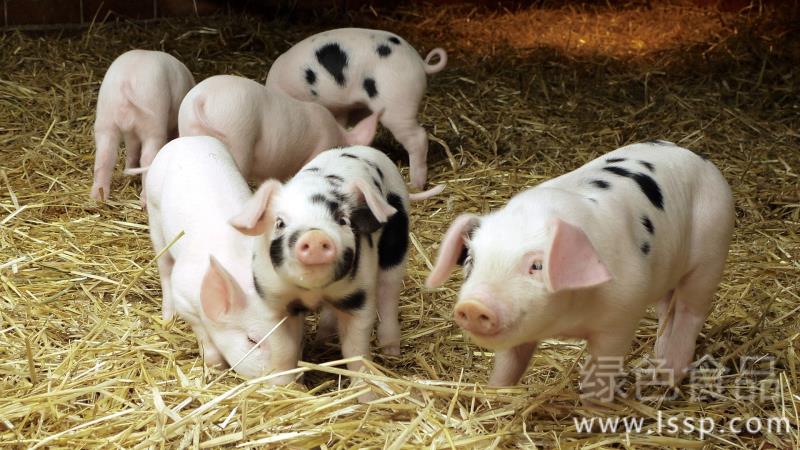
Pork prices are so high, so why is pig farming still not profitable?
Why is pig farming still not profitable when pork prices are high?
条件筛选