-
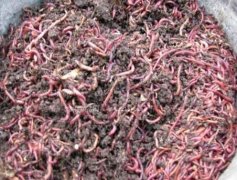
Key Management Techniques for Raising Earthworms in Open Fields in Winter
Earthworm farming now brings high economic returns, which has led many people to raise earthworms, so what are the key management points for earthworms, do you know? 1. Daily management should be done carefully, including checking temperature and humidity, egg laying and hatching, feeding conditions, pest intrusion and abnormal phenomena
-
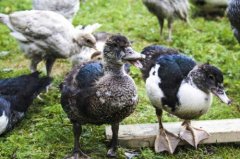
What Are the Key Points of Duck Farming Methods and Disease Prevention
Nowadays, the economic income from duck farming is quite high, so there are also many farmers raising ducks, but raising good ducks is not easy. So how should you raise them? There are many problems in the farming process, and below we will solve these problems for you. Ducks grow fast,
-

Key Technical Points and Management Methods for Northern Pike Farming
Farming Techniques for Northern Pike
-

How to raise northern pike? A detailed explanation of the key farming techniques
Farming techniques for northern pike
-

Hsinchu County Signs the Friendly Farming and Honest Agriculture Strategic Alliance
On January 16, the Hsinchu County Xinpu Township Office invited representatives from industry, government, academia and research in the agricultural field to sign the "Friendly Farming and Honest Agriculture" strategic alliance memorandum of cooperation at the Xinpu Township Visitor Center, announcing that farmers in Xinpu Township will, under the joint professional guidance of all invited parties...
-

A Detailed Guide to Snake Farming Techniques and Processing Methods
Snakes are a precious biological resource. Snakes can be eaten, used for medicine, used to make musical instruments, and so on; the whole body is a treasure, and they are praised as a "mountain delicacy." Snakes sell well and fetch high prices. In China, the purchase price per kilogram of live snakes and snake meat is 40-60 yuan; for the five-paced snake (Deinagkistrodon acutus), it is 250-400 yuan per kilogram; 1 gram of banded krait (Bungarus multicinctus) toxin is priced at 1000 yuan; raw snake gallbladder reaches as much as 2000-3000 yuan per kilogram. On the international market, 5 grams of snake venom is priced at as much as 1000 US dollars, 20 times more expensive than gold. Farming snakes artificially has a short cycle and high returns, and is a good way for farmers to escape poverty
-
Spring pig farming: pay attention to preventing vitamin deficiencies
Vitamin A deficiency: use 20 grams of pine needles, crush them for juice or boil them for juice, mix into the feed and give once, once a day, for several days in a row; you can also feed more carrots, silage and other feed rich in vitamin A. Vitamin B deficiency: when preparing daily feed, pay attention to fully supplying bran, silage, sprouted feed and others rich in vitamin B. If corn is used as feed for a long time, it can cause niacin deficiency. The amount of corn in the feed should be reduced and bran, silage, sprouted feed and juicy tuber feed should be increased.
-
Chum Salmon Farming Techniques and Key Points of Feeding Management
[Local names] Ma-ha-yu, Ma-ha-yu, salmon, Ma-gao-yu. [Morphological characteristics] The body is generally about 60 cm long. The body is elongated and laterally compressed, gradually rising behind the head. The head is large and laterally compressed. The mouth is large. The tip of the snout protrudes and curves slightly, resembling a bird's beak; during the breeding season the protrusion is most pronounced in males, curving toward each other like pincers so that the upper and lower jaws do not meet. The eyes are small. The gill openings are large. The scales are small and fine. The lateral line is distinct. Behind the dorsal fin there is a very small adipose fin, opposite the anal fin. The caudal fin is slightly forked. Body color varies considerably; when first entering fresh water from the sea,
-
How do you prevent disease when farming eels? There is real know-how involved
Every year in July, August and September, the weather is hot, and farmed eels are prone to serious diseases. The main signs are: 1. Gill rot disease caused by parasites or bacteria. 2. Liver-kidney syndrome caused by feed or management factors. These two diseases have a high mortality rate and are difficult to treat, and they are the biggest headache for many farmers. Based on follow-up surveys in recent years, I would like to offer some humble observations on this issue. 1. Focus on prevention to avoid disease outbreaks. The specific steps are as follows: 1. Regularly use insecticides,
-
How to improve the body color of adult eels? A practical farming method explained
The body color of eels plays a decisive role in sales. Raising eels with good body color is the eager hope of all farmers and a subject that many feed manufacturers have been exploring. To solve the eel body color problem, you must first understand the causes of eel body color and the factors that affect it. The production of eel body color: eel body color is mainly the result of the combined action of multiple factors such as carotenoids, melanin, pterins and guanine. Factors affecting eel body color: 1. In feed
条件筛选