-

What are the key technical points of Taishan eel farming in earthen ponds?
The Taishan earthen pond eel farming model is an extensive farming model developed by referring to the earthen pond farming model for Chinese carp. Its characteristics are: ① The ponds are large, generally more than 4 mu, up to 20-30 mu, and developed in contiguous tracts; ② The stocking density is low; ③ Water sources are insufficient, and the water is used for a whole grow-out cycle, with a water depth within 1.2 m; ④ The soil quality is good, mainly loam; ⑤ Aeration facilities are fully equipped; ⑥ The feeding method is to feed to satiation at every meal until feed remains; ⑦ The annual grow-out rate is above 90%. Taishan earthen ponds are mostly developed from land created by reclaiming land from the sea and enclosing it into fields, and the soil is mostly loam, with water retention performance.
-
Six fish feed formulas, useful reference for scientific fish farming
1. Suitable for tilapia in flowing water and cage culture: grass meal 20%, fish meal 30%, soybean cake 20%, corn gluten meal 20%, rice bran 20%, wheat bran 10%, corn flour 5.5%, bone meal 1%, salt and vitamins together 0.5%. 2. Suitable for grass carp: sweet potato vine meal 45%, soybean cake 13%, rice bran 15%, wheat bran 12%, fish meal 3%, corn flour 10%, bone meal 1.5%, salt 0.5%. 3. Suitable for bighead carp, silver carp and grass carp: rice straw
-
Detailed Explanation of New Techniques for Green Ecological Pig Farming
I. Feed: Feed is an important transmission route for many pathogenic microorganisms. Feeding safe feed is the source of producing safe pork. The production of feed and feed additives shall be strictly managed in accordance with the law, monitoring and testing shall be strengthened, and prohibited drugs shall be strictly banned and severely investigated and punished. At the same time, the inspection and monitoring of feed raw materials shall be strengthened, and feeding feed that is moldy, deteriorated or seriously contaminated by highly toxic pesticides shall be prohibited. In addition, new green and safe feed and feed additives shall be developed. For example, planting pollution-free, high-yield and high-quality green feed, and using microbial preparations, enzyme preparations, acidifiers, Chinese herbal preparations and preparations extracted from natural plants approved by the national animal husbandry
-
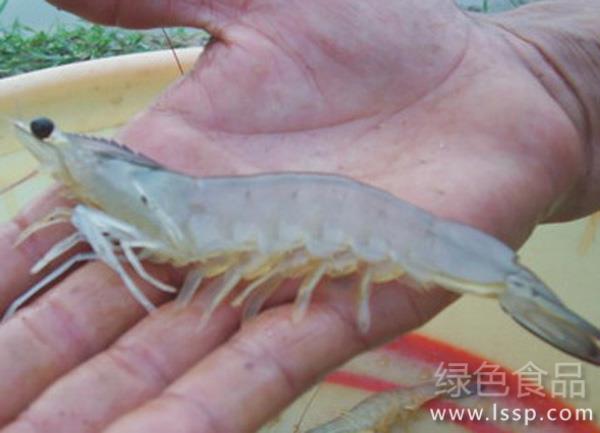
Soft-shell syndrome in prawns occurs at a high rate; how can it be prevented and treated in farming?
Prevention and treatment of soft-shell syndrome, which prawn farming is prone to
-
In eel farming, gill nephritis must be strictly prevented.
Gill nephritis is a disease that causes great harm to eels. The epidemic period of this disease is relatively long, beginning in December and lasting until May of the following year. Small-sized eel fingerlings can have a mortality rate of over 50% when affected by this disease during the overwintering period. Larger eels develop the disease somewhat later than small-sized fingerlings, generally between February and March. If the disease is severe in autumn, the harm from gill nephritis in winter will be greater. When water temperatures begin to rise in February and March, secondary infections such as water mold disease, red fin disease, and red spot disease are likely to occur. Ponds whose water contains salt generally do not develop this disease, that is,
-
Mott dwarf elephant grass is suitable as forage for fish farming
Mott dwarf elephant grass is a grass-family forage introduced from the United States a few years ago. This grass is perennial, with a plant height of 0.8-1.4 m, short and numerous nodes, a large amount of leaves per plant, and strong tillering and regrowth ability. It is relatively cold-tolerant; in winter the aboveground part turns yellow and withers, while the underground part survives. It sprouts in spring and begins to grow when the temperature is around 12°C. It prefers to grow in places with deep, fertile and moist soil. This forage is high-yielding and highly nutritious. Under good water and fertilizer conditions, it can produce 15,000-20,000 kg of fresh grass per mu, and its leaf amount accounts for 8
-
Honeysuckle can prevent and treat poultry and livestock diseases, making it a valuable medicine for farming
Honeysuckle, also known as silver flower or Japanese honeysuckle flower, is the flower bud of Japanese honeysuckle (Lonicera japonica), a perennial semi-evergreen climbing vine of the Caprifoliaceae family. Honeysuckle is distributed throughout China, especially common in the south, and is now also cultivated artificially, with significant economic benefits, making it a path to wealth. It is mainly produced in Guangxi, Guangdong and Henan provinces and autonomous regions. From March to July each year, flower buds that are about to open are picked in the early morning and dried in the sun for later use. Every part of the honeysuckle is a treasure; it is a rare traditional Chinese medicine. At the same time, it is also a good medicine for preventing and treating poultry and livestock diseases. 1. Chicken diseases
-
How can fox farming profits be increased? Master these measures
1. Lower feeding costs. First, establish reasonable feeding standards and prepare daily rations according to those standards. Do not arbitrarily raise the ration level. During the fox's breeding period, meat, egg and milk feeds should be used rationally, while during the non-breeding period, cheap marine trash fish and meat by-products may be used appropriately, but the nutritional needs of the fox must never be ignored. For example, feeding poor-quality feed during the winter fur growth period will lower pelt quality, or cause delayed pelt harvesting, which instead results in greater economic loss. Second, feed losses in quantity and quality during purchasing, transport, storage and processing
-
Management Points for Raccoon Dog Farming in Different Periods
Because the raccoon dog tolerates coarse feed, has few diseases, is easy to manage, and has low farming costs, it is favored by many fur animal farmers. However, some farmers manage raccoon dogs in a relatively extensive way, resulting in poor fur quality and small pelts, which affects economic returns. Below is a brief introduction to the management points for raccoon dogs in each period. 1. Early stage of the pre-breeding period: the daily ration should be based on the principle of eating enough, and animal feed should not be less than 10% of the daily ration. Increase feed with a high fat content; the feed should be diverse and sufficient drinking water should be provided. Late stage of the pre-breeding period
-
Salmon Bones Become the Best Feed for Cod Farming
According to scientists' research, salmon bones are the best raw material for cod feed. The scientists revealed that wild cod eat large amounts of crustaceans rich in minerals, and this dietary structure can absolutely be carried forward in aquaculture. After the scientists added salmon bones rich in minerals to the feed, farmed cod showed a greatly increased appetite and faster growth. Compared with fish fed normal feed, cod fed feed supplemented with 20% salmon bone meal can grow 10% faster. In addition, in
条件筛选