Detailed Guide to Guinea Pig Farming: Low Cost, Low Technical Difficulty
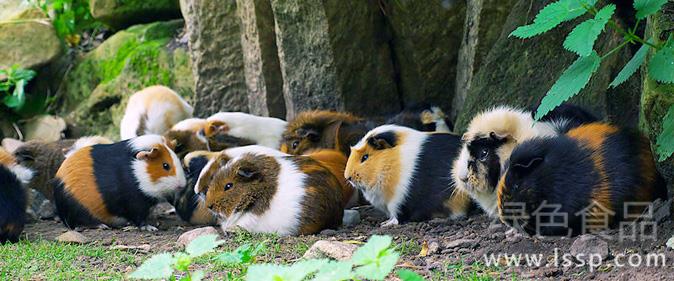
Guinea Pig
The guinea pig, also known as the cavy, is a valuable multi-purpose herbivorous animal raised for both its fur and meat. The guinea pig has a short, thick, round body, short limbs, and no external tail. Guinea pig meat is tender, tasty, and delicious, and is a low-fat, high-protein, low-cholesterol meat. It is rich in 17 amino acids needed by the human body, and contains abundant protein, calcium, iron, phosphorus, and various vitamins. The "roast whole pig" processed from it sells for 200 to 300 yuan per plate in Hong Kong, China, Macao, China, Taiwan, China, Hainan, Fujian, Guangdong, and other places, and demand far exceeds supply. Guinea pig farming has low costs and low technical difficulty; one person can raise 400 breeding guinea pigs, with a survival rate of over 90%.
I. Raising Environment
1. Cage raising. Cages can be made of wooden strips, bamboo slats, or wire, with dimensions of 60 cm × 50 cm × 40 cm being suitable. 2. Flat-floor pool-style pen raising. Suitable for single-story houses with a wide floor area. The room is partitioned with bricks, wooden boards, etc. into pools of 0.5-1 sq m, and the pools are best lined with some wood shavings or straw, which helps keep them warm and absorb moisture. 3. Three-dimensional factory-style raising. This is larger in scale and relatively concentrated, making management and operation convenient, and allowing many animals to be raised. Use bricks, wood, or iron bars to build 3-5 tiers, with the bottom slightly sloped so that manure flows out, making management convenient.
II. Feed Management
Guinea pig feed is best mixed and fed fresh each time, with clean water provided for drinking, and small frequent meals; each adult guinea pig gets about 40 g of ration per day, fed twice daily, and the feed trough should be kept clean and hygienic. After feeding concentrate, fresh green feed should be added at the same time; the green feed is best cut and fed on the same day, with each adult guinea pig fed about 250 g of green feed per day, and green feed contaminated by pesticides and the like must be prevented from being fed.
III. Growth and Development
Newborn guinea pigs generally weigh 50-115 g. Their whole body is covered with hair, they have incisors, and their eyes and ears are already open; within a few hours they can eat soft feed. In the first two months after birth, they gain an average of 4-5 g per day. Generally, guinea pigs at two months of age can reach 350 g in weight; at five months of age, females can reach 700 g and males can reach 750 g; adult males can reach 950 g and adult females can reach 800 g. The lifespan of a guinea pig is generally 4-5 years.
IV. Points to Note
Guinea pigs have a relatively poor ability to regulate body temperature automatically and are quite sensitive to changes in ambient temperature. The critical temperatures for guinea pigs are a low of -15°C and a high of 32°C, the thermoneutral range is 30-31°C, and the suitable temperature for guinea pigs is 18-29°C. Therefore, the temperature of the raising room should be controlled within the range of 18-29°C, with the optimum being 18-22°C, and humidity of 40-70%. When the temperature is above 29°C, if the humidity is high and the air is not circulating, it can cause great harm to guinea pigs or even death, and can cause pregnant guinea pigs to miscarry.