-
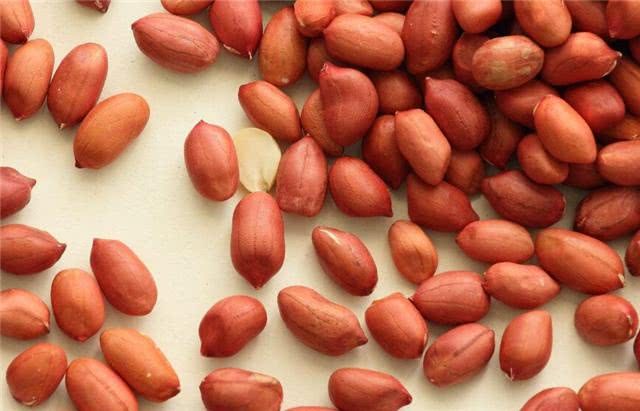
How to tell good peanut, soybean and corn seeds from bad ones, learn this and you will never be fooled again
Peanuts, soybeans and corn are crops that farmers often grow, and they plant a lot of them in paddies and dry fields, so choosing seeds is very important. Whether farmers save their own seed or buy seeds on the market, they all need to learn...
-
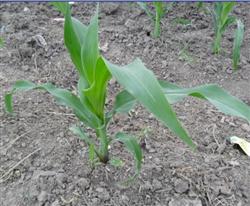
How to prevent seed fertilizer burn in summer corn? Practical prevention methods shared
How to prevent seed fertilizer burn in summer corn? Please provide methods. In recent years, with the promotion and application of no-till summer corn planters equipped with fertilizing devices, the use of seed fertilizer for summer corn has become increasingly common. However, due to improper application of seed fertilizer by farmers, phenomena of sprout burn or seedling burn have appeared. The causes of seedling burn include: ...
-
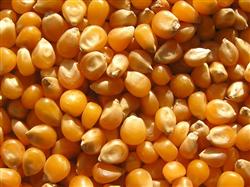
What should be noted for high-yield summer corn planting?
What should be noted to achieve high yield when planting summer corn? Please give an introduction. To achieve high yield when planting summer corn, the following aspects should be noted: 1. Careless selection of seeds. Because the current seed propagation system is still not perfect enough, substandard corn seeds still account for a relatively large proportion. Some farmers, coveting cheapness, buy from small vendors...
-
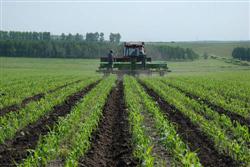
Correct Methods and Key Technical Points for Scientific Topdressing of Summer Corn
How to scientifically topdress summer corn? Here is an introduction to the methods. Corn is a high-yield crop with a relatively large fertilizer requirement, and scientific fertilization is the key to achieving high and stable corn yields. Only by determining reasonable fertilization methods and clarifying suitable fertilizer ratios according to the fertilizer requirement patterns of corn can high and stable corn yields be achieved and maximum...
-
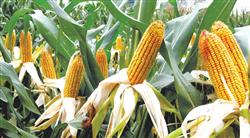
Late harvest of direct-seeded summer corn can achieve high yields
From the 1960s to the 1990s, wheat and corn yields were low, the turnaround time between crops was long, and heavy rain easily caused waterlogging and sprouting damage, so interplanting in wheat fields played a positive role in raising corn yields per unit area. Since entering the new century, with the improvement of production conditions, changes in the production system, and higher levels of mechanization, wheat and corn yields have increased substantially, ...
-
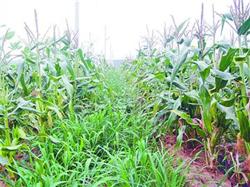
How to remove weeds in summer corn fields? A detailed guide to practical control methods
How to remove weeds in summer corn fields? Please explain the methods. Summer corn and weeds both grow quickly and in concentrated flushes. Corn seedlings suffer the most severe weed damage during the seedling stage; in the mid-to-late stage, corn can form a tall, dense canopy, and weed emergence and growth are suppressed, with little impact on yield. Weed control in corn fields should focus on the two key periods after sowing before seedling emergence and early post-emergence. The integrated weed control plans for the different periods are as follows:
-
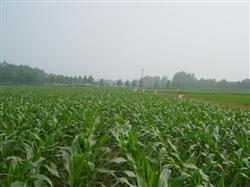
Summer Corn Fertilization Methods and Key Technical Points
How should summer corn be fertilized? Please provide guidance. In some regions, farmers harvest winter wheat and immediately dibble-sow summer corn; farmers call this period the "three summer" rush of seeding and harvesting. Since it is a double rush, there is no time to plow or prepare the land, so summer corn cannot be given seed fertilizer. In other regions, corn is relay intercropped before the wheat is harvested...
-

How to best apply topdressing to summer corn? Detailed explanation of timing and methods
How to best apply topdressing to summer corn? Please give an introduction to topdressing methods. Topdressing holds a very important position in corn fertilization; fertilizer can be applied timely and in appropriate amounts according to the corn's nutrient requirements. The purpose of topdressing is to achieve the high-yield goal of "promoting stalks, promoting ears, and promoting kernels." Summer corn with a yield of 400 kg per mu...
-
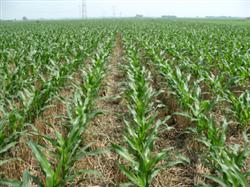
Key Field Management Techniques for Summer Corn in July
How should summer corn be managed in July? Please give guidance. Summer corn can be managed in July as follows: on the premise of ensuring suitable soil moisture, sow at the right time as much as possible to ensure a full stand. Before sowing, the seeds should be sun-dried and treated with seed coating agents or chemical seed dressing to improve seed vigor. An appropriate amount of phoxim, ...
-
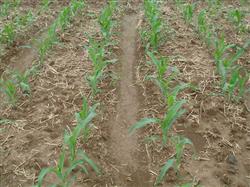
Detailed Explanation of Key Management Techniques for Summer Corn at the Seedling Stage
How should summer corn seedlings be managed? Please provide detailed guidance. Summer corn seedling management mainly includes the following aspects: 1. Checking seedlings and replanting missing ones. After emergence, frequently check the field for seedlings, and promptly replant or transplant where gaps are found. If few seedlings are missing, leave double seedlings on both sides of the gap; if many are missing, when the corn has 2 to 3 leaves, transplant healthy seedlings with soil balls and water them thoroughly...
条件筛选