How to tell good peanut, soybean and corn seeds from bad ones, learn this and you will never be fooled again
Peanuts, soybeans and corn are crops that farmers often grow, and they plant a lot of them in paddies and dry fields, so choosing seeds is very important. Whether farmers save their own seed or buy seeds on the market, they all need to learn how to tell good seeds from bad ones. Especially now that buying seeds on the market has become very common among farming households, the quality of the seeds is crucial, so everyone must learn how to identify them.
Peanut seeds
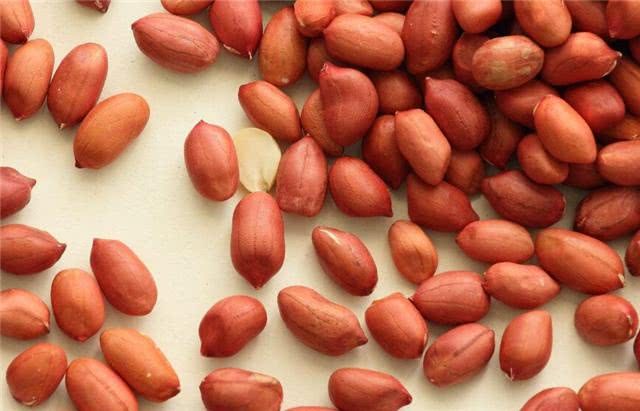
Peanut seeds are plump, the tip of the seed embryo is sharp, the germ disc is very prominent, the seed coat is pink, the hilum at the top is white, and the seed coat rubs off easily between the fingers. If farmers have trouble telling them apart, they can rub them between their fingers, and they should also check for mold.
If peanut seeds are shriveled, and the seed coat turns yellowish brown or dark red, and oily spots appear on the hilum at the top and on the two peanut halves, and the peanut halves separate easily, then such seeds cannot be kept for planting.
Corn seeds
Corn seeds with uniform color, with the embryo and endosperm areas pure white and not discolored, and with no mechanical damage and no shriveled kernels, can all be bought. Some farmer friends may also come across seeds with black spots on the embryo area; there is nothing wrong with these seeds, and as long as they are not frost-damaged they can still sprout, but if farmer friends are worried they can choose not to pick this kind.
Soybean seeds
Soybean seeds whose seed coat is yellow and glossy, whose two cotyledons are a fresh light yellow, and whose seed coat has no moisture clinging to it, and whose seeds have no unusual smoothness or shine, no other undesirable colors, and no mold, can be selected.
If the seed coat of soybean seeds turns dull and pale and shows oily patches, and when you bite a cotyledon open it is dark yellow or brown and has no luster, and the edge of the cotyledon is very distinctly colored, and after breathing on it moisture clings to it and a glossy sheen appears, then such seeds cannot be used.
That is all for these little tips on telling good peanut, soybean and corn seeds from bad ones. When farmer friends buy seeds, they need to check whether the seeds have sprouted, gone moldy or dried out, whether they are fresh seeds, and whether they have insect damage, and then combine this with small tricks such as rubbing them between the fingers, and in this way they can select seeds of fairly good quality.