-
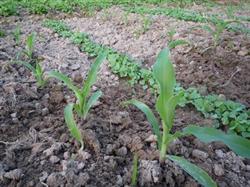
Detailed Explanation of Key Techniques for Raising Seedlings and Transplanting Spring Corn
The spring corn sowing period is approaching, and in production, work on raising seedlings and transplanting should be done well to promote early and steady growth of corn and achieve high and stable yields. For plots selecting improved varieties to harvest tender corn cobs, it is advisable to choose varieties with good quality such as the Jiangnan Huanuo and Suyunuo series; for plots harvesting corn grain, it is advisable to choose high-yielding varieties such as Zhengyu...
-
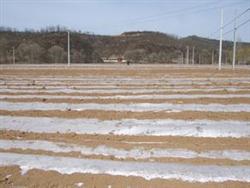
Key Technical Points for Transplanting Spring Corn with Plastic Film Mulch Cultivation
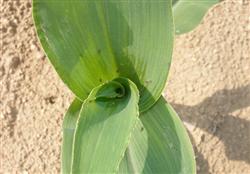
Q: The spring corn already has more than ten leaves, and now the field has a very high population of small brown planthoppers. Can I spray chlorpyrifos or fipronil to control them? A: The main damage small brown planthoppers cause to corn is spreading the viral disease maize rough dwarf. According to relevant data, the susceptible leaf-age period for corn runs from emergence to the 6-leaf stage (9 visible leaves),...
-
Detailed Cultivation Techniques for Spring Corn Intercropped with Autumn Cucumber
Land preparation and fertilization: Choose a sunny, well-ventilated plot with deep, loose, fertile soil, abundant water and good drainage. Base fertilizer should be mainly organic fertilizer, applied as early as possible in combination with autumn plowing, so that the fertilizer can fully decompose and blend with the soil. According to experiments, applying base fertilizer in autumn increases yield by 14.9% compared with applying it in spring. The base fertilizer can be...
-
Why Spring Corn Fertilization Should Be Light Early and Heavy Late
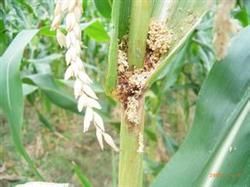
The corn borer, also known as the corn stalk borer. Spring corn is currently at the late whorl stage (funnel stage), and this period is the best time to control the corn borer. At the funnel stage, most newly hatched corn borer larvae crawl into the leaf whorl tube and feed on the mesophyll of the not yet unfolded leaves, and spraying at this stage makes it easy for the spray liquid to enter the leaf whorl tube, improving control effect...
-
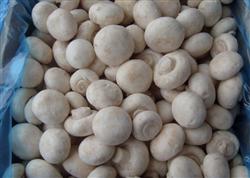
Detailed Explanation of the New Technique for Cultivating Button Mushrooms with Corncobs
A large amount of corn is grown in northern China, and after crushing, corncobs can be used for button mushroom cultivation. In recent years, the area used for cultivating button mushrooms with corncobs has grown rapidly. Corncobs contain 91.3% organic matter and 51.8% soluble carbohydrates, with a carbon-to-nitrogen ratio of 56.70:1. For a button mushroom cultivation area of 100 sq m, 200...
-

New Techniques and Management Key Points for Cultivating Button Mushrooms with Corncobs
1. Pressing water for the mycelium should be done at the right time. When mycelium emerges on the bed surface, it indicates that the mycelium has reached the bottom of the compost and has fully developed within the casing layer, and has already gained the ability to fruit. At this point, water should be sprayed at the right time to press the mycelium. Method: Increase ventilation to let strong wind blow into the mushroom shed, causing the mycelium on the soil surface to lie down; control the amount of water sprayed according to the mycelium development in the casing layer, generally...
-
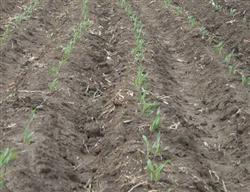
Key Technical Points for High-Ridge, Sparse-Planting, High-Yield Cultivation of Spring Corn
Many excellent spring corn varieties now require high ridges and sparse planting, but farmers generally adopt low ridges and dense planting, so the superior traits of corn cannot be fully expressed, seriously affecting farmers' income growth. This is especially true for excellent varieties such as Dongdan 60, Sanbei No. 6, Dongdan 13, and Zunyan No. 1, whose planting density per mu must not exceed 3000 plants, while...
-
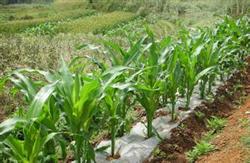
A Full Analysis of Key Spring Corn Cultivation Techniques
Adapt to local conditions and select improved varieties. For plains and hilly areas, promote Yedan 13 and Xiyu No. 3, paired with Huayu No. 4, Zhongdan 32, Chenghai No. 1, and Yuanzheng 808; for intercropping in cotton fields, choose the short-stalked, short-growth-period Yedan 22, Yedan 51, and 9362; in suburban areas where fresh eating is the main purpose, waxy corn varieties such as Zhongnuo No. 1 can be planted; in western Hubei, promote...
-

A Complete Analysis of the Key Technical Points for Soil Testing and Formula Fertilization in Spring Corn
1. Choose suitable varieties. Select suitable and superior varieties according to local conditions; based on heat resources and actual production conditions, choose medium-to-late maturing varieties with a growth period of 120-130 days. Among spring corn varieties with relatively outstanding comprehensive traits, the main one is Nongda 108, etc. 2. Fine land preparation. Spring corn requires deep plowing, and the earlier the autumn plowing...
-
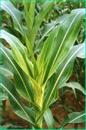
Detailed Explanation of Key Points for Drought-Resistant Cultivation Techniques of Spring-Sown Corn
In recent years, as the area of spring-sown corn has increased, corn dwarf mosaic virus disease has also shown a worsening trend and has become a major disease of spring-sown corn. 1. Symptom identification: Corn dwarf mosaic virus disease can infect corn throughout the entire growth period, with damage being most severe at the seedling stage. Symptoms can appear as early as the three-leaf stage of corn, initially on...
条件筛选