Late harvest of direct-seeded summer corn can achieve high yields
From the 1960s to the 1990s, wheat and corn yields were low, the turnaround time between crops was long, and heavy rain easily caused waterlogging and sprouting damage, so interplanting in wheat fields played a positive role in raising corn yields per unit area. Since entering the new century, with the improvement of production conditions, changes in the production system, and higher levels of mechanization, wheat and corn yields have increased substantially, ...
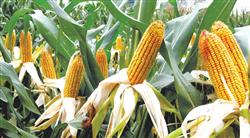
From the 1960s to the 1990s, wheat and corn yields were low, the turnaround time between crops was long, and heavy rain easily caused waterlogging and sprouting damage, so interplanting in wheat fields played a positive role in raising corn yields per unit area. Since entering the new century, with the improvement of production conditions, changes in the production system, and higher levels of mechanization, wheat and corn yields have increased substantially, the turnaround time between crops has shortened, drought and lack of rain occur, interplanted corn has insufficient density, uneven seedlings, severe pests and diseases, and difficult field operations, making it hard to meet the requirements for higher yields. The wheat field interplanting technology formed at the medium-yield level needs to be updated. At the stage of high yield and higher yield, it is imperative to adopt the high-yield cultivation technology of direct-seeded corn with late harvest.
1. Variety selection
Select medium-to-late maturing, high-yielding, compact-type corn varieties, with high population photosynthesis continuing to increase after flowering, medium ears, tolerance to dense planting, lodging resistance, disease resistance, and stay-green maturity, a growth period of 100-105 days, and effective accumulated temperature of 1200-1500°C. Currently representative varieties include Zhengdan 958, Nongda 108, Ludan 981, Liaoyu 18, etc.
2. Direct seeding immediately after wheat harvest
Sow immediately after wheat harvest, with a row spacing of about 60 cm, sow in furrows, build soil moisture or irrigate after sowing, coat seeds with seed coating agent, place 2 seeds per hill, apply chemical fertilizer between the two hills, cover with soil manually to 3 cm, and after 10 hours, tread once along the rows to ensure uniform and strong seedlings.
3. Reasonable dense planting
Establishing a reasonable population structure and ensuring population uniformity are key to high-yield cultivation. Compact-type varieties have upright leaves and a large leaf orientation value, and are suitable for dense planting, with 5000 plants per mu. Flat-type varieties have spreading leaves and a small leaf orientation value, and are suitable for sparse planting, with 3500 plants per mu.
4. Balanced fertilization
Soil organic matter in high-yield fields should be above 1%. Calculate the fertilizer amount based on the need for 3 kg of nitrogen, 1 kg of phosphorus pentoxide, and 2 kg of potassium oxide for every 100 kg of grain produced. Apply 3000 kg of base fertilizer when sowing wheat. At corn sowing, apply 10-15 kg of urea, 10-15 kg of phosphate fertilizer, 30-35 kg of potassium chloride, and 1 kg of zinc sulfate fertilizer. Mix the above chemical fertilizers and apply them all at once between the two hills at sowing. At the large trumpet stage, topdress 50% of the total nitrogen fertilizer amount, and at the flowering stage, supplement 20% of the nitrogen fertilizer amount. Apply deeply 10 cm at a distance of 15 cm from the plants, and cover firmly with soil.
5. Fine management
(1) Early thinning: thin seedlings at the 4-leaf stage, removing weak ones and keeping strong ones during thinning to ensure uniform seedlings.
(2) Early stubble removal: remove stubble before thinning to promote root growth. After stubble removal, spray 40% acetochlor plus atrazine mixture or 33% pendimethalin for chemical weed control.
(3) Pest and disease control: treat seeds with seed coating agent to control seedling-stage diseases; after the three-leaf stage, spray omethoate once to control sucking pests; at the large trumpet stage, broadcast phoxim poisonous sand to control corn borers, and pay attention to controlling aphids in the later stage.
(4) Cover with wheat straw or wheat chaff at the small trumpet stage: cover 500 kg per mu between the rows, which can suppress weeds and fertilize the field.
(5) Remove tassels every other row at the tasseling stage: when the tassels emerge, remove tassels from every other row.
(6) Timely late harvest: harvest when the husks are dry and withered, the milk line has disappeared, and the black layer has appeared, to ensure grain weight.
6. Suitable promotion areas
The summer corn planting area of the Huang-Huai-Hai region.
Click to get more corn planting techniques
Click to get more food crop planting techniques