Correct Methods and Key Technical Points for Scientific Topdressing of Summer Corn
How to scientifically topdress summer corn? Here is an introduction to the methods. Corn is a high-yield crop with a relatively large fertilizer requirement, and scientific fertilization is the key to achieving high and stable corn yields. Only by determining reasonable fertilization methods and clarifying suitable fertilizer ratios according to the fertilizer requirement patterns of corn can high and stable corn yields be achieved and maximum...
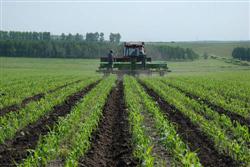
How to scientifically topdress summer corn? Here is an introduction to the methods
Corn is a high-yield crop with a relatively large fertilizer requirement, and scientific fertilization is the key to achieving high and stable corn yields. Only by determining reasonable fertilization methods and clarifying suitable fertilizer ratios according to the fertilizer requirement patterns of corn can high and stable corn yields be achieved and maximum economic benefits obtained. Apply base fertilizer or seed fertilizer well: Before sowing summer corn, base fertilizer should be applied well, mainly organic fertilizer (less commonly used in production), or straw from the previous wheat crop can be returned directly to the field (a suitable amount of nitrogen fertilizer should be applied along with it to adjust the carbon-to-nitrogen ratio and accelerate straw decomposition). Seed fertilizer is mainly quick-acting nitrogen, phosphorus, and potassium chemical fertilizers, such as diammonium phosphate (about 5 kg to 10 kg per mu), potassium sulfate compound fertilizer (about 10 kg to 15 kg per mu at 45% content), etc., all of which have very good yield-increasing effects. Proper topdressing is crucial: Topdressing plays a decisive role in corn growth. Topdressing is mainly based on quick-acting nitrogen fertilizer, with phosphorus and potassium fertilizers added according to different growth stages of corn, and applied in split applications. In practice, it is usually divided into three topdressings: seedling fertilizer, jointing fertilizer, and ear-promoting fertilizer. Fertilization at the seedling stage should be applied early, accounting for about 10% of the total topdressing amount; jointing fertilizer accounts for about 60% of the total topdressing amount, and this fertilization is the key topdressing; ear-promoting fertilizer accounts for about 30%. Summer corn has a relatively high demand for nitrogen, phosphorus, and potassium during the jointing and booting stages, and phosphorus and potassium fertilizers should be applied together according to specific conditions. Pay attention to the application of foliar fertilizer: As an economical and effective fertilization measure, foliar fertilization is recognized and used by many people. For example, spraying 0.2%--0.3% potassium dihydrogen phosphate 2 times--3 times during the jointing stage of corn can increase corn yield by more than 10%. Spraying 0.1%--0.3% zinc sulfate aqueous solution during the seedling and jointing stages of corn can prevent the occurrence of white seedling and mosaic disease in corn. Be careful when using special fertilizers. Nowadays, special fertilizers under various names are constantly emerging in the agricultural input market, in a wide variety, and among them there are no shortage of inferior products. Today it is corn special fertilizer, and tomorrow after changing the packaging bag it may become wheat special fertilizer. Therefore, when purchasing and using fertilizer, you must be careful and cautious, and select and use fertilizer according to the growth characteristics of corn and soil nutrients.
Click to get more corn planting techniques
Click to get more food crop planting techniques